
 Worksheets
Momentum and Impulse Pre-Test
Total questions: 55
Worksheet time: 2hrs 36mins
Why is momentum considered to be a vector quantity?
Momentum has to indicate both magnitude and direction.
Momentum has to have a positive value.
Momentum has to be calculated using speed.
Momentum has a quantity but not a unit.
A stationary object has a small amount of momentum.
True
False
The momentum of an object is related to the object's mass and velocity.
True
False
Which of the following quantities IS NOT involved in the study of collisions?
friction
force
time
mass
velocity
Calculate the momentum of a 55-kg running back moving westward at 10 m/s.
550 kg·m/s, west
550 kg·m/s
550 m/s, west
550 kg, west
Calculate the momentum of a 1200-kg truck moving northward at 30 m/s.
36000 kg·m/s, north
400 kg·m/s, north
36000 kg·m/s
400 kg·m/s
With what velocity must a 0.48-kg softball be moving to equal the momentum of a 0.29-kg baseball moving at 23 m/s?
13.9 m/s
10.8 m/s
16.7 m/s
12.0 m/s
Which of the following objects has the greatest momentum?
a 7.6-kg ball moving at 6.3 m/s westward.
a 10.8-kg ball moving at 3.8 m/s eastward.
a 3.2-kg ball moving at 13.3 m/s northward.
a 5.2-kg ball moving at 8.8 m/s southward.

Consider this elastic collision between two spheres. They collide and then bounce apart. Sphere A has a mass of 8-kg. Sphere B has a mass of 5-kg. Before the collision, Sphere A is travelling to the right at 3 m/s and Sphere B is travelling to the left at 4 m/s. After the collision, Sphere A is travelling 2 m/s. How fast is Sphere B travelling after the collision?
about 2.5 m/s
about 3.2 m/s
about 7.4 m/s
about 8.1 m/s
You are calculating the momentum of a 2 kg toy car moving along the sidewalk at a speed of 0.5 m/s. What would happen to the momentum if you doubled the mass of the car?
You would double the momentum.
You would triple the momentum.
You would half the momentum.
The momentum would not change.
What is the momentum of a 55kg person running at 7 m/s? Do not include units
True or false: The total momentum before and after an elastic collision remains the same.
true
false
If a 100kg car has a momentum of 2000 kg m/s, how fast is it going? Do not include units
Calculate momentum and put them in order from GREATEST to LEAST momentum. (1st one should be the largest)
m = 1000
v = 50
m = 100
v = 100
m = 400
v = 15
m = 2000
v = 2
m = 1500
v = 2
A 50kg skater has a momentum of 500 kg m/s. How fast are they going? Do not include units
Before a car accident, two cars had a total momentum of 1500 kg m/s. After the collision, what is the total momentum?
not enough information
1500 kg m/s
750 m/s
3000 m/s
A billiard ball collides with a stationary identical billiard ball in a head-on collision. After the collision, which is true of the first ball?
It has one-half its initial velocity.
It comes to rest.
It moves in the opposite direction.
It maintains its initial velocity.

Many factors can affect what happens when balls collide. For example, the material the ball is made from, how hard the balls hit each other, whether both balls are moving, and the directions they are moving in.
If two tennis balls are moving towards each other at the same speed what do you expect to observe (see)?
Both balls stop moving
One tennis ball will stop and the other will keep moving
One tennis ball will jump over the other ball
Both balls bounce off each other

Which of the following would transfer more energy?
Lowering ball 1 before release
Raising ball 1 higher before release
Gently putting ball 1 down next to ball 2
Keeping ball 1 in the same place
Which of the following is true about what happens to energy when two balls collide?
The total amount of energy between the two balls becomes zero.
The total amount of energy between the two balls stays the same.
The total amount of energy between the two balls increases.
The total amount of energy between the two balls decreases.

While playing with toy cars, Kirsten and Luca each push a car toward the center of the room. What happens when the toy cars collide?
Energy is transferred.
Energy is unchanged.
Collisions where objects BOUNCE apart.
inelastic collisions
elastic collisions
explosions
none of these

What will the TOTAL MOMENTUM be AFTER COLLISION?
12 Kg x m/s
10 Kg x m/s
24 Kg x m/s
-24 Kg x m/s

During an INELASTIC COLLISION what would happen to the velocity of the cars since they are now stuck together?
Velocity INCREASES
Velocity DECREASES
Velocity remains the SAME
When comparing the momentum of two moving objects, which of the following is correct?
the object with the higher velocity will have less momentum if the masses are equal
the more massive object will have less momentum if its velocity is greater
the less massive object will have less momentum if the velocities are the same
the more massive object will have less momentum if the velocities are the same
A child with a mass of 23 kg rides a bike with a mass of 5.5 kg at a velocity of 4.5 m/s to the south. Compare the momentum of the child with the momentum of the bike.
Both the child and the bike have the same momentum
the bike has a greater momentum than the child
the child has a greater momentum than the bike
neither the child nor the bike has momentum
Two objects stick together and move with a common velocity after colliding. Identify the type of collision.
elastic
perfectly elastic
inelastic
perfectly inelastic
The only collision in which kinetic energy is conserved is
perfectly inelastic
elastic
inelastic
nonexistent
The momentum before objects collide is always written as:
m1m2+v1,iv2,i
m1v1,i+m2v2,i
21m1v1,i2+21m2v2,i2
(m1+m2)vf
Conservation of momentum means that the initial and final momentum in a collision are
different
the same/equal
impossible to determine
always the same as the kinetic energy
An object having a pi of 30kg m/s has ended with a pf of 40 kg m/s. What impulse caused this?
2kg m/s
10kg m/s
70kg m/s
5kg m/s
If the change of momentum of an object is 50kg m/s, we can say the impulse is equal to:
0 kg m/s
25 kg m/s
50 kg m/s
100 kg m/s
An object has an initial momentum of 20 kgm/s and a final mometum of 30 kgm/s. If it took 2s, what is the force?
10N
4N
5N
50N
An object has Pi of 20 kgm/s ends with a Pf of 40 kgm/s. How long would a 5N force need to act?
3s
8s
7s
4s
An object with 20kgm/s is stopped by a force of -20N, how long does it take to do this?
2s
1s
4s
5s
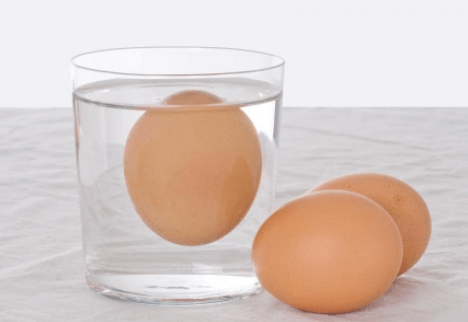
An egg gets dropped from a height of 0.1 meters and cracks. A second egg gets dropped from the same height but this time it lands on a glass of water and does not break. In terms of impulse.
1st egg experienced more impulse
2nd egg experienced more impulse
both experienced the same impulse
An egg gets dropped from a height of 0.1 meters and cracks. A second egg gets dropped from the same height but this time it lands on a glass of water and does not break. In terms of force and time, the second egg must have experienced...
more force, but less time
less force, but more time
more force, and more time
less force, and less time
The air bag on a car reduces the force experienced by the driver, by extending the time of impact.
True
False
You find that an objects final momentum is 45kg m/s, and the impulse that caused this was 45kg m/s, what must have been the objects initial momentum?
45kg m/s
0 kg m/s
22.5kg m/s
need more information

A 3 kg cart has a momentum of 18 kg m/s. What is its velocity?
6 m/s
54 m/s
0.17 m/s
15 m/s

What is the momentum if the mass is of an object is 35 kg and it has a velocity of 10 m/s?
3.5 kg*m/s
35 kg*m/s
0.3 kg*m/s
350 kg*m/s

Cart A is pulled with a 2 Newton force for 2 seconds, and Cart B is pulled with a 1 Newton force for 3 seconds. Which cart experiences the greatest impulse?
Cart B
Cart A
they are the same

A 5 N force is applied to a 3 kg ball to change its velocity from +9 m/s to +3 m/s. The impulse on the ball is ______.
2.5 N s
10 N s
-18 N s
-45 N s

