
 Worksheets
DC -- Continuity principle
Total questions: 8
Worksheet time: 7mins
The amount of fluid that moves past a given point per unit of time.
flow rate
fluid volume
fluid motion
fluid continuity
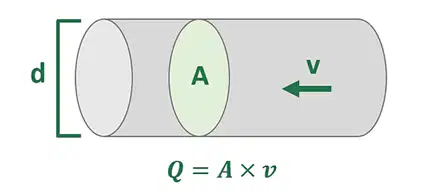
What variables are used to calculate the flow rate?
density and volume of the fluid
area of the fluid and volume of the tube
diameter of the tube and volume of the fluid
area of the tube and velocity of the fluid
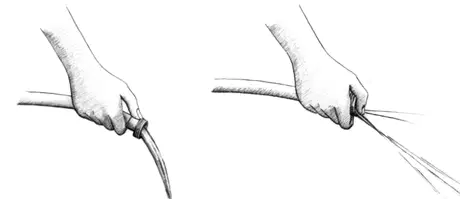
What property of the hose changed?
the volume of the fluid
the flow rate
the diameter of the hose
the density of the fluid
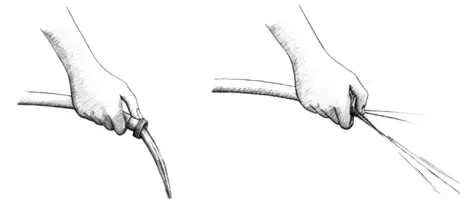
What happens to the flow rate when the area of the hose opening changes?
Increases
Decreases
Remains the same
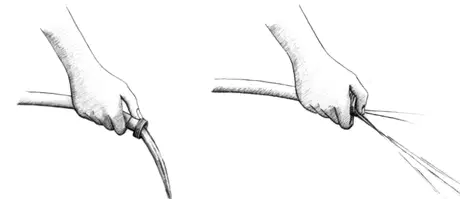
In order for the flow rate to remain unchanged, what must happen?
The area of the hose must increase.
The velocity of the fluid must increase.
The volume of the fluid must increase.
The flow rate increases.
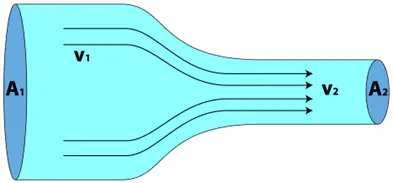
Why does the velocity of the fluid increase at v2 ?
Select all correct answers.
The area of the tube opening has decreased.
The area of the tube opening is larger.
There is no other place for the fluid to go.
The fluid is not compressible.
The fluid volume decreases.
The amount of fluid that goes in one end of a tube in any specified amount of time is equal to the amount that comes out the other end in the same amount of time.
the Bernoulli principle
the Conversion principle
the Continuity principle
the Flow Rate principle
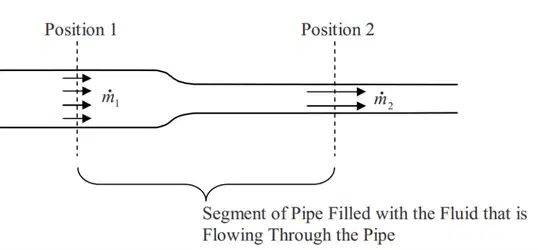
In order for the mass of fluid at Position 1 to equal the mass of fluid at Position 2, what must be true?
The density of the fluid must decrease.
The volume of fluid must increase.
The diameter of Position 2 must remain unchanged.
The velocity of the fluid must increase.

