
Font size
 Worksheets
Ancient China Review
Total questions: 77
Worksheet time: 42mins

A dusty material that forms soil and makes the Huang He River yellow.
loess
Daoism
acupuncture
jade
Drag the geographic feature to the correct place on the map

A gemstone often used to make jewelry and art.
loess
silk
jade
Laozi

China's earliest written records that often told predictions for the future.
filial piety
oracle bones
Daoism
dynasty

A group of rulers from the same family.
loess
philosophy
dynasty
seismograph

The right to rule in ancient China.
Filial Piety
Legalism
Mandate of Heaven
Acupuncture

Respect for one's parents and elders.
Daoism
Legalism
Great Wall
Filial Piety

A method of inserting needles into the skin to stop pain and cure disease.
dynasty
acupuncture
seismograph
Daoism

A set of beliefs about how to live.
philosophy
dynasty
loess
oracle bones
Match the following philosophy with its definition
Confucianism
The ideas and teachings of Confucius
Daoism
A philosophy that emphasizes living in harmony with the Dao
Legalism
A belief that people must be controlled with a strong leader & legal system
Confucius
Important philosopher and teacher in Chinese history
Laozi
Founder of Doaism
Shi Huangdi
First emperor and leader who unified China

A tool that measures and detects earthquakes.
acupuncture
Legalism
seismograph
loess
The highest class in society, many born into the class.
Royals
Aristocracy
Rich
Emperor
A government run by multiple non-elective officials.
Aristocracy
Analects
Dynasty
Bureaucracy
A sovereign ruler with great power and rank.
King
Aristocracy
Pharaoh
Emperor
Grown as a cereal crop - farmers relied on rainfall to produce crops such as rice and ________
Millet
Corn
Potatoes
Beans
A massive collection of clay sculptures representing the army of Qin Shi Huang, the first Emperor of China.
Clay army
Daoism
Terracotta Army
Dynasty


Leaders of China were chosen through the
education system
Pharaoh
Mandate of Heaven
power of the people

Name a body of water that borders China to the east.
Atlantic Ocean
Pacific Ocean
Yangtze River
Yellow River
What is the definition of a natural barrier?
Mountains
Human -made Structures that cause isolation
physical features that make travel and communication difficult.

Why was the Huang He River called China's Sorrow?
It often was very sorry its behavior
It caused much destruction or even killed people when it flooded
Everyone disliked it, so they were "sorry" it even existed.
The leader who came up with its name, couldn't think of anything other than they were sorry they were not as creative.
Near what geographical feature have many ancient civilizations started?
rivers
oceans
mountains
The Chinese belief that people were bad by nature and needed to be controlled.
Which mountain is the tallest peak in the world?
K2
Kangchenjunga
Mount Everest
Lhotse
The Huang He River is also called the "______________________________."
Great River
Ohio River
Yellow River
River of Happiness.
The Chang Jiang (CHAHNG JYAHNG) River is also called the _____________ River.
Yangtze
Qin Shang
Crying River
Mississippi River
China was isolated from other civilizations by ____________________________.
its rugged mountains and barren deserts.
centuries of strict tradition.
a force field projected from the moon.
different languages.
What major geographical feature served as protection on the southern border of China?
Yellow River
Himalayan Mountains
Gobi Desert
Taklaman Desert
Which are the two major rivers that flow through China?
The Yellow and Red Rivers
The Yellow and Yangtze Rivers
The Yangtze and East Rivers
The Yingtze ane Yangtze Rivers
On which continent is China located?
Australia
India
Asia
Antarctica
a means of written communication which is also an art form
legalism
calligraphy
filial piety
steppe

The belief system that teachers people to respect authority and your elders.
Daoism
Buddhism
Hinduism
Confucianism

The belief system that tells you to look to nature to know how to live in peace and harmony.
Confucianism
Daoism
Hinduism
Buddhism

What is the symbol for the opposites of the universe that work in harmony?
Yin-Yang
Yo-Yo
Enlightenment
Nirvana

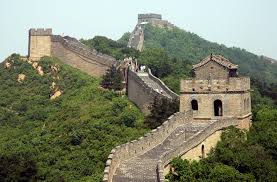
How long did the Great Wall become?
13,000 miles
100 miles
1 million miles
130,000 miles
What Dynasty was the first in China?
Qin
Zhou
Shang
Kowloon
Which Confucian relationship should have proper behavior?
Older Brother over Younger Brother
all of these
living in harmony with "the way" of nature
Human relationships

Silly
The goal of Daosim is to...
read ancient texts
serve your country
live in harmony with nature
work hard to make more money
Which belief system was based on strict laws?
Confusianism
Daoism
Legalism
Which dynasty is considered to have been the first dynasty of Ancient China?
Ming
Song
Yuan
Xia
Tang
TRUE or False
The Zhou dynasty claimed this principle gave them the right to rule
Divine Right of Kings
popular mandate
Mandate of Heaven
Made of kings
Which best describes the Silk Road?
vast highway where the Chinese bought silk
dangerous road that silk traders traveled
a series of different merchants trading on route thousands of miles long
a straight road for travelers
Which of the following is a core belief in legalism?
5 key relationships are necessary for a strong China.
Government should stay out of the lives of the people.
A strong leader and a strong government are needed to create social order.
Superior and inferior relationships.
What is one way that Shi Huangdi tried to censor the thoughts of Chinese people?
He started construction on a Great Wall.
He ordered the burning of all books that did not support his policies.
He developed a standardized currency.
Why did the Qin Dynasty fall?
The harsh punishments were not popular among the people.
Nomads conquered from the north.
The population became too large to control.
The majority of people were...
slaves
peasant farmers
dynasties
emporers
Why were merchants considered the lowest social group in ancient China?
Because they were not wealthy
Because they did not farm
Because they did not produce any goods
Because they did not respect their parents
Which class was considered important for producing crops?
Generals
Historians
Farmers
Merchants
According to Confucianism, how many relationships must be in good standing for social harmony?
Three
Four
Five
Six
Which relationship was considered the most important in ancient China?
Ruler and Citizens
Older Sibling and Younger Sibling
Husband and Wife
Parent and Child
What was a crime related to family respect in ancient China?
Not becoming a merchant
Not farming
Disrespecting parents
Not becoming a general
What was the expected role of most women in ancient China?
To become historians
To serve as generals
To become merchants
To care for their family at home
What is a social class?
line of rulers in the same family
people with a similar position in society
heavenly law giving the king the right to command

A member of an upper class of society...
warlord
ancestor
aristocrat
bureaucrat
Most people in ancient China were...
aristocrats.
farmers.
soldiers.
merchants.
Which class did the merchants belonged in ancient China?
Merchants belonged to upper class.
Merchants belonged to middle class.
Merchants belonged to lower class.

What three Philosophies developed out of the Warring States Period?

What is the main idea of Legalism?
What is Confucianism?

What is the main teaching of Daoism?
The process of making silk was incredibly complicated. What is Silk made from?
The cocoons of Silkworms


Which of the following continents was NOT involved in the Silk Road?
Asia
North America
Europe
Africa
What is the correct timeline order of the four dynasties we learned about in this unit?
Han, Ming, Lee, Chang
Shang, Zhou, Qin, Han
Zhou, Qin, Shang, Min
Laozi, Confucius, Buddha, Mulan
Ancient China was isolated because of what?
their military strength
the outsiders not wanting what the Chinese had
their geography providing many natural barriers
their rivers being very difficult to navigate

