
NEW
Font size
 Worksheets
Understanding Heat Emitters part 5
Total questions: 40
Worksheet time: 20mins
What is the primary function of heat emitters?
To cool the room
To emit light
To get heat into the room or dwelling
To purify the air.
Heat emitters come in various styles and sizes and are responsible for getting the heat into the actual room or ____.
Vehicle
Dwelling
Office
Garden
What percentage of heat is convected via the fins in panel radiators?
50%
70%
85%
95%
Panel radiators warm the cold air that passes through them, creating ______ currents.
conduction
convection
radiation
diffusion
What is the recommended minimum height from the floor for installing panel radiators?
100mm
150mm
200mm
250mm
Panel radiators should be installed where obstructions will not interfere with the ______.
airflow
convection flow
water flow
heat flow
Which method is described as the most efficient way to pipe radiators but can look unsightly?
TBOE
BBOE
TBSE
Fill in the blank: The usual and most common method to pipe radiators, is ______.
TBOE
BBOE
TBSE
What is the range of heights supplied for panel radiators?
200-800mm
300-900mm
400-1000mm
500-1100mm
Panel radiators are supplied in varying lengths starting from 400mm and increasing by ____.
50mm
75mm
100mm
150mm
What is the primary purpose of a kickspace heater?
To cool the room
To heat rooms with limited wall space
To provide lighting
To purify air
Kickspace heaters are installed under the kitchen unit or vanity unit and blow warm air into the room via a ______ mounted on the kick plinth.
fan
grill
vent
pipe
What is the primary function of the fins attached to the copper heat exchanger in a fan convector?
To reduce noise
To increase surface area
To decrease weight
To enhance color
In a fan convector, a low-volume electric fan is installed below the heat exchanger, which operates when the heat exchanger _______.
cools down
is turned off
warms up
is removed

What is a skirting convector?
A type of heater with a finned copper heat exchanger relying on natural convection
A type of air conditioner
A type of fan
A type of humidifier
The main disadvantage of a skirting convector is that dust can ______ the fins and stall the convection current.
clean
block
enhance
polish
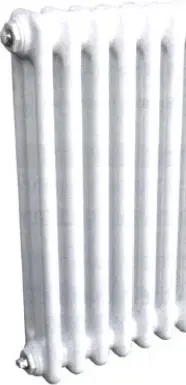
What materials are modern column radiators made from?
Steel and Aluminium
Wood and Plastic
Copper and Brass
Iron and Nickel
Column radiators have been used for many years. The more columns, the greater the ______.
weight
height
heat output
cost
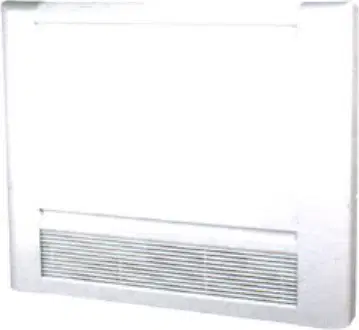
What was the original purpose of designing Low Surface Temperature (LST) radiators?
For residential homes
For the NHS
For industrial use
For outdoor heating.
Low Surface Temperature radiators were designed to not exceed a surface temperature of ____.
50°C
43°C
60°C
70°C
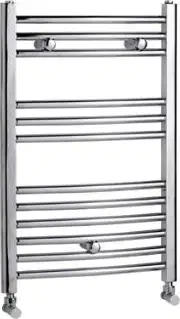
Which of the following systems can towel rails be used with?
Wet central heating system
Electrical element
Both A and B
None of the above
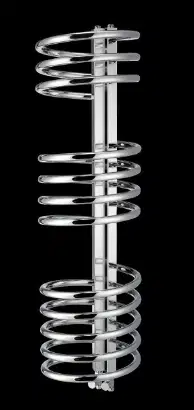
Towel rails can come in a wide range of designs and colors and can be used in a wet central heating system or independently with an _________.
A) electrical element
B) gas heater
C) solar panel
D) wood burner
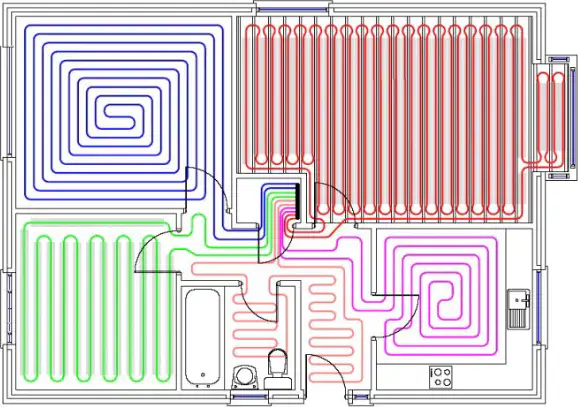
What is the main function of the floor in an underfloor heating system?
To act as a heat emitter
To insulate the room
To support the structure
To cool the room
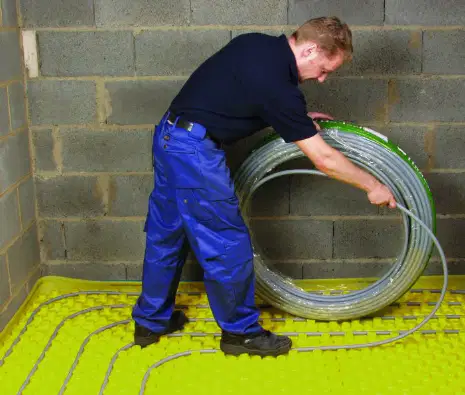
In underfloor heating, the floor becomes the heat emitter when it is heated by ______.
A) electrical wires
B) pipework laid under the screed-in boards
C) solar panels
D) air vents
What is one of the most widely used systems for heating domestic and commercial properties?
Radiators
Underfloor heating
Space heaters
Electric blankets
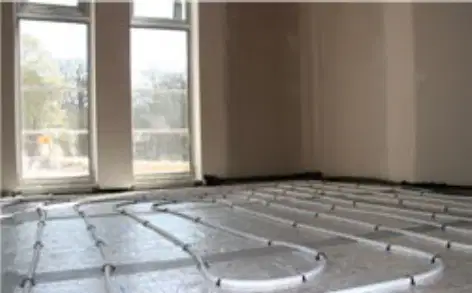
Underfloor heating requires a minimum of ___ at the manifold.
55ºC
40ºC
65ºC
70ºC
What is the main function of the manifold in an underfloor heating system?
To cool the water
To blend and distribute the water
To heat the water
To pump the water
In underfloor heating, the crucial factor for correct heat transfer is the flow rate, which is set by the manufacturer. The flow rate is usually ______.
fast
slow
moderate
variable
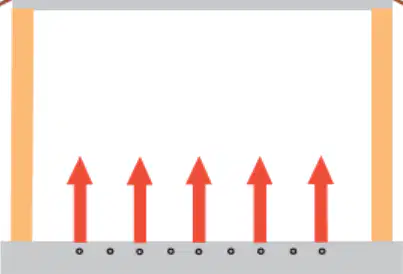
What is the primary benefit of underfloor heating as shown in the diagram?
A) Heat is concentrated at the ceiling level.
B) Heat is concentrated at the floor level.
C) Heat is evenly distributed throughout the room.
D) Heat is concentrated at the wall level.
In underfloor heating, the heat is concentrated at the ______ level.
ceiling
floor
wall
window
Which of the following is an advantage of underfloor heating?
Higher temperature for operation
Lower potential fuel costs for the customer
Requires heat emitters on the wall
Uneven heat over the floor area.
Underfloor heating is suited to ________.
air conditioning systems
groundsource heat pump
traditional radiators
electric heaters
Which of the following is a disadvantage of underfloor heating?
Low installation costs
Quick to heat up a room
High component costs
Suitable for every situation.
Underfloor heating tends to have little or no ______.
Installation cost
Condensation
Heating time
Suitability
What is the main method used by heat emitters?
Convection
radiation
conduction
insulation
BS EN 442 is the specification for _______.
Boilers
Heat pumps
Radiators and convectors
Air conditioners
Which of the following is a consideration for plumbers when installing heat emitters?
Cost effectiveness
Color of the emitters
Brand of the emitters
Size of the room.
When installing heat emitters, plumbers must consider ______.
Cost effectiveness
Comfort for the customer
Control of the system
All of the above.
Where are radiator valves normally installed in the UK?
Top female tapings
Bottom female tapings
Side female tapings
Middle female tapings
Radiator valves are occasionally found fitted to the ___ bottom opposite ends (TBOE).
Top
Side
Middle
Bottom

