
 Worksheets
Nervous System Review
Total questions: 39
Worksheet time: 29mins
All a part of the peripheral nervous system except:
Autonomic Nervous System
Somatic Nervous System
Sympathetic Nervous System
Brain and spinal cord
Controls involuntary motor movements
Autonomic Nervous System
Somatic Nervous System
Nerves
Controls voluntary motor movements
Autonomic Nervous System
Somatic Nervous System
Sympathetic Nervous System
Parasympathetic Nervous System
activated when in stress or in a threatening situation.
Sympathetic Nervous System
Parasympathetic Nervous System
Central Nervous System
Lowers activity, calms the body, operates during normal situations, permits digestion, and conservation of energy
Sympathetic Nervous System
Parasympathetic Nervous System
Central Nervous System
Which TWO of these are the main divisions of the nervous system?
Central Nervous System
Autonomic Nervous System
Peripheral Nervous System
Somatic Nervous System
In which division do the brain and spinal cord belong?
Central Nervous System
Autonomic Nervous System
Peripheral Nervous System
Somatic Nervous System
Which part of a neuron acts as the antennae to receive a signal?
Axon
Soma
Dendrites
Myelin Sheath
Which part of a neuron sends out a signal to another cell?
Axon
Soma
Dendrites
Myelin Sheath
Depolarization occurs, making a neuron more positive, because _ rushes into the cell.
Potassium
Sodium
Chlorine
Water
The name of the major cell of the nervous system is the (a) .
The junction between nerve cells is called the ____.
Junction
Axon
Dendrite
Synapse

Which part of the neuron is letter C (the whole thing)?
(a)

Which part of the neuron is letter A?
(a)
Which lobe of the brain controls reasoning, planning, and decision making?
Frontal
Parietal
Temporal
Occipital
Which part of the brain controls visual processing?
Frontal
Parietal
Temporal
Occipital
The diencephalon contains all of the following structures EXCEPT
thalamus
hypothalamus
cerebellum
pineal gland
Where does the sodium potassium pump move potassium ions?
into the cell
out of the cell
into and out of the cell
the potassium channels are closed
Which is the main, conductive cell type of nervous tissue?
Neuroglial
Neuron
Oligodendrocyte
Schwann
Which is more numerous in the nervous system?
Neurons
Neuroglia
An electrical impulse within a single neuron is called a
synapse
membrane potential
action potential
cell body
An action potential is the same as a(n) (a) .
Results from opening of gated Na channels
polarized
depolarized
hyperpolarized
What is the charge on the outside of the axon during the resting membrane potential?
+
-
neutral
During an action potential, _____ ions flow INTO the axon and _____ ions flow out of the axon.
Na, K
K, Na
Na, Cl
Cl, Na
What is the main function of the sodium potassium pump?
To power other pumps in the cells
To filter the water in the cells
To maintain a resting membrane potential
To aerate the cells
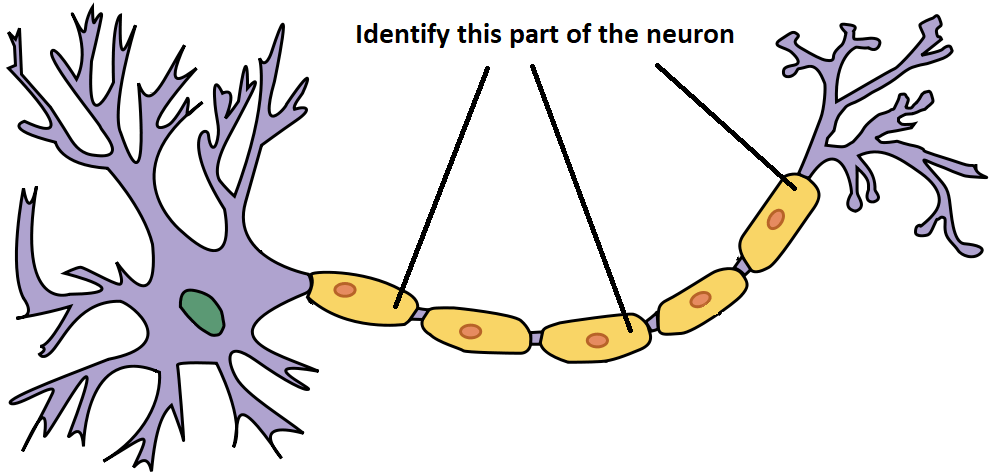
Dendrites
Axon Terminals
Myelin Sheath
Schwann Cells
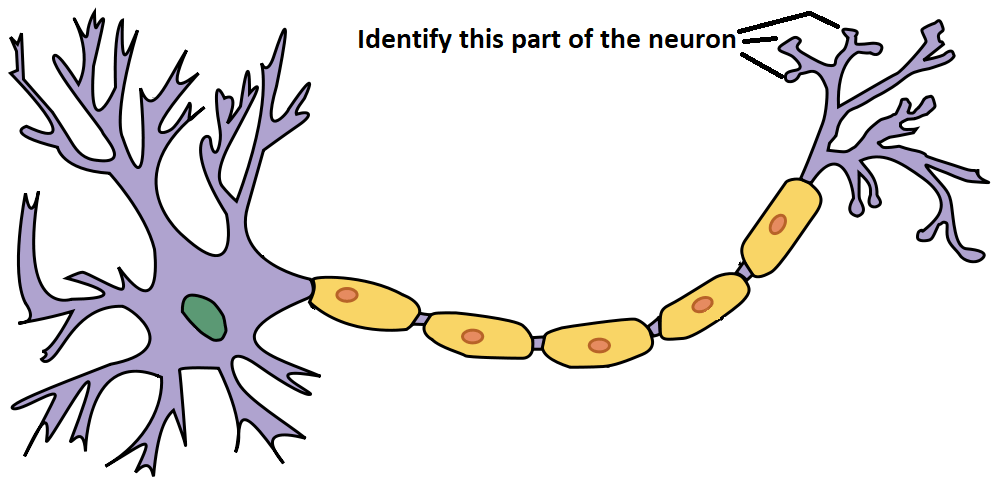
Dendrites
Axon Terminals
Myelin Sheath
Schwann Cells
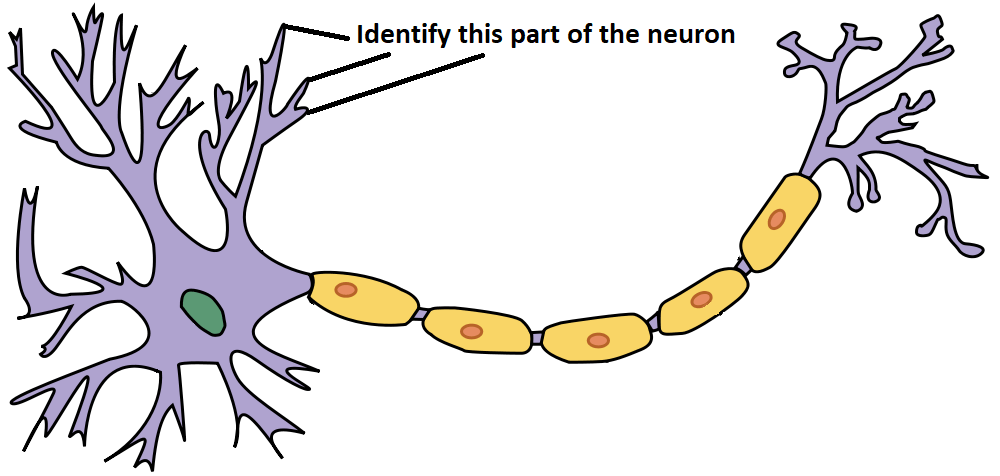
Dendrites
Axon Terminals
Myelin Sheath
Schwann Cells
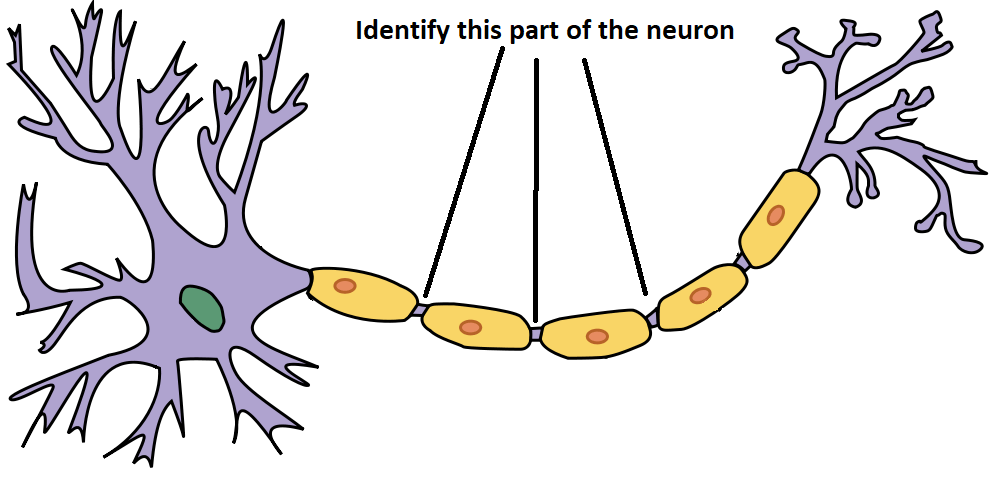
Nucleus
Cell Body
Axon
Node of Ranvier
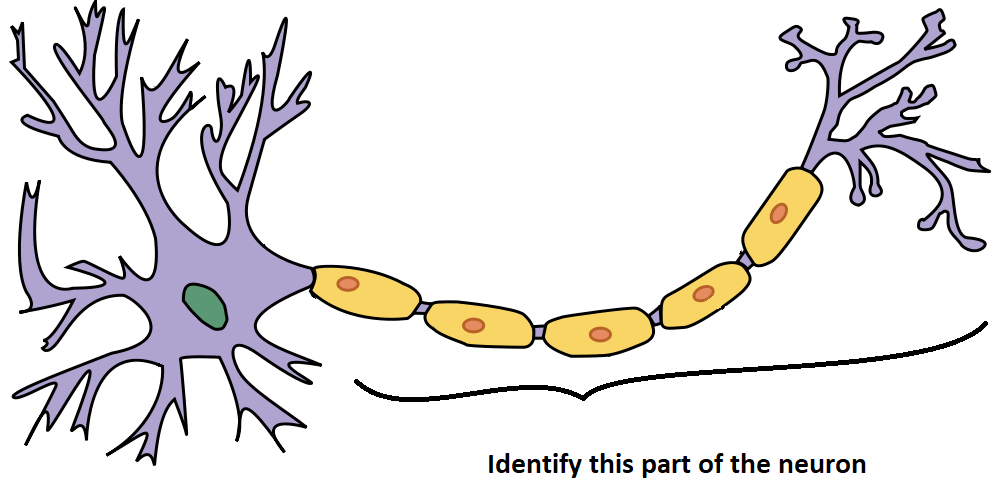
Nucleus
Cell Body
Axon
Node of Ranvier
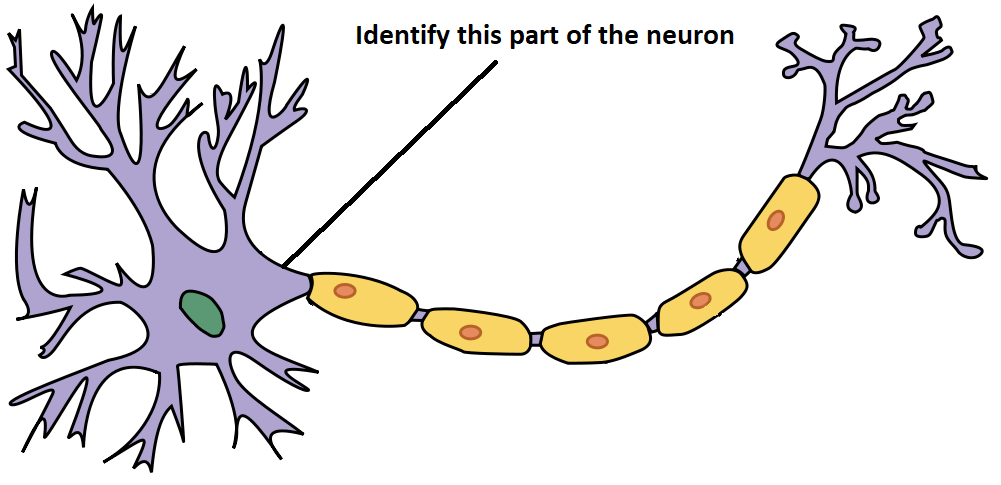
Nucleus
Cell Body
Axon
Node of Ranvier
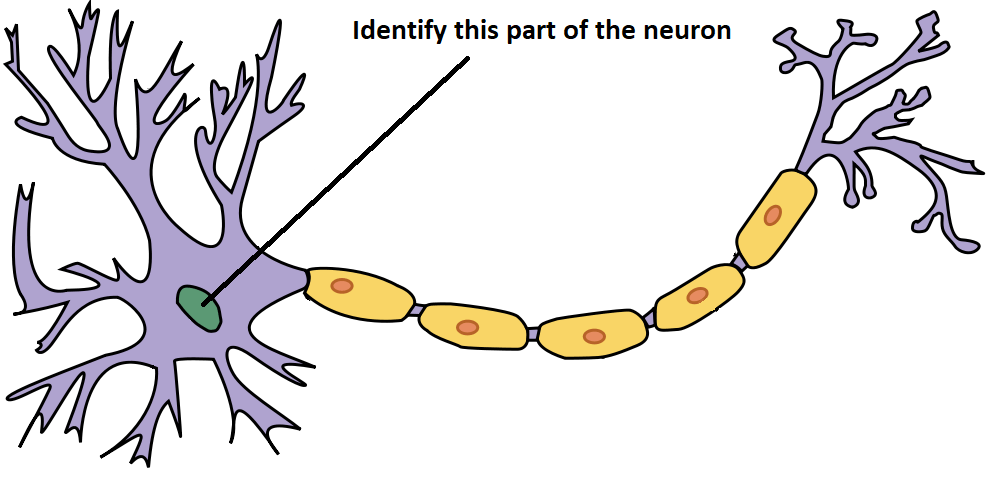
Nucleus
Cell Body
Axon
Node of Ranvier
A neuron that is polarized, stable, and waiting to fire/engage.
Action Potential
Stimulus
Threshold
Resting Potential
When the neuron is not conducting a nerve impulse the membrane is

