
 Worksheets
French Versification
Total questions: 136
Worksheet time: 2hrs 16mins

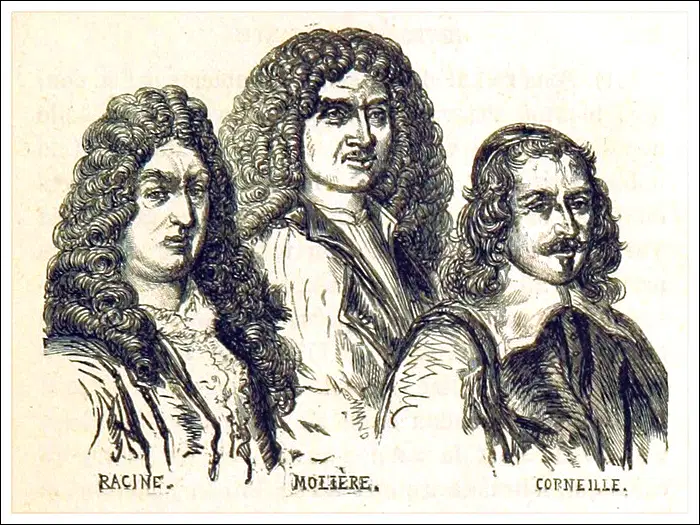
The three greatest playwrights of seventeenth-century France—and perhaps of all French literature—are generally considered to be Pierre _________ (1606–84), _______ (d.1673), and ____-________ ______ (1639–99).
(a)

______ Corneille (____–__) is regarded as one of the three great playwrights of seventeenth-century France. Among the chiefest of his works lie __ ___ (____) and ______ (____).
(a)
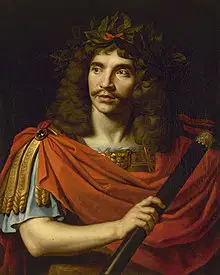
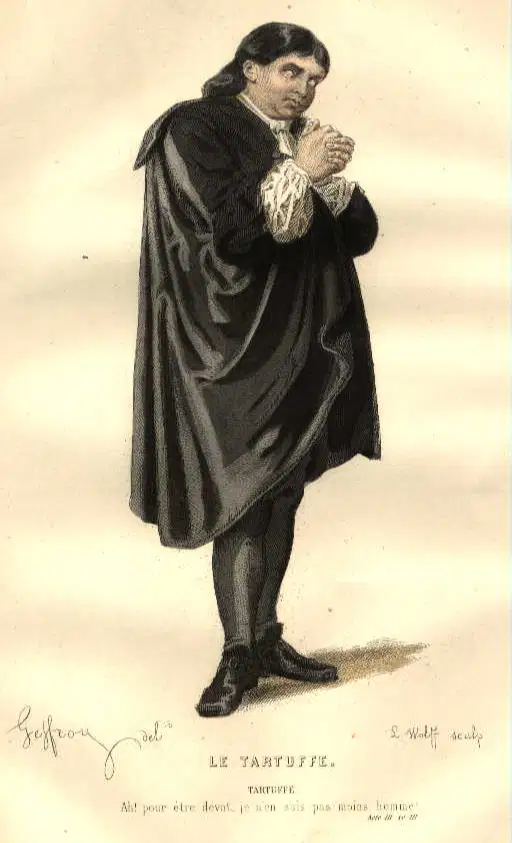
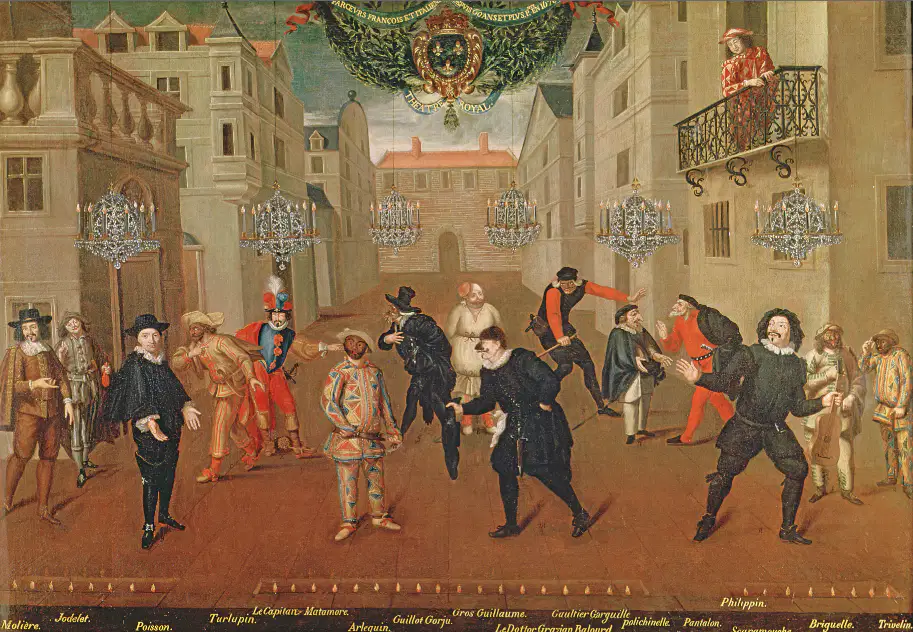
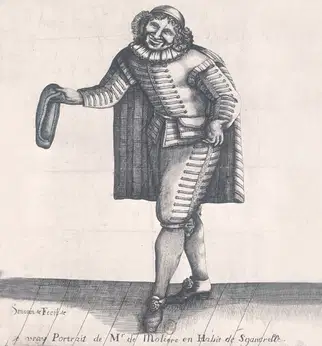
Molière (d.____) is widely regarded as the greatest French playwright to have lived. Among the chiefest of his works lie Le ________ (1664), Le ___________ (1666), and Le _________ ____ilhomme (1670).
(a)
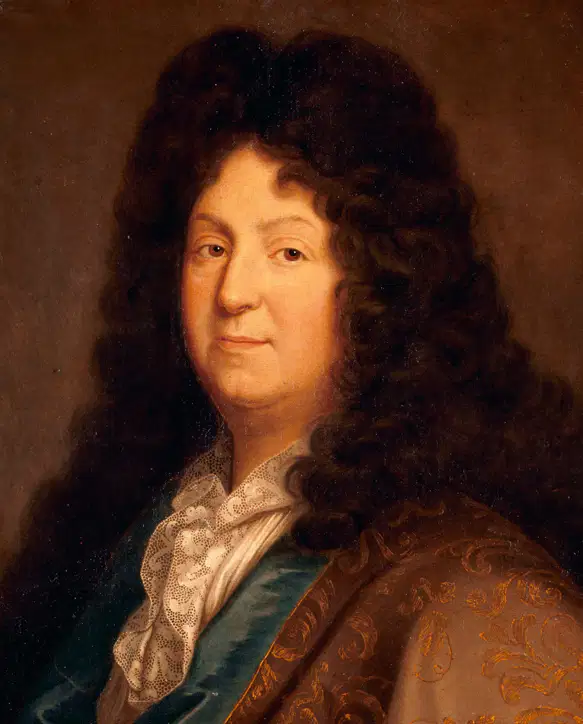
Jean-Baptiste Racine (____–__) is regarded as one of the three great playwrights of seventeenth-century France. Among the chiefest of his works lie __________ (1667), ___________ (1669), and ________ (1670).
(a)
preliminary concepts (the epistemic foundations on which further knowledge can be acquired)
(a)

In French, lines of poetic composition are referred to as ‘____’, rather than ‘______’. A stanza is referred to as a ‘_______’.
(a)
(of poetry) line
(a)
(of poetry) stanza
(a)
French is a ________, rather than _________, language. Hence, a line of verse is measured by the number of _______ ________s it contains.
(a)

Vocalic syllables are ________s composed of ___ _____ _____ each.
(a)

syllable
(a)
vocalic, of or pertaining to vowels
(a)

that is, in other words
(a)
vowel
(a)

consonant
(a)

consonantal, of or pertaining to consonants
(a)

In French, the number of ________s in a line of verse is called the _____, which can be translated as either ‘__ ________’ or ‘__ _____’.
(a)

(of poetry) metre
(a)
(of poetry) metre
(a)
In spoken French, the ______ ‘_’ is never pronounced. This is known as ‘___________’.
(a)
In poetic French, the ______ ‘_’ is pronounced in certain cases, especially in the ‘_’, ‘__’, or ‘___’ forms.
(a)

(of language) spoken, current
(a)

(of French) the silent 'e'
(a)
the omission of a sound or syllable when speaking
(a)

(of a word) written form, spelling
(a)

In French versification, a ______ ‘_’ at the end of a line never counts as a ________. This is called an ‘_______’.
(a)

apocope, the omission of an 'e' as a syllable at the end of a line of verse
(a)

Within a line of verse, the ______ ‘_’ counts as a ________, unless it is followed by another _____ or a ______ ‘_’.
(a)

(of French) the silent 'h'
(a)

Put simply, the ______ ‘_’ is pronounced in a line of verse when it is followed by a _________, or when it takes the form ‘__’ or ‘___’.
(a)

Of how many syllables is this line of verse composed?
‘Où tendent tous les fronts qui pensent et qui rêvent.’
(a)
The ‘_’ within a single word is sometimes elided when it is preceded by a _____ and followed by a _________ which also has a _____ _____ attached to it. This is called a ‘_______’. So, ‘je ne t’envierai pas’ would be syllabised as ‘je / ne / t’en / vie / rai / pas’, as the ‘e’ is preceded by a vowel sound (‘vi’), and followed by a consonant which also has vowel sounds attached to it (‘rai’).
(a)

The ‘e’ within a single word is sometimes elided when it is preceded by a vowel and followed by a consonant which also has a vowel sound attached to it. This is called a ‘syncope’. So, ‘je ne t’envierai pas’ would be syllabised as ‘je / ne / t’en / vie / rai / pas’, as the ‘_’ is preceded by a _____ sound (‘__’), and followed by a _________ which also has _____ sounds attached to it (‘___’).
(a)
syncope, the elision of an 'e' by the vowel that precedes it
(a)

Express the dilemma which necessitates syncope within a word, and how the word is syncopated to solve this dilemma:
_____ / ‘_’ / _________ / _____ -> _____ + ‘_’ / _________ + _____
(a)
Of how many syllables is this line of verse composed?
‘Je ne t’envierai pas ce beau titre d’honneur.’
(a)
to elide, omit a vowel sound when speaking
(a)

(a) : the diacritical separation of two contiguous vowel sounds in a written word, using the marks ä/ë/ï/ö/ü.

diaeresis: the ___________ __________ of two contiguous vowel sounds in a _______ word, using the marks _/_/_/_/_.
(a)
diaeresis, the diacritical separation of two contiguous vowel sounds in a written word
(a)

adjacent, contiguous
(a)
(a) : the fusion of two contiguous vowel sounds into one diphthong, or complex vowel sound, in a word, as seen with the ‘o’ and the ‘i’ in ‘oiseau’.
syneresis: the ______ of two contiguous _____ sounds into one _________, or _______ _____ sound, in a word, as seen with the ‘_’ and the ‘_’ in ‘oiseau’.
(a)
syneresis, the fusion of two contiguous vowel sounds in a word into a diphthong
(a)
(a) : the natural separation of two contiguous vowel sounds in a spoken word, as seen with the ‘i’ and the ‘a’ in ‘hiatus’.
hiatus: the _______ __________ of two contiguous vowel sounds in a ______ word, as seen with the ‘_’ and the ‘_’ in ‘______’.
(a)

hiatus, the natural separation of two contiguous vowel sounds in a spoken word
(a)
In French, a line of verse is measured by the number of _______ ________s, or syllables composed of one vowel sound each. The number of _______ ________s measured is called the _____.
(a)
(a) : of or relating to a line of verse composed of four vocalic syllables.

(of poetry) line of four syllables
(a)

(of a line) composed of four syllables
(a)

(of a poem) composed of lines of four syllables
(a)

(a) : of or relating to a line of verse composed of five vocalic syllables.

(of poetry) line of five syllables
(a)

(of a line) composed of five syllables
(a)

(of a poem) composed of lines of five syllables
(a)
(a) : of or relating to a line of verse composed of six vocalic syllables.
(of poetry) line of six syllables
(a)

(of a line) composed of six syllables
(a)
(of a poem) composed of lines of six syllables
(a)
(a) : of or relating to a line of verse composed of seven vocalic syllables.
(of poetry) line of seven syllables
(a)
(of a line) composed of seven syllables
(a)
(of a poem) composed of lines of seven syllables
(a)

(a) : of or relating to a line of verse composed of eight vocalic syllables.

(of poetry) line of eight syllables
(a)

(of a line) composed of eight syllables
(a)
(of a poem) composed of lines of eight syllables
(a)
(a) : of or relating to a line of verse composed of nine vocalic syllables.
(of poetry) line of nine syllables
(a)

(of a line) composed of nine syllables
(a)
(of a poem) composed of lines of nine syllables
(a)

(a) : of or relating to a line of verse composed of ten vocalic syllables.

(of poetry) line of ten syllables
(a)

(of a line) composed of ten syllables
(a)

(of a poem) composed of lines of ten syllables
(a)

(a) : of or relating to a line of verse composed of eleven vocalic syllables.

(of poetry) line of eleven syllables
(a)

(of a line) composed of eleven syllables
(a)

(of a poem) composed of lines of eleven syllables
(a)

(a) : a line of verse composed of twelve vocalic syllables, often with a caesura after the sixth, dividing the line into two hemistichs.
alexandrine: a line of verse composed of ______ vocalic syllables, often with a _______ after the _____, dividing the line into two ____syllabic _________s.
(a)

(of poetry) line of twelve syllables
(a)
(of a poem) composed of lines of twelve syllables
(a)
(a) : half a line of verse, divided by a medial caesura.
hemistich: ____ a line of verse, divided by a ______ _______.
(a)
(of poetry) half a line of verse
(a)

A caesura is a _____ or breathing-place about the ______ of a metrical line, generally indicated by ___________. When a caesura falls exactly in the ______ of a line, it is considered ‘______’.
(a)

(of poetry) caesura
(a)

(of poetry) medial caesura
(a)

When a line of verse ends in punctuation, this is known as an ___-____; where it does not, this is called an ___________.
(a)

(of poetry) end-stop
(a)
(of poetry) enjambement
(a)
On occasion, one or more lines in a metrical composition may either lack a syllable or take on an extra one. If a line lacks a _______ ________ in relation to its standard metre, it is considered __________, or an example of _________.
(a)
(of a line) catalectic, lacking a syllable in relation to its standard metre
(a)

catalexis, the incompleteness of a metrical line
(a)
On occasion, one or more lines in a metrical composition may either lack a ________ or take on an extra one. If a line contains one vocalic syllable too many in relation to its standard metre, it is considered _______________, or an example of ______________.
(a)

(of a line) hypercatalectic, containing one syllable too many in relation to its standard metre
(a)
hypercatalexis, the overcompleteness of a metrical line
(a)
In French, different forms of _____ are distinguished by the ways in which the _____s are ____ ___ on the ____ and _________ between lines.
(a)
rhyme
(a)
formatted, laid out
(a)
In English, the rhyme scheme ‘AAAA…’ is referred to as _________, known in French as ‘_____ _________’.
(a)
monorhyme (‘AAAA…’)
(a)

In English, the rhyme scheme ‘AABB…’ is referred to as the _______, known in French as ‘_____ ______’.
(a)
couplet (‘AABB…’)
(a)
In English, the rhyme scheme ‘ABAB…’ is referred to as an _________ _____, known in French as ‘_____ ________’.
(a)
alternate rhyme (‘ABAB…’)
(a)

In English, the rhyme scheme ‘ABBA…’ is referred to as an ________ _____, known in French as ‘_____ __________’.
(a)
enclosed rhyme (‘ABBA…’)
(a)
In French, the rhyme scheme ‘ABCABC…’ is known as ‘_____ _________’.
(a)
(in poetry) a rhyme following the scheme ‘ABCABC…’
(a)

In French, the rhyme scheme ‘AABCCBDDB…’ is known as ‘_____ ___________’.
(a)
(in poetry) a rhyme following the scheme ‘AABCCBDDB…’
(a)
In French, the rhyme scheme ‘AAABCCCBDDDB…’ is known as ‘_____ ______________’.
(a)

(in poetry) a rhyme following the scheme ‘AAABCCCBDDDB…’
(a)
In ‘rimes tripartites’ and ‘rimes quadripartites’, each ________ of either two (__, __…) or three (___, ___…) rhymes is rounded off by a sort of rhyme resemblant of a _______ (_), which completes the _____nce and forms ‘tripartite’ (three-part) or ‘quadripartite’ (four-part) blocks.
(a)
three-part
(a)
four-part
(a)
In French, a feminine rhyme—referred to as a ‘____ ________’—occurs when the rhyming words end in a ______ ‘_’, and are therefore ________. In all other cases, the rhyme is deemed ‘______ine’.
(a)
feminine rhyme, a rhyme in which the words are apocopic
(a)
masculine rhyme, a rhyme in which the words are not apocopic
(a)

(of a word) apocopic, coming at the end of a line of verse and ending in a silent ‘e’
(a)
In French, rhymes ending in ‘_’, ‘_’, or ‘_’ are referred to as ______ rhymes, even if the rhyming words in question are not ______ nouns, such as ‘__ ____’. In all other cases, the rhyme is deemed ‘________’.
(a)
plural rhyme, a rhyme in which the words end in 's', 'x', or 'z'
(a)
singular rhyme, a rhyme in which the words do not end in 's', 'x', or 'z'
(a)
In French, ______ rhymes (ending in ‘_’, ‘_’, or ‘_’) must always rhyme with plural rhymes, and ________ rhymes with singular rhymes. Thus, ‘__ ____’ and ‘____’ are not considered as rhyming.
(a)
In French, the ‘______’ of a rhyme is judged in accordance with the number of _____s that _____.
(a)

wealth (of a rhyme)
(a)

In French, a rhyme in which only the last __________ _____ of each word rhymes is referred to as a ‘____ ______’. Consider, for example, ‘_____’ and ‘___’.
(a)

poor rhyme, a rhyme in which only the last pronounced vowel of each word rhymes
(a)
In French, a rhyme in which the last pronounced _____ of each word and the _________ that either ________ or succeeds it rhyme is referred to as a ‘____ __________’. Consider, for example, ‘cheval’ and ‘banal’.
(a)
sufficient rhyme, a rhyme in which the last pronounced vowel of each word and the consonant that either precedes or succeeds it rhyme
(a)

In French, a rhyme in which _____ sounds—_____s or _________s—in each word rhyme is referred to as a ‘____ _____’. Consider, for example, ‘banal’ and ‘______’.
(a)
rich rhyme, a rhyme in which three or more sounds in each word rhyme
(a)

(of water) channel
(a)

