
 Worksheets
Respiratory system
Total questions: 24
Worksheet time: 15mins

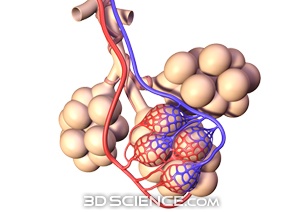
Gas exchange takes place in structures called:
Alveoli
Pulmonary Phalanges
Uvula
VanDer Moof Sacs

Gas exchange in the lungs happened primarily by the process of:
Diffusion
Endocytosis
Apoptosis
Mycellium

The diaphragm contracts during
Inhalation
Exhalation

Air is drawn into the lungs because:
of the contraction of the diaphragm
of the expansion of the thoracic cavity
of the relaxation of the diaphragm
of the reduction of the thoracic cavity

The brain knows we need to breathe faster by monintoring the amount of _____ in blood.
CO2
O2
Glucose
Lactic Acid

Sound is made when air passes over flaps of cartilage in the
Trachea
Pharynx
Larynx
Glottis

Inhalation happens because:
the pressure of the thoracic cavity increases
the pressure of the thoracic cavity decreases
the volume of the thoracic cavity decreases
the volume of the thoracic cavity increases

Small branches of tubes that pass through the lungs are called:
Pulomonary Phalanges
Bronchi
Bronchioles
Capillaries
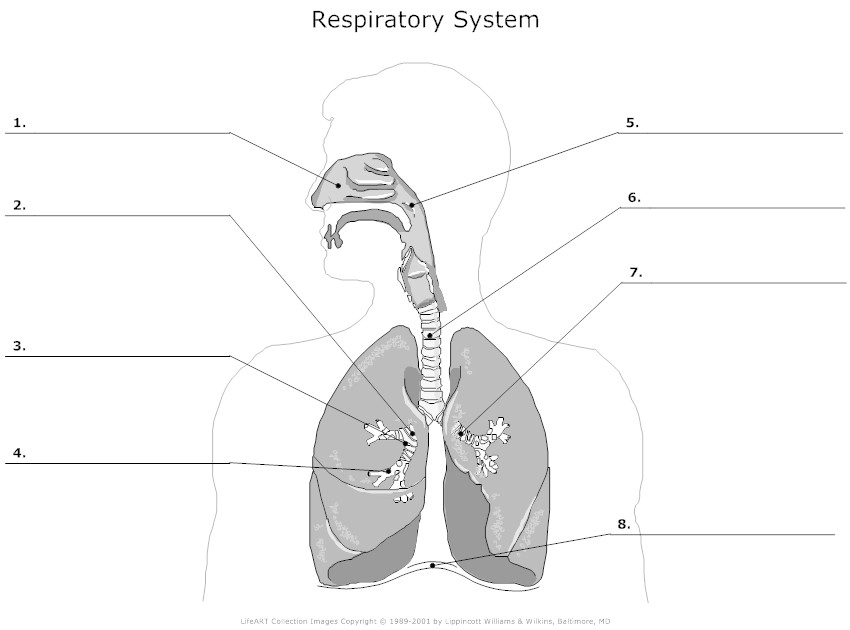
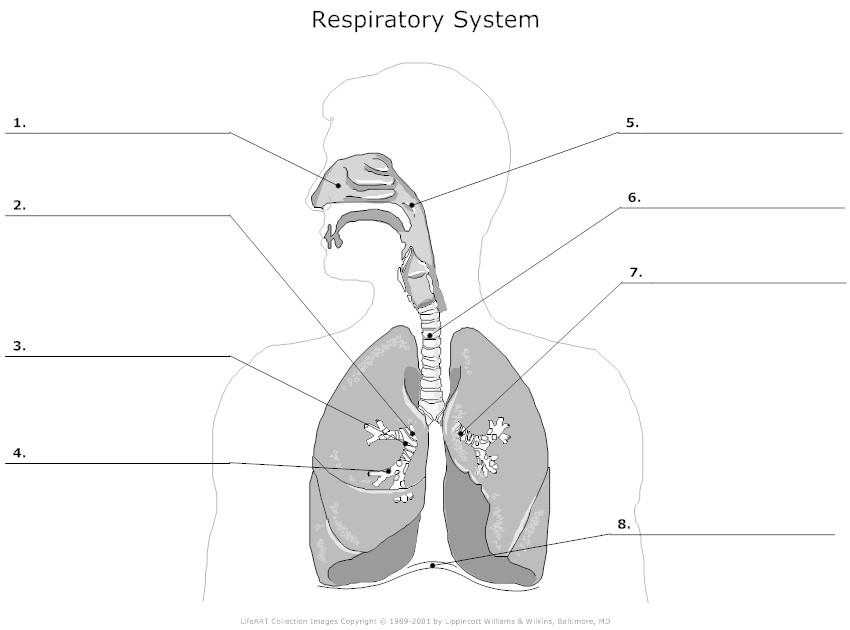
1. larynx
2. nasal cavity
3. pharynx
4. trachea
Which of the following is the correct order that air would flow during inhalation.

What keeps your bronchi and bronchiole tubes open?
cartilage rings
ligament squares
ciliated cells
muscle
Gaseous exchange happens because of...
Osmosis
Respiration
Diffusion
Semi-permeable membranes
Which structures filter and moisten air as it passes through the human respiratory system?
cilia and mucous membranes
alveoli and cartilage rings
diaphragm and bronchioles
epiglottis and bronchi
Which respiratory structure is supported by rings of cartilage?
trachea
alveolus
bronchiole
pharynx

The diagram below represents a demonstration of the breathing process in humans. The balloons represent lungs.
The change in the balloons is brought about by
a change in air composition outside the bell jar
a change in air pressure inside the bell jar
an expansion of the balloons, which pulls the rubber sheet into the bell jar
a contraction of the balloons, which forces air into the bell jar

