
Font size
 Worksheets
7.12AB Energy and Matter in Ecosystems Review
Total questions: 31
Worksheet time: 17mins

In this model, which group of consumers is likely to obtain the most energy from the producers?
producers
primary consumers
secondary consumers
tertiary consumers
decomposers
In this model, how much energy will the tertiary consumers receive directly from the producers?
100%
10%
0%
0.1%
Of all the energy present in the producer level, how much energy will the tertiary consumers eventually receive?
100%
10%
0%
0.1%
In an ecosystem, if a producer has 1000 J of energy, what typically happens to this energy as it moves through the food chain?
All of the energy is transferred to primary consumers.
Approximately 10% of the energy is transferred to primary consumers, while the rest is lost as heat.
About 90% of the energy is transferred to primary consumers, with 10% lost as heat.
All of the energy is lost as heat to the environment.

Examine the food web model. Select all organisms that are secondary consumers through at least one food chain.
grasshopper
fox
bird
snake
Examine the food web model. Select all organisms that are tertiary consumers through at least one food chain.
owl
fox
hawk
snake

Which statements are true about trophic levels in an ecosystem?
Half of the energy in each level is passed on to the next level.
Energy is transferred from organisms in one level to those in the level above.
Energy is transferred down each level of the energy pyramid.
Only a small amount of energy is passed on to the next level.
Most of the energy in each level is used up by organisms for life processes.
TRUE or FALSE: Most of the energy in each trophic level is destroyed.
TRUE
FALSE
TRUE or FALSE: Eventually, all the energy is recycled back to the producers.
TRUE
FALSE
Which type of energy transformation occurs in photosynthesis?
Chemical to thermal
Radiant to chemical
Thermal to radiant
Chemical to radiant
What is the main type of energy transformation that occurs in animals as they do their life processes?
Chemical to radiant
Radiant to thermal
Chemical to thermal
Thermal to chemical

Where would decomposers fit in the energy pyramid?
At the very top because they receive the least amount of energy.
At the very bottom because they receive the most energy.
At all levels because they get energy from the remains and waste from all levels.
Between the producers and consumers because they pass energy between them.
TRUE or FALSE: Matter is recycled in ecosystems.
TRUE
FALSE
TRUE or FALSE: Energy is recycled in ecosystems.
TRUE
FALSE
TRUE or FALSE: Energy is conserved in ecosystems.
TRUE
FALSE
Where do animals get the carbon they need for their life processes?
Animals get carbon from the air they breathe.
Animals get carbon from the food they consume.
Animals produce carbon through photosynthesis.
Animals absorb carbon from water sources.
How do matter and energy flow differently?
Energy flows in one direction, matter is recycled
Matter flows in one direction, Energy is recycled
Energy and Matter are both recycled
Energy and Matter both flow in one direction

Where do plants get the carbon they need for their life processes?
Plants absorb carbon from soil nutrients.
Plants generate carbon through photosynthesis.
Plants obtain carbon from water during transpiration.
Plants get carbon from carbon dioxide in the atmosphere.
What converts nitrogen gas into a usable form for plants and animals?
bacteria
rain
fungi
car exhaust
Organisms that need nitrogen to survive.
only plants
only animals
only bacteria
all living things
How is nitrogen "fixed" into a usable form for plants?
Through action of bacteria only
Through lightning only
Through action of bacteria and lightning
Through photosynthesis
How do animals get the nitrogen they need?
From the air they breathe
From the water they drink
From the food they eat
From the sun
Gas that makes up 78% of our atmosphere.
Oxygen
Nitrogen
Hydrogen
Carbon Dioxide
What is the process of combining nitrogen gas with other elements to make nitrogen into usable compounds?
nitrogen composition
nitrogen fixation
ammonia
denitrification
Plants and animals cannot use nitrogen directly from the air.
True
False
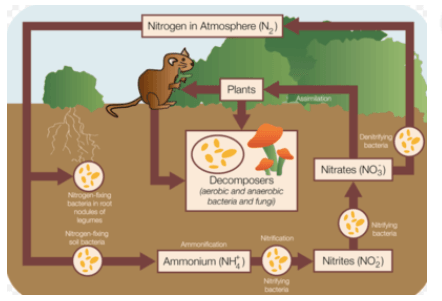
A correct path that nitrogen could take would be
air -> animals -> plants -> bacteria
animals -> air -> bacteria -> plants
bacteria -> air -> plants -> animals
air -> bacteria -> plants -> animals
Bacteria create a form of nitrogen that animals can use directly.
True
False
Bacteria fix nitrogen from the atmosphere into a form plants can use.
True
False
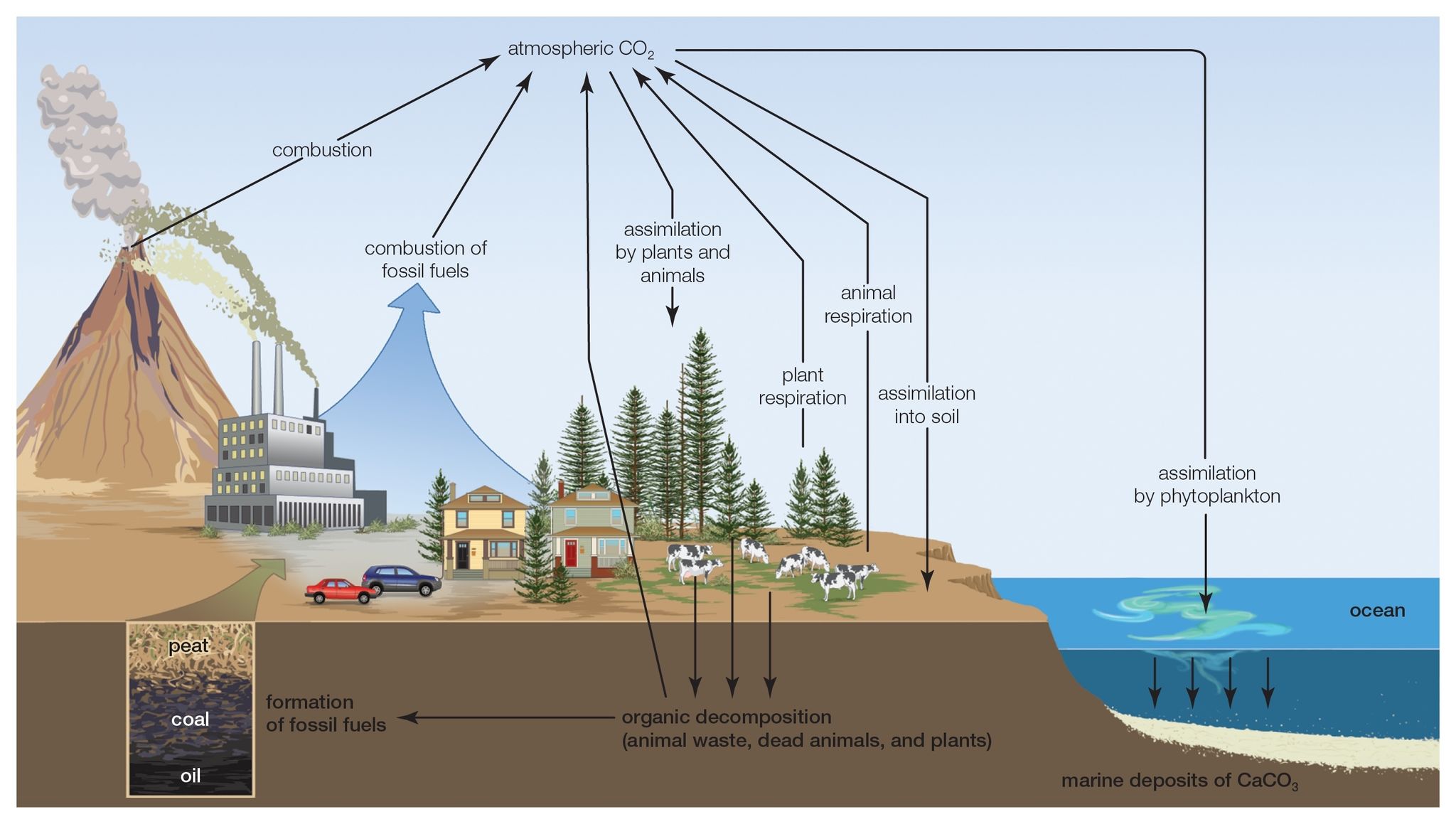
Which of the following add carbon dioxide to the atmosphere?
volcanoes
combustion of fossil fuels
animal and plant respiration
all of these
Plants use the process of photosynthesis to turn carbon dioxide from the air and water absorbed by their roots into _____.
Select all answers that would correctly complete the statement.
sugar
food
carbon compounds
chemical energy

Which process takes carbon dioxide out of the atmosphere?
respiration
combustion
decomposition
photosynthesis

