
NEW
Font size
 Worksheets
Grade 8 Science - EOY Practice test #1
Total questions: 15
Worksheet time: 8mins
Janice is learning about compounds. Which of the following best describes a compound?
a substance made up purely of one element
a group of substances that are either acids or bases
a group of substances that can be separated by a physical change
a substance made up of two or more elements that are chemically combined
Scientific theories are developed over time in all areas of science. Which statement best describes scientific theories?
They are based on scientific laws that came first.
They are pieces of scientific evidence that support a hypothesis.
They are explanations of scientific events that may change based on continuous research.
They are predictions of events that usually remain constant because scientific ideas rarely change.

Many interactions occur between the biosphere and the atmosphere. One of these interactions results in changes in atmospheric carbon dioxide (CO2) levels. The graph above shows these changes over a two‑year period. Which of the following changes in the biosphere most likely caused these changes in the atmospheric CO2 levels?
Streams froze in the winter and melted in the spring.
Plants grew leaves in the spring and lost leaves in the fall.
Offspring were born in the summer and matured in the fall.
Soil dried out in the summer and absorbed moisture in the winter.
Jordan adds some soil and plants to a large glass jar to build a terrarium. He waters the plants and then adds two snails, two crickets, and an earthworm to the jar. Jordan then places the lid tightly on the jar and sets it on a sunny windowsill. Based on the law of conservation of mass, which of the following is expected to occur inside Jordan’s terrarium?
The mass will increase as the plants grow and decrease when the snails eat the plants.
The mass will increase as the earthworm digests the soil.
The mass will decrease when the crickets die.
The mass will neither increase nor decrease.
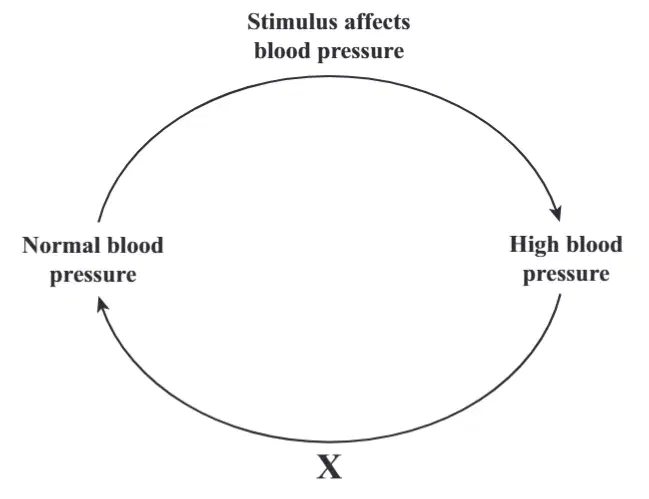
Human body systems interact to keep blood pressure within a normal range. The diagram represents this interaction. Which of the following best describes what is occurring in part X of the diagram?
A) Respiration remains high as other body systems work with the circulatory system.
B) Blood pressure is regulated as the circulatory system shuts down other body systems.
C) Blood pressure remains high as the circulatory system shuts down other body systems.
D) Homeostasis is maintained as the other body systems work with the circulatory system.
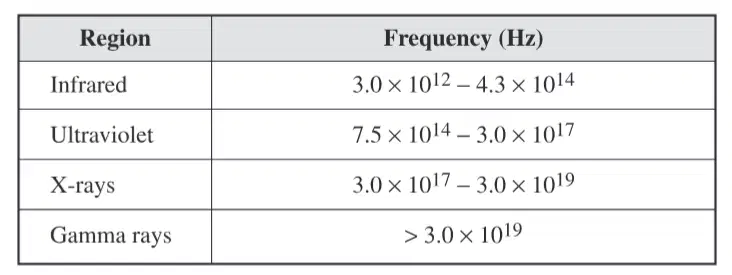
The table shows the range of frequencies, in Hertz (Hz), for part of the electromagnetic spectrum.
Which of the following types of radiation has the longest wavelength?
A. Infrared
B. Ultraviolet
C. X-rays
D. Gamma rays
An astronomer observes a sunspot. Which of the following describes this feature of the Sun?
a location where heat rises to the Sun’s surface
a location that produces most of the Sun’s heat energy
a location that is cooler than other parts of the Sun’s surface
a location where energy and matter leave the Sun’s atmosphere
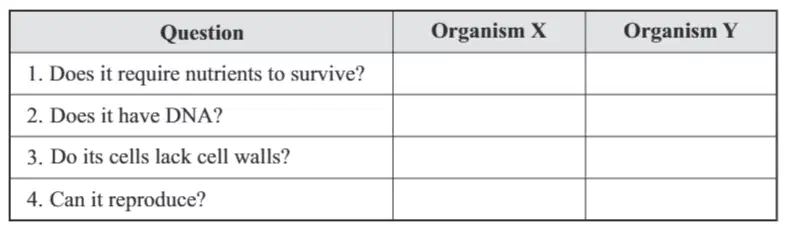
Ricky wants to finish constructing a chart that helps classify two organisms. The chart is shown here.
Accurately answering which question would best help distinguish these organisms as members of the animal kingdom rather than the plant or fungi kingdom?
1
2
3
4
Atoms are made up of subatomic particles, including neutrons. Which of the following describes a neutron?
has a greater volume than the electron cloud
has more mass than the nucleus
has no charge
has no mass
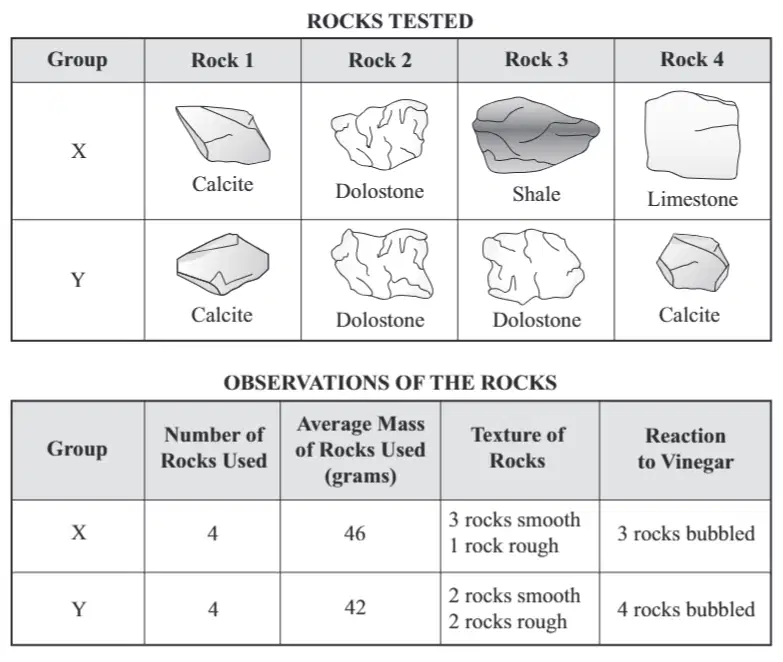
Two groups of students hypothesized that rocks on Earth’s surface are damaged by acid rain.
● Group X tested the hypothesis by examining the properties of some rocks and pouring a weak acid, vinegar, on each of the rocks.
● Group Y later repeated the same procedure with a different group of rocks.
The rocks used for the investigations and the results from each student group are shown below.
Which of the following best describes an advantage Group X has over Group Y in supporting the hypothesis?
A. Group X tested the rocks before Group Y did.
B. Group X tested more rocks that are smoother.
C. Group X tested rocks with a greater average mass.
D. Group X tested a greater variety of rocks than Group Y did.
Mandy applies the brakes on her bicycle and stops quickly to avoid hitting a basketball that bounces into the street. Which of the following best explains what happens to the bicycle’s kinetic energy?
A. It increases because the tires make a screeching noise.
B. It is destroyed because Mandy stops the bicycle quickly.
C. It remains the same because Mandy is the source of energy.
D. It is transformed to heat because the tires are slowed by friction.
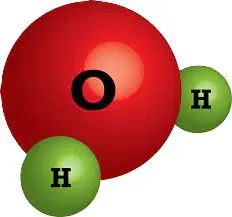
How many atoms of Hydrogen are in this compound?
1
2
3
4

This picture represents which of the following?
element
compound

A copper penny turning greenish after a few years is an example of ...
Chemical Change
Physical Change
Which of the following best describes the process of photosynthesis in plants?
A. It converts carbon dioxide and water into glucose and oxygen using sunlight.
B. It breaks down glucose into carbon dioxide and water, releasing energy.
D. It transforms sunlight into chemical energy stored in proteins.
C. It absorbs oxygen and releases carbon dioxide as a waste product.

