
NEW
Font size
 Worksheets
NAFS MOCK TEST (WEEK 1) - Science 6
Total questions: 20
Worksheet time: 20mins
What is the process by which plants convert sunlight into energy?
Sunpower
Photosynthesis
Solarization
Chlorophyll
Which type of rock is formed from the cooling and solidification of magma or lava?
Sedimentary rock
Volcanic rock
Igneous rock
Metamorphic rock
What type of reaction occurs when two or more substances combine to form a new substance?
Physical reaction
Biological reaction
Nuclear reaction
Chemical reaction
A type of passive transport that moves particles from high concentration to low concentration.
Endocytosis
Osmosis
Diffusion
Exocytosis

Which organelle is known as the powerhouse of the cell?
Mitochondria
Endoplasmic reticulum
Golgi apparatus
Ribosomes
What is the basic unit of structure and function in living things?
Atom
Gene
Molecule
Cell
How are unicellular organisms different from multicellular organisms?
They are only classified as prokaryotes.
There are no differences.
They are made of many cells.
They are made of only one cell.
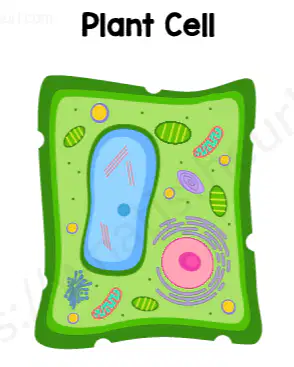
Plant cells have these to provide support for plants, since plants don't have bones.
Nucleus
Cell membranes
Cell walls
Cytoplasm
What organ system that moves blood, gases, and nutrients throughout the body?
Circulatory system
Nervous system
Respiratory system
Digestive system
It is the process of moving particles without using cell's energy.
Exocytosis
Passive Transport
Homeostasis
Cellular Respiration
It is the control center for the entire body that sends signals from throughout the body to the brain.
Nervous system
Excretory system
Circulatory system
Muscular system
What is the term for the organ system that provides oxygen to the blood and removes carbon dioxide from the blood?
Nervous system
Muscular system
Respiratory system
Digestive system
Using oxygen to produce energy from food (sugar/glucose) molecules.
Cellular Respiration
Active Transport
Photosynthesis
Passive Transport
What is the term for the organ system that remove excess water and filter waste from the body?
Muscular system
Excretory system
Digestive system
Circulatory system
How is the life cycle of a frog similar to the life cycle of a beetle? Both life cycles ---
Take place in the water
Begin with an egg
Have adults with wings
Include a nymph stage
What is the process by which traits are passed from parents to offspring?
Mutation
Evolution
Inheritance
Photosynthesis
What is the function of a chloroplast?
Allows materials in and out of the cell
Makes proteins for animal cells
Provide structure and support
Absorbs sunlight for photosynthesis
Which of the following is directly involved in the transportation of materials inside/within the cell?
Golgi Apparatus
Ribosomes
Endoplasmic Reticulum (ER)
Mitochondria
What is the force that resists or opposes the motion of one surface sliding over another?
Acceleration
Attraction
Slipperiness
Friction
According to Newton's first law of motion, an object at rest will remain at rest unless acted upon by what?
External force
Internal force
Friction
Gravity

