wayground logo

Free Printable Worksheets

NEW

Font size

S
M
L
XL
Worksheets

Review Chemistry Exam- Core Science M2

Total questions: 60

Worksheet time: 51mins

Name
Class
Date
1.

A change in the form of a substance that does not change its identity is referred to as a...

a)

Physical property

b)

Chemical property

c)

Physical change

d)

Chemical change

2.

A characteristic that can be observed or measured such as color, state, or hardness is referred to as a...

a)

Physical property

b)

Chemical property

c)

Physical change

d)

Chemical change

3.

Which of the following is NOT an example of a physical change?

a)
b)
c)
d)
4.
Which of the following terms identifies the change from a liquid to gas?
a)
Vaporization
b)
Condensation
c)
Deposition
d)
Sublimation
5.
Evidence of Chemical Change.
a)
New Substance 
b)
Size change
c)
State change
d)
Mixture 
6.
Iron rusts.
a)
Chemical change
b)
Physical Change
7.
Pancakes cooking on a griddle
a)
Chemical Change
b)
Physical Change
8.

A change in the size, shape, or state of matter.

a)

chemical change

b)

physical change

9.

What is the atomic number?

a)

the number of protons in the nucleus

b)

the number of protons and neutrons in the nucleus

c)

the number of neutrons in the nucleus

d)

the number of protons in the energy levels

10.

What is the mass number?

a)

the number of protons in the nucleus

b)

the number of protons and neutrons in the nucleus

c)

the number of neutrons in the nucleus

d)

the number of protons and electrons in the atom

11.
Most of the mass in an atom is made up of _____________________?
a)
protons and electrons
b)
protons and neutrons
c)
neutrons and electrons
d)
electrons and quarks
12.
What subatomic particles would you find in the nucleus of an atom?
a)
Protons only
b)
Protons and Neutrons
c)
Neutrons and Electrons
d)
Protons and Electrons 
13.

Which subatomic particle is labeled "a" in the diagram?

a)

proton

b)

neutron

c)

electron

d)

orbital

14.

Periods tell us the number of _________ that an atom has.

a)

valence electrons

b)

energy levels

15.

Groups tell us the number of ___________ that an atom has.

a)

valence electrons

b)

energy levels

16.

What period is Argon in?

a)

3

b)

18

c)

8

17.
Name group 1 on the periodic table.
a)
alkali metals
b)
alkaline earth metals
c)
noble gases
noble gases
d)
halogens
18.
Name group 2 on the periodic table.
a)
alkali metals
b)
alkaline earth metals
c)
noble gases
d)
transition metals
19.
Name groups 3 - 12 on the periodic table.
a)
noble gases
b)
halogens
c)
metalloids
d)
transition metals
20.
Name group 17 on the periodic table.
a)
transition metals
b)
metalloids
c)
halogens
d)
alkali metals
21.
Which group has the most reactive nonmetals?
a)
alkali metals
b)
noble gases
c)
metalloids
d)
halogens
22.
Name the group that contains inert (nonreactive) elements.
a)
noble gases
b)
halogens
c)
alkali metals
d)
alkaline earth metals
23.

A group of atoms joined together in a particular way are called?

a)

atoms

b)

reactants

c)

molecules

d)

ions

24.

The outer shell of an atom is usually where valence electrons can be found.

a)

True

b)

False

c)

Neither True or False

d)

I don't know

25.

An example of an ionic bond would be.....?

a)

CH4

b)

NaCl

c)

H2O

d)

CO2

26.

Which type of bond combines a metal atom with a non-metal atom?

a)

Covalent

b)

Metallic

c)

Ionic

d)

None of the above

27.

The ________________________________ elements would be found on the right side of the periodic table behind the stair steps.

a)

non-metal

b)

metal

c)

metalloids

d)

None of the above

28.

An example of a chemical reaction would be.....

a)

Frying an egg

b)

Ice melting into liquid water

c)

Water freezing into ice

d)

None of the above

29.

How many electrons are in a triple bond?

a)

3

b)

4

c)

6

d)

1

30.

How many electrons are in a single bond?

a)

1

b)

2

c)

4

d)

0

31.
What does the following ion mean 
                      S-2
a)
sulfur gains 2 electrons
b)
sulfur loses 2 electrons
c)
sulfur gains 2 protons
d)
sulfur loses 2 protons
32.
What's a valence electron?
a)
electrons in the second energy level
b)
electrons in the outermost energy level
c)
the atomic number
d)
electrons in the first level
33.
What does the following ion mean
              Na +1
a)
sodium gains an electron
b)
sodium loses an electron
c)
sodium gains a proton
d)
sodium loses a proton
34.
If an atom gains 3 electrons, what charge will it have as an ion?
a)
+3
b)
-3
c)
+5
d)
-5
35.
Anions are _______ that form ____________ ions and __________ electrons.
a)
nonmetals, positive, lose
b)
nonmetals, negative, gain
c)
metals, positive, gain
d)
metals, positive, lose
36.

Most of the elements on The Periodic Table of Elements are:

a)

the same

b)

metals

c)

nonmetals

d)

metalloids

37.

What is the chemical symbol for the element Cadmium?

a)

Ca

b)

Cm

c)

Cd

d)

Cad

38.

Cobalt has how many protons, neutrons, and electrons?

a)

27 protons, 31 neutrons, 27 electrons

b)

27 protons, 32 neutrons, 28 electrons

c)

27 protons, 32 neutrons, 27 electrons

d)

27 neutrons, 32 protons, 27 electrons

39.
Which of the following is not a compound?
a)
HCl
b)
Cl
c)
NaCl
d)
CO2
40.
A combination of substances that are not chemically combined is called a(n)____________. 
a)
mixture
b)
compound
c)
physical
41.
An element is made up of only one kind of _____.
a)
isotope
b)
plastic
c)
atom
d)
metal
42.
_____ small particles that make up most types of matter on Earth.
a)
compounds
b)
atoms
c)
mixtures
d)
elements
43.
All mixtures are defined as "heterogeneous." 
a)
TRUE
b)
FALSE
44.
Which of these is not a mixture? 
a)
oil and water
b)
sand and soda
c)
diet soda
d)
all are mixtures
45.

This substance can be separated by physical means such as filtering, sifting, and evaporating.

a)

Mixtures

b)

Pure Substances

c)

Elements

d)

Compounds

46.
Atoms are most stable when their outer shell is complete.
a)
true
b)
false
47.
This picture represents which of the following?
a)
element
b)
compound
c)
mixture
d)

atom

48.
This picture represents which of the following?
a)
element
b)
compound
c)
mixture
d)

atom

49.

What does the 18.998 represent in this periodic table square?

a)

atomic number

b)

atomic symbol

c)

atomic mass

d)

scientific name

50.

How many electrons does this element have?

a)

20.1797

b)

10

c)

11

d)

10.1797

51.

If an atom had a mass of 20, and 5 protons, how many neutrons does it have?

a)

20

b)

5

c)

15

d)

25

52.

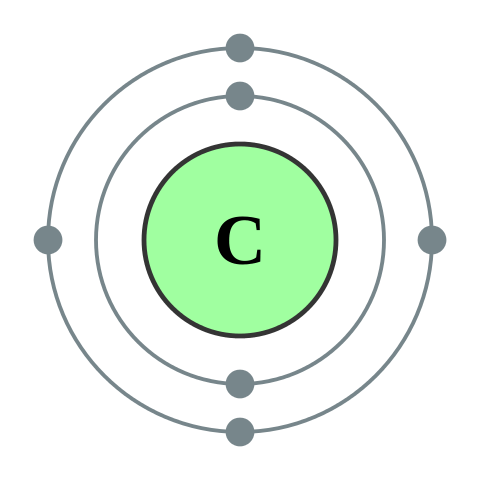
How many valence electrons does carbon have?

a)

4

b)

5

c)

6

d)

7

53.
Elements which are shiny, conduct electricity and heat are called
a)
metal
b)
nonmetal
c)
metalloid
d)
nonexistent
54.

When a substance is heated, particles will

a)

Move further apart

b)

Get larger

c)

Move closer together

d)

Be unaffected

55.

The process when a solid turns into a gas

a)

Sublimation

b)

Deposition

c)

Evaporation

d)

Melting

56.

The process when a liquid turns into a gas

a)

Evaporation

b)

Melting

c)

Condensation

d)

Deposition

57.

The process when a gas turns into a solid

a)

Deposition

b)

Weathering and Erosion

c)

Super freezing

d)

Sublimation

58.

What is the term given to the temperature at which a liquid changes to a solid?

a)

Melting point

b)

Boiling point

c)

Sublimation point

d)

Freezing point

59.

Non-metals have ____ melting and boiling points. 


a)

low

b)

high

60.

Metals have a ___ tensile strength.

a)

low

b)

high