
 Worksheets
Virtual Day 03/06/2025
Total questions: 65
Worksheet time: 51mins
What is the state of matter characterized by having a definite shape and volume?
Solid
Liquid
Gas
Plasma
Which process describes the change from a liquid to a gas?
Freezing
Condensation
Evaporation
Sublimation
According to Charles's Law, what happens to the volume of a gas when the temperature increases, assuming pressure is constant?
Volume decreases
Volume remains constant
Volume increases
Volume becomes zero
Boyle's Law states that the pressure of a gas is inversely proportional to its volume. If the volume of a gas is halved, what happens to its pressure?
Pressure is halved
Pressure doubles
Pressure remains constant
Pressure quadruples
How many atoms are in a molecule of water ( H2O )?
1
2
3
4
Which element is located in Group 1, Period 2 of the periodic table?
Hydrogen
Lithium
Sodium
Potassium
What is the main idea of atomic theory?
Atoms are indivisible and indestructible
Atoms are made of protons, neutrons, and electrons
Atoms can be created and destroyed
Atoms are the smallest unit of matter
Which of the following is a chemical change?
Melting ice
Burning wood
Dissolving sugar in water
Breaking glass
Which of the following is a physical change?
Rusting of iron
Baking a cake
Boiling water
Digesting food
Which of the following is a physical property of matter?
Flammability
Reactivity with acid
Density
Ability to rust
Explain why gases are compressible while solids are not.
Gases have more mass than solids
Gases have more space between particles
Solids have more energy than gases
Solids have more space between particles
Describe the process of sublimation and provide an example.
Solid to liquid; ice melting
Liquid to gas; water boiling
Solid to gas; dry ice sublimating
Gas to liquid; steam condensing
Apply Charles's Law to explain why a balloon expands when heated.
The pressure inside the balloon decreases
The volume of the gas increases with temperature
The number of gas molecules increases
The density of the gas decreases
Use Boyle's Law to predict what happens to a gas's volume if its pressure is increased while temperature remains constant.
Volume increases
Volume decreases
Volume remains constant
Volume becomes zero
Calculate the number of atoms in C6H12O6 .
24
18
12
6
Identify the trend in atomic radius as you move down a group in the periodic table.
Increases
Decreases
Remains constant
Fluctuates
Explain the significance of the periodic table in understanding chemical behavior.
It organizes elements by atomic mass
It predicts chemical reactions
It shows the arrangement of electrons
It groups elements with similar properties
Differentiate between a chemical and a physical change with examples.
Chemical: melting ice; Physical: burning wood
Chemical: rusting iron; Physical: dissolving sugar
Chemical: boiling water; Physical: baking a cake
Chemical: breaking glass; Physical: digesting food
Analyze why metals are good conductors of electricity.
They have free electrons
They have tightly bound electrons
They have high melting points
They have low density
Design an experiment to demonstrate the process of condensation.
Heat water until it boils
Cool steam to form water droplets
Freeze water to form ice
Dissolve salt in water
Predict the effect of increasing temperature on the solubility of a gas in a liquid.
Solubility increases
Solubility decreases
Solubility remains constant
Solubility fluctuates
Evaluate the impact of atomic theory on modern chemistry.
It has no impact
It provides a framework for understanding chemical reactions
It limits the study of chemistry
It only applies to gases
Critique the use of the periodic table in predicting the properties of unknown elements.
It is unreliable
It provides a systematic approach
It is only useful for known elements
It is outdated
Explain how the conservation of mass applies to chemical reactions.
Mass is created
Mass is destroyed
Mass is conserved
Mass fluctuates
What is the primary difference between a chemical and a physical property?
Chemical properties can be observed without changing the substance
Physical properties involve a change in composition
Chemical properties involve a change in composition
Physical properties can only be observed during a reaction
Which state of matter has particles that are tightly packed but can still flow past one another?
Solid
Liquid
Gas
Plasma
What is the process called when a gas changes directly into a solid?
Deposition
Sublimation
Condensation
Freezing
In Charles's Law, if the temperature of a gas is doubled, what happens to its volume, assuming pressure is constant?
Volume is halved
Volume doubles
Volume remains constant
Volume becomes zero
According to Boyle's Law, if the pressure of a gas is decreased by half, what happens to its volume, assuming temperature is constant?
Volume is halved
Volume doubles
Volume remains constant
Volume becomes zero
How many atoms are in a molecule of NH3 ?
2
3
4
5
Which element is located in Group 17, Period 3 of the periodic table?
Chlorine
Fluorine
Bromine
Iodine
What is the main idea of Dalton's atomic theory?
Atoms are made of protons, neutrons, and electrons
Atoms are indivisible and indestructible
Atoms can be created and destroyed
Atoms are the smallest unit of matter
Which of the following is a chemical change?
Melting butter
Baking bread
Dissolving salt in water
Cutting paper
Which of the following is a physical change?
Burning gasoline
Rusting iron
Freezing water
Cooking an egg
Which of the following is a physical property of matter?
Reactivity with oxygen
Flammability
Boiling point
Ability to tarnish
Explain why liquids have a definite volume but no definite shape.
Particles are tightly packed and cannot move
Particles are loosely packed and can move past each other
Particles are far apart and move freely
Particles are fixed in place
Describe the process of freezing and provide an example.
Liquid to solid; water freezing
Solid to liquid; ice melting
Gas to liquid; steam condensing
Solid to gas; dry ice sublimating
Apply Boyle's Law to explain why a balloon shrinks when placed in a refrigerator.
The pressure inside the balloon increases
The volume of the gas decreases with temperature
The number of gas molecules decreases
The density of the gas increases
Use Charles's Law to predict what happens to a gas's volume if its temperature is decreased while pressure remains constant.
Volume increases
Volume decreases
Volume remains constant
Volume becomes zero
Calculate the number of atoms in C2H5OH .
6
8
9
10
What is the primary form of energy transformation in a hydroelectric power plant?
Nuclear to electrical
Chemical to electrical
Mechanical to electrical
Thermal to electrical
Which of the following best describes the energy transformation in a solar panel?
Electrical to thermal
Thermal to chemical
Light to electrical
Mechanical to chemical
In a coal-fired power plant, what type of energy transformation occurs first?
Chemical to thermal
Thermal to mechanical
Electrical to chemical
Mechanical to electrical
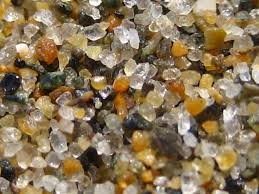
Solutions and colloids are classified by (a)

Which of the images represents a mixture.
pepper
salt

A combination of two or more substances that are not chemically combined.
mixture
element
solvent
solute

heterogeneous

Flammability of a substance is a (a)
Match the following properties with their types.
ability to rust
Chemical property
ability to conduct heat
Thermal property
volume
Physical property
magnetic
Magnetic property
Match the following properties with their types.
ability to rust
Chemical property
ability to conduct heat
Thermal property
volume
Physical property

Label the following item
What type of energy transformation occurs in a solar panel?
Thermal to electrical
Light to electrical
Chemical to electrical
Mechanical to electrical
Which of the following is an example of chemical energy being converted to mechanical energy?
A wind turbine generating electricity
Hydroelectric dam generating power
A car engine burning fuel
Solar panels converting sunlight
In a battery, what type of energy transformation takes place when it powers a device?
Electrical to chemical
Mechanical to thermal
Chemical to electrical
Thermal to mechanical
What type of energy transformation occurs in a solar panel?
Chemical to electrical
Light to electrical
Mechanical to electrical
Thermal to electrical
Which of the following is an example of chemical energy being transformed into mechanical energy?
A battery powering a flashlight
A wind turbine generating electricity
A car engine burning fuel to move
A solar panel converting sunlight
In a hydroelectric power plant, what is the primary energy transformation that takes place?
Light to chemical
Thermal to mechanical
Chemical to thermal
Mechanical to electrical
What is the primary difference between kinetic and potential energy?
Kinetic energy is stored energy, while potential energy is energy in motion.
Kinetic energy is energy in motion, while potential energy is stored energy.
Kinetic energy is only found in living organisms, while potential energy is found in non-living objects.
Kinetic energy and potential energy are the same.
Which of the following scenarios best illustrates potential energy being converted into kinetic energy?
A book falling off a shelf.
A car accelerating on a highway.
A person running a marathon.
A light bulb being turned on.
In which of the following situations is kinetic energy at its maximum?
A roller coaster at the top of a hill.
A compressed spring before release.
A pendulum at the highest point of its swing.
A car moving at its highest speed on a flat road.
Which of the following best describes the concept of potential energy?
Energy due to motion
Energy stored in an object due to its position
Energy transferred by heat
Energy in the form of waves
How does the kinetic energy of an object change if its velocity is doubled?
Kinetic energy is halved
Kinetic energy quadruples
Kinetic energy remains the same
Kinetic energy doubles

