
 Worksheets
Putting the FUN in functions!!!
Total questions: 84
Worksheet time: 1hrs 24mins
What is the definition of function?
Has inputs and outputs
Every input has only ONE output
Inputs have different outputs every time
x-values and y-values
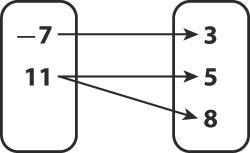
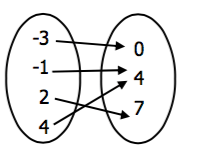
Is this relation a function?
Function
Not a function
(1,5), (1,6), (1,7), (1,8), (1,9)
Is this relation a function?
Function
Not a function
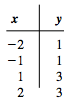
Is this relation a function?
Function
Not a function
(6,-5) (7, -3) (8, -1) (9, 1)
Is this relation a function?
Function
Not a function

Is this relation a function?
Function
Not a function

Is this relation a function?
Function
Not a function

Is this relation a function?
Function
Not a function

Is this relation a function?
Function
Not a function

Is this relation a function?
Function
Not a function

Is this relation a function?
Function
Not a function

Is this relation a function?
Function
Not a function

Is this relation a function?
Function
Not a function

Is this relation a function?
Function
Not a function
(9,5) (10,5) (9,-5) (10,-5)
Is this relation a function?
Function
Not a function

A
B
C
D

-3
2
-1
0
1

IS THIS A FUNCTION?
YES
NO

DOES THE GRAPH REPRESENT A FUNCTION?
YES
NO

DOES THIS GRAPH REPRESENT A FUNCTION?
NO
YES

DOES THIS GRAPH REPRESENT A FUNCTION?
YES
NO
IS THE FOLLOWING A FUNCTION?
YES
NO
IS THE FOLLOWING A FUNCTION?
YES
NO
(1,5), (1,6), (1,7), (1,8), (1,9)


Function
Not a function

Function
Not a function

Function
Not a function

Function
Not a function

Function
Not a function

Function
Not a function

Function
Not a function

Function
Not a function

Function
Not a function

Function
Not a function

Function
Not a function

Function
Not a function

Function
Not a function

Function
Not a function

Function
Not a function

Function
Not a function

Function
Not a function

Function
Not a function

Function
Not a function

Function
Not a function

Ordered pairs DO NOT show a function if the input values (a) .

A table of values DOES NOT represent a function if the x-values (a) .

A function is a rule that assigns exactly (a) input to every output.
Which of the following is NOT a function:


Which of the following is a function:


Which of the following is a function:


Choose the TWO tables that represent functions:


Pick the FOUR choices that are ways to represent functions:
Mapping
Ordered Pairs
Tables
Ratios
Graphs


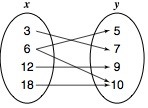


Does this mapping diagram represent a function?
No, because an input value goes to multiple output values
Yes, because each input goes to one and only one output
A relation contains the points (1, 2), (2, -1), (3, 0), (4, 1), and (5, -1). Which statement accurately describes this relation?
The relation does not represent y as a function of x, because each value of x is associated with a single value of y.
The relation represents y as a function of x, because one value of y is associated with two values of x.
The relation does not represent y as a function of x, because each value of y is associated with two values of x.
The relation represents y as a function of x, because each value of x is associated with a single value of y.
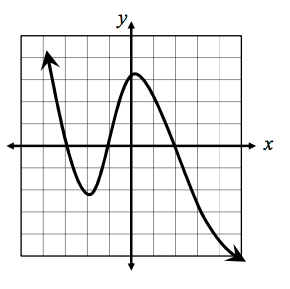
Which representation shows y as a function of x?



Is the mapping a function or not?
(Write out the ordered pairs!)


Determine whether the relation given by the set of ordered pairs {(1, 2), (3, 4), (5, 6), (7, 8)} is a function or not. If it is a function, explain why. If it is not a function, explain why not.
The relation is a function.
The relation is a linear equation
The relation is a quadratic equation
The relation is a rational function
Given the relation represented by the set of ordered pairs {(2, 3), (2, 4), (5, 6), (7, 8)}, determine whether it is a function or not. If it is a function, explain why. If it is not a function, explain why not.
Yes, it is a function because all x-values have unique y-values
Not a function
No, it is not a function because it does not pass the vertical line test
Yes, it is a function because it has more than 3 ordered pairs
Is the relation given by the set of ordered pairs {(1, 2), (2, 4), (3, 6), (4, 8), (1, 3)} a function? Explain your answer.
Yes, because it has a total of 5 ordered pairs
Yes, because it has the pair (1, 3)
Yes, because it has multiple outputs for the same input
No
Given the relation as a set of ordered pairs {(1, 2), (2, 4), (3, 6), (4, 8), (5, 10)}, identify whether it is a function or not. Explain your reasoning.
No, because the y-values are not unique
Yes
No, because the x-values are not unique
No, because the relation is not continuous
Is the relation given by the set of ordered pairs {(1, 2), (2, 4), (3, 6), (4, 8), (5, 10), (6, 12)} a function? Justify your answer.
No, because the relation does not have a constant rate of change
No, because the relation is not continuous
No, because the relation is not a set of ordered pairs
Yes

