
 Worksheets
Mastery Check: LS4-1
Total questions: 4
Worksheet time: 6mins
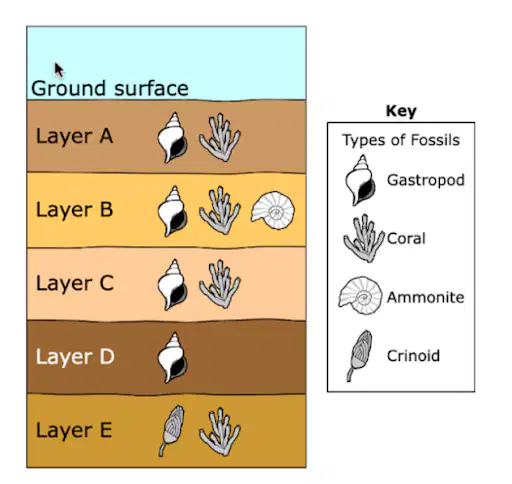
The diagram shows a cross section of layers of sedimentary rock. The types of fossils in each layer are shown.
Based on this information, which 3 statements are most likely true and which 2 statements are most likely false.
Layer C is below Layer B, so Lawer C is older
Layer A is at the top, so it is the youngest
The ammonite fossil is above the crinoid fossil, so the crinoid fossil is older
There is no coral fossil in layer D, so coral must have become extinct
The gastropod fossils are above the crinoid fossil, so gastropod evolved from crinoids
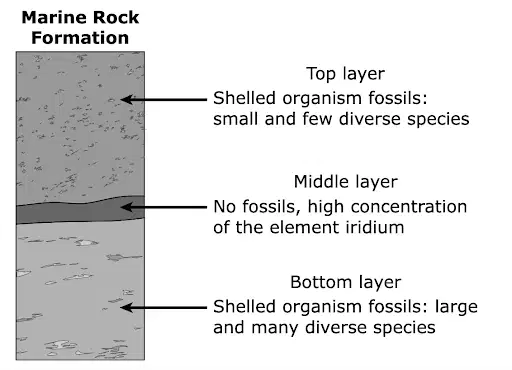
Scientists are studying a marine rock formation that contains fossilized shells of various species of single-celled organisms in two distinct layers. The scientists compare the fossilized shells in the upper layer to those in the lower layer shown in the diagram.
This middle layer contains high concentrations of the element iridium, which is rarely found on Earth. Which conclusion is supported by the evidence in these rock layers?
The smaller shelled organisms consumed the larger shelled organisms.
Gases released form volcanic eruptions allowed the shelled organisms to increase in size.
The impact of asteroid could have caused a mass extinction in many varieties of shelled organisms.
An increase in ocean temperature caused the larger-shelled organisms to migrate to deeper water.
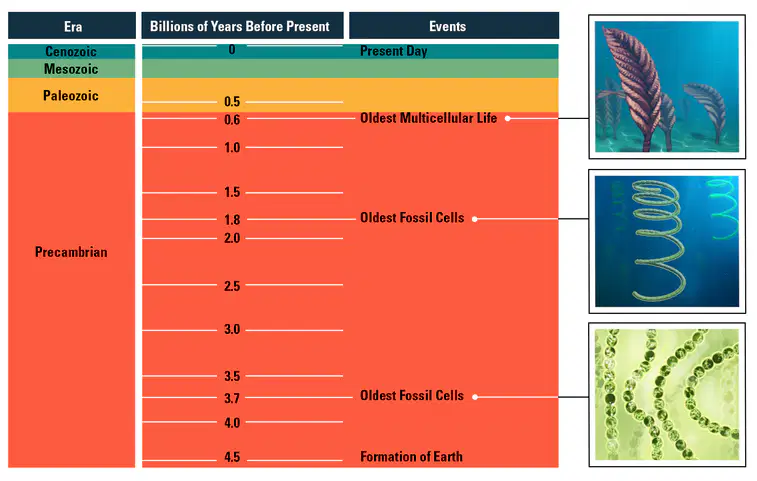
Maria was organizing a timeline of important events that occurred in the history of life. She created the diagram below in order to look for patterns in the fossil record. Based on the evidence in her diagram, what is the correct order of life forms from earliest (1) to latest (3)?
simple, single-celled organisms
Complex-celled organisms that could photosynthesize
Multi-cellular life with differentiated structures
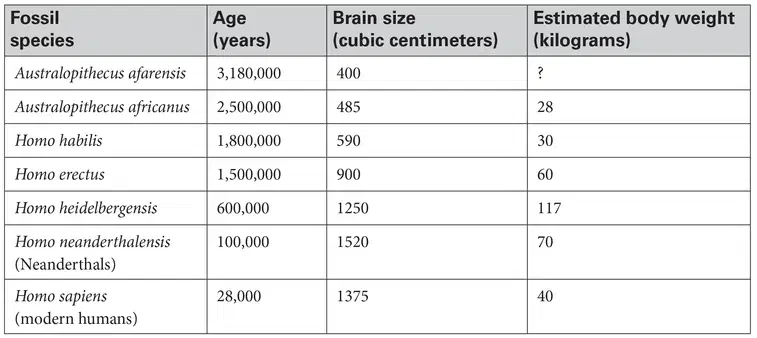
Professor Carmela Lee collects data on several different fossils of human relatives that have been found. She measures the volume of the braincase of each fossil and uses that value to estimate brain size. She also estimates the original body weight of the human relative. Her data is shown in the table below.
Which of the following claims about changes in brain size in fossil human relatives is BEST supported by the evidence?
Brain size has generally stayed the same over time.
Brain size has changed over time, but there is no pattern to the changes.
Brain size has generally increased in size over time, though some fossils are exceptions to this.
Brains size has generally decreased over time, though some fossils are exceptions to this.

