
 Worksheets
Islam/Tang/Song/Mongol Quiz
Total questions: 23
Worksheet time: 50mins
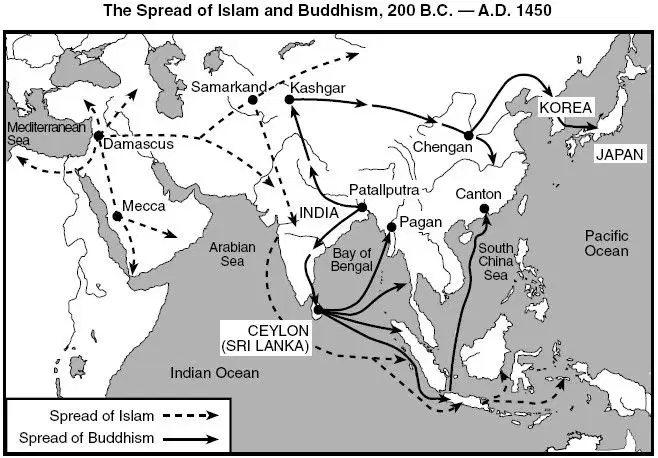
Which area was most affected by the spread of both Islam and Buddhism in the period from 200 B.C. to A.D. 1450?
Indian subcontinent
Japanese islands
Arabian peninsula
coastal China
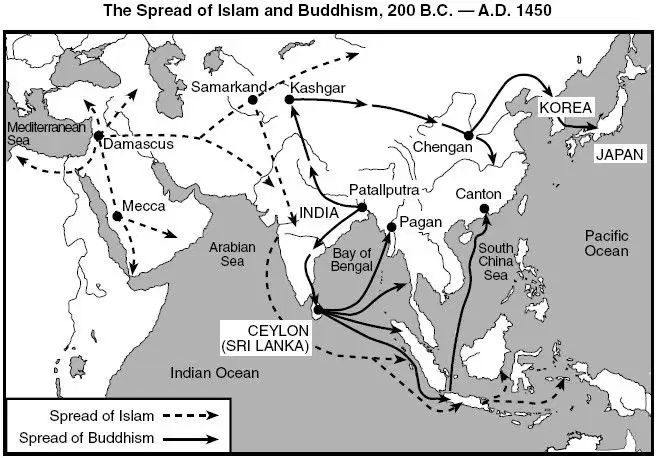
Identify the best use of this map for a historian.
To identify which goods were traded from China to Europe during the Classical Era
To find what paths Islamic traders and military campaigns might have taken to get to India
To explore the origins of religious practices in Asia
To determine why Canton was a popular trading city in China
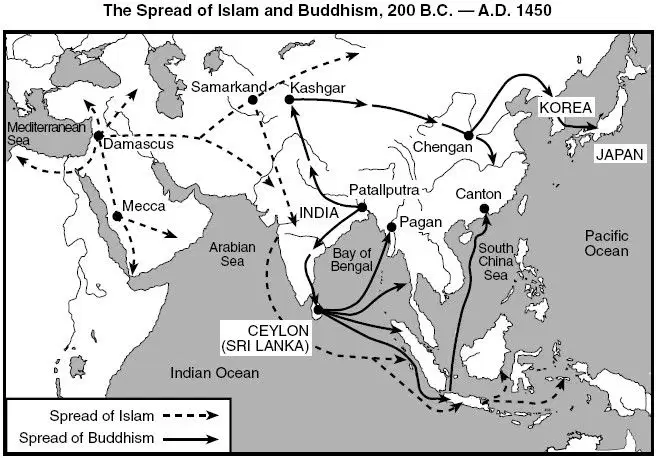
Which claim is best supported by evidence in the map above?
Islam and Buddhism spread through trade routes over land and over sea
Islam and Buddhism originated in India
Buddhism was a popular religion in North Africa in 1450 CE
Many people in Japan were Muslim in 1450 CE
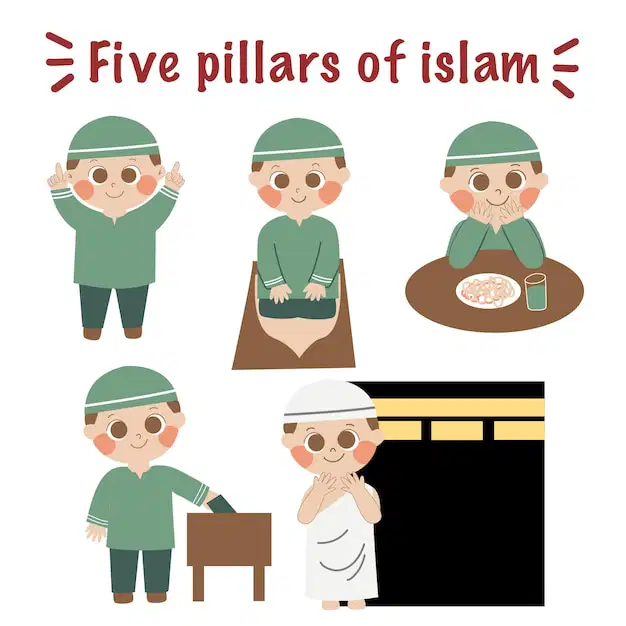
The five pillars of Islam include faith in Allah, charity, pilgrimage to Mecca, praying five times per day and ----
reciting from the Torah
8 Fold Path
fasting during the holy month
celebrating Easter

In the Middle East during the Golden Age of Islam scholars were encouraged to -
Reject all knowledge that was Western in origin
Ignore the achievements of Chinese culture
Preserve and expand ancient Greek and Roman learning
Accept medieval western religious ideas

From the 9th to the 14th centuries, Muslim rule of conquered territories was characterized by -
The rejection of Greek and Roman scientific works
The toleration of members of other cultures
The creation of democratic governments
A decrease in trade and commerce
Which activity occurred during the Golden Age of Muslim culture?
Destruction of books containing Greek and Roman ideas
Beginning of pilgrimages to Mecca
Opposition to freedom of thought and to foreign ideas by rulers
Major discoveries in math and science

The situation described in this passage led to the -
Pogroms in Russia
Fall of Constantinople
Division of Sunni and Shi’a
Tensions between Protestants and Catholics
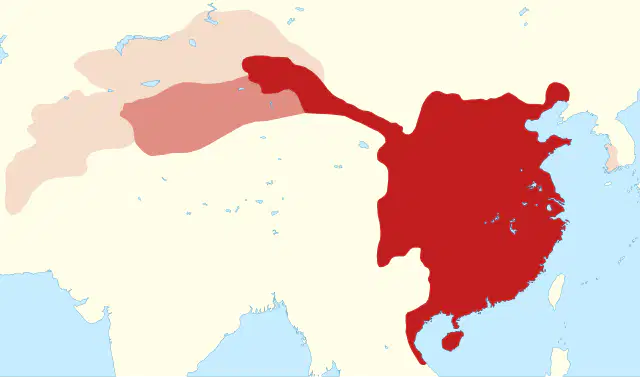
What was the Tang Dynasty (YouTube- 2:39 minutes)

The Song Dynasty (YouTube- 3:04 minutes)

Which achievements are most closely associated with the Tang and Song dynasties of China?
Gunpowder and wooden moveable type
Mosaics and domes
Chinampas and calendar
Wheel and stirrup

Filial as used in the quote above means -
Authoritarian
Just
Disrespectful
Faithful

This quote reflects elements of which philosophy in China -
Daoism
Confucianism
Legalism
Buddhism

This quote illustrates Song China had -
A weak bureaucracy
A strong central authority from the emperor
Rule by fear
A capitalist economy

The grade of tea the Chinese had access to was determined by -
the price
the climate it grew in
their social status
corrupt government officials
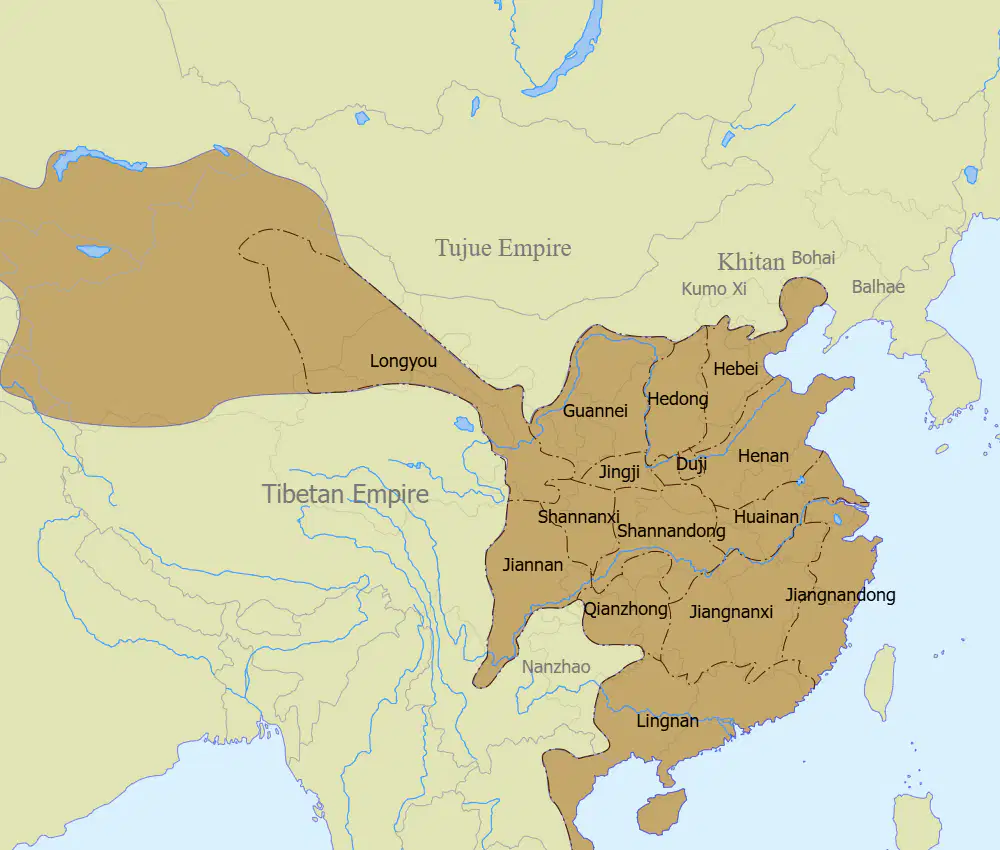
This map illustrates the Chinese bureaucratic system of governing by depicting -
Administrative provinces
Military Diwans
Tributary states
Silk Roads

The province of Longyou in the west shows that the Chinese are protecting -
The Middle Kingdom
Their capital city of Xian
Silk Road trade routes
An important harbor for maritime trade

Which Confucian relationship does this BEST illustrate?
Father to Son
Man to woman
Elder to younger
Emperor to subject

What Chinese cultural belief is BEST reflected in this quote?
Patriarchy
Friend to Friend mutual respect
Filial Piety
4 Noble Truths

The Roman Empire and the Mongols were similar in that each -
Developed systems of writing
Extended control over neighboring peoples
Established industrial societies
Adapted democratic political systems
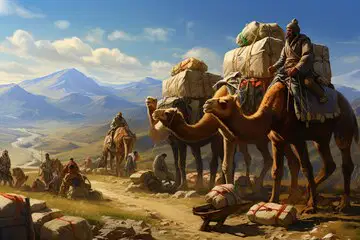
The Pax Romana and Pax Mongolica are similar because each empire -
Had a Golden Age as a result
Suffered defeats due invading Huns
Created HUGE building projects like the Colosseum
Experienced an extensive period of trade and economic growth

The information provided by the map indicates that in 1280 the Mongols controlled -
territory from eastern China to eastern Europe
areas of Africa, Asia, and Europe
Japan and Korea
all of Asia

What was the effect of the extensive Mongol Empire on the people who lived in Europe and Asia in the 1200s?
development of a common language
adoption of Confucian ideas and practices
expansion of Japanese cultural traditions
significant increases in trade and travel

