
 Worksheets
Ecosystems Lesson 3: Human Impact
Total questions: 45
Worksheet time: 42mins
The word ___________ means all the variety of the life on Earth.
Biodiversity
Conservation
Ecology
Match the type of biodiversity to the description.
The differences among members of the same species.
Genetic Biodiversity
The different species that live in an ecosystem.
Species Biodiversity
The types of habitats in one place.
Ecosystem Biodiversity
A (a) amount of genetic biodiversity is good for a species because it makes it (b) to adapt when the environment changes.
A (a) amount of species biodiversity is good for an ecosystem because it makes it (b) to recover from a species extinction.
Burning fossil fuels is causing (a) levels in the atmosphere to (b) .
Reorder the following reasons for biodiversity loss from most common reason to least common reason.
Habitat Destruction
Invasive Species
Pollution
Climate Change
Overhunting
The most common reason for biodiversity loss in our local area is ___________.
Habitat fragmentation
Pollution
Climate change
Overhunting
The division of a large habitat into smaller, disconnected sections is called habitat ____________.
Fragmentation
Partitioning
Conservation
Rehabilitation
Wildlife corridors are a specific way to deal with the problem of ______________.
Invasive species
Habitat fragmentation
Pollution
Climate change
An animal that likes to roam a large territory like a deer is most likely to be harmed by __________.
Invasive species
Habitat fragmentation
Global Warming
Pollution
The California Condor was saved from the brink of extinction through the process of __________.
Habitat restoration
Captive breeding
Habitat Fragmentation
Wilderness rescue
The process of repairing a damaged/polluted habitat so that it can be a useful ecosystem is called _______________.
Habitat fragmentation
Captive breeding
Habitat restoration
Wilderness rescue
All of the following are main ways to conserve species EXCEPT:
Laws
Protecting Land from Development
Captive Breeding
HIPCO
The imaginary word __________ is a way to remember the main types of environmental problems.
HIPCO
EXEWVU
ESA
NESE
The main law in the U.S. to protect threatened species from extinction is the ___________.
Endangered Species Act
Habitat Restoration Act
National Park Act
Red List
Match the following terms to the correct definition.
The factor that determines what the max population will be.
Limiting Factor
The max population for a species in an ecosystem
Carrying Capacity
The process of using resources wisely so that they will last.
Sustainability
The (a) of a population is determined by the (b) .
(a) limiting factors become stronger with a higher population density, while (b) limiting factors aren't affected by density at all.
If you remove the limiting factor from a population, the carrying capacity will _______.
Rise
Fall
Stay the Same
No population can grow forever, because there will eventually be a ____________.
Limiting Factor
Density Checkpoint
Competition Loss
Resource Partitioning
A population that is very crowded and packed in has a (a) density and one that is very spaced out has a (b) density.
Extremely rapid growth when there is no limiting factor is (a) growth. When the limiting factor caps the population, the (b) is reached.
Where on this graph is "carrying capacity" located?
Which of the following contributes most to promoting sustainability in an ecosystem?
lack of decomposers
a balanced water table
variety of organisms
a narrow temperature range
When human-made chemicals and garbage find their way into nature and harm the air, soil, and water it is called
pollution
habitat destruction
overexploitation
climate change
Which of the following most likely supports the most sustainable ecosystem?
The habitat with the greater number of green plants
The habitat with the greatest variety of living things
The habitat with the warmest average temperature
The habitat with the greatest number of consumers
Deforestation is an example of
the H
the P
the C
the O
Burning fossil fuels and trapping more greenhouse gases in the atmosphere cause which part of HIPPCO
the P
the C
the O
the I
Biodiversity contributes to habitat sustainability because
Changing conditions that harm one species leave other species to survive and perhaps even thrive.
The greater the number of species, the more competition there is for food between predators, which sustains their populations
The more plants and animals in a habitat, the greater the links in food webs allowing for more stable system
It will be more prone to disturbances
What is an effect of habitat restoration?
An increase in the biodiversity of only aquatic life & to reverse habitat damage & restore ecosystems.
An increase in the biodiversity of wild life & to reverse habitat damage & restore ecosystems.
An increase in the biodiversity of wild life & to increase habitat damage & restore ecosystems.
An increase in the ecosystem of wild life & to increase habitat damage & restore ecosystems.
The process of restoring damaged or destroyed ecosystems defines what vocabulary term?
Habitat Restoration
Species Preservation Efforts
Nature Conservancy Groups
Ecotourism
The act to prevent extinction, recover imperiled plants and animals, and protect the ecosystems on which they depend upon is called...
The Fossil Fuel Burning Act of 2000
Congressional Bill 78655
The Endangered Species Act of 1973
Project Save
Which of the following is a method to prevent species from becoming endangered?
Pollution
Captive breeding
Overhunting
Habitat destruction
What is the purpose of Wildlife Corridors?
enhanced habitat destruction
improve illegal hunting opportunities
promote species isolation
allow wildlife to move between fragmented habitats
What is an invasive species?
A species that is only found in zoos
A native species that thrives in its environment
An organism that is not native to a particular area and causes harm
A species that is beneficial to the local ecosystem
How can people help prevent the spread of invasive species?
Take home animals from different ecosystems
Plant non-native species in gardens
Clean boats before moving to different waters
Release pets into the wild
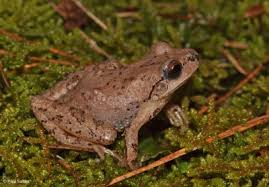

Biodiversity is not the same all over the planet. Some biomes have higher biodiversity than others. An example of a biome with high biodiversity is (a) . On the other hand, an example of a biome with little biodiversity is (b) .


In this food web example you can see that rain forests have many producers consumer and predators. How would you describe the rain forest biome?
It has high biodiversity
It has low biodiversity.

Image "B" shows more biodiversity than image "A". Why?
Because "B" shows more different species than image "A"
Because image "B" has less different species than "A"
"A" has a greater number of same species plants so this statement is wrong.
Both images show the same biodiversity
What does it mean when a species is extinct?
The species no longer exists
The species is in captivity
The species is thriving
The species is at risk of becoming endangered

