
 Worksheets
Exploring the Lymphatic System
Total questions: 84
Worksheet time: 1hrs 6mins
What is the function of the lymphatic system?
Drains tissue fluids, waste products & flights against infection.
Prevent swelling
Removes toxins & waste
Fights against infection

What is structure D?
Lymph Nodes
Spleen
Thymus
Tonsils
What is structure C?
Lymph Vessels
Spleen
Thymus
Tonsils
What is one of the primary functions of the lymphatic system?
To transport oxygen to the cells
To remove waste products from the blood
To maintain fluid balance in the body
To produce red blood cells
Which of the following is a component of the lymphatic system?
Arteries
Veins
Lymph nodes
Capillaries
What is the role of lymph nodes in the lymphatic system?
To produce hormones
To filter lymph and trap pathogens
To store calcium
To transport oxygen
Which of the following best describes the lymphatic circulation process?
Lymph is pumped by the heart through the lymphatic vessels
Lymph flows in a closed loop like the circulatory system
Lymph flows in one direction towards the heart
Lymph is actively transported by muscle contractions
How does the lymphatic system contribute to the immune response?
By producing antibodies
By transporting oxygen to immune cells
By filtering out carbon dioxide
By storing excess glucose
Which of the following is NOT a function of the lymphatic system?
Absorption of dietary fats
Regulation of blood pressure
Removal of interstitial fluid
Immune system support
What is the fluid called that is transported by the lymphatic system?
Plasma
Serum
Lymph
Hemoglobin
Which of the following disorders is associated with the lymphatic system?
Hypertension
Lymphedema
Diabetes
Osteoporosis
What is the primary role of the spleen in the lymphatic system?
To produce insulin
To filter blood and recycle red blood cells
To store bile
To produce digestive enzymes
Which of the following is a common symptom of a lymphatic disorder?
High blood sugar
Swelling in the limbs
Increased appetite
Hair loss
What is the role of the thymus in the lymphatic system?
To produce red blood cells
To mature T-cells
To store iron
To filter lymph
Which of the following is a characteristic of lymphatic vessels?
They have thick muscular walls
They contain valves to prevent backflow
They carry oxygen-rich blood
They are directly connected to the heart
What is the primary function of lymphocytes in the lymphatic system?
To transport nutrients
To fight infections
To produce hormones
To store energy
Which organ is considered a part of both the lymphatic and endocrine systems?
Pancreas
Thyroid
Thymus
Liver
What is the main difference between lymph and blood plasma?
Lymph contains more red blood cells
Lymph has a higher protein concentration
Lymph lacks red blood cells and platelets
Lymph is thicker than blood plasma
Which of the following is a function of the tonsils in the lymphatic system?
To produce digestive enzymes
To trap and destroy bacteria and viruses
To regulate body temperature
To store vitamins
What is the role of Peyer's patches in the lymphatic system?
To produce bile
To monitor intestinal bacteria
To store glycogen
To secrete insulin
Which of the following is a potential cause of lymphedema?
High cholesterol
Blockage of lymphatic vessels
Excessive exercise
Low blood pressure
What is the function of the lymphatic capillaries?
To transport oxygen to tissues
To absorb excess tissue fluid
To produce white blood cells
To store fat
Which of the following is a characteristic of lymph nodes?
They are located only in the abdomen
They are involved in the production of bile
They swell in response to infection
They are part of the digestive system
What is the primary function of the lymphatic system in relation to dietary fats?
To break down fats into fatty acids
To transport absorbed fats to the bloodstream
To store fats in adipose tissue
To convert fats into glucose
a white blood cell that is involved in fighting infection
antibodies
erythrocyte
leukocyte
lymphatic
antigen
a foreign substance that causes the body to make antibodies
antibodies
erythrocyte
leukocyte
lymphatic
antigen
a red blood cell that transports oxygen and carbon dioxide to and from body tissues
antibodies
erythrocyte
leukocyte
lymphatic
antigen
proteins produced by leukocytes that bind with and disable antigens
antibodies
erythrocyte
leukocyte
lymphatic
antigen
related to or containing the watery fluid (lymph) collected from body tissues
antibodies
erythrocyte
leukocyte
lymphatic
antigen
All pathogens are infectious, but not all of them are virulent or contagious.
True
False
High numbers of monocytes in the body indicate a chronic infection.
True
False
____ are important to the function of the immune or lymphatic system.
Super cells
Red blood cells
Leukocytes
Plasma
Which of the following terms describes blood vessels that carry oxygenated blood away from the heart?
antibodies
capillaries
arteries
erythrocytes
A(n) ____ is a very small pathogen that invades and reproduces inside other cells and is usually spread through contact with body fluids.
bacteria
virus
fungus
protozoa
Cells that originate in the bone marrow and make antibodies to fight pathogens are known as ____.
leukocytes
neutrophils
neutrophils
erythrocytes
The lymphatic structure that closely parallel veins are called?
capillaries
lymph vessels
lymph
A lymphatic structure located in the upper left quadrant of the abdomen is called ?
lymph
spleen
lymph fluid
The tiny oval shaped lymph structure located throughout the body are known as?
lymph nodes
lymph fluid
spleen
The (a) is the largest lymphatic organ. It is found in the upper left part of the abdomen.
What is one cause of lymphatic filariasis?
Parasites
High Blood Pressure
Clogged Vessels
Cancer
Lymph vessels return lymph back into the circulatory system into a vein found in/near your (a) .
What gland is found near the heart and releases white blood cells to fight infection?
thyroid
tonsils
thymus
A 7th grade student goes to the doctor because they are feeling sick. Their doctor says they have an increased production of white blood cells to fight an infection. What part of their lymphatic system could be swollen because of the infection?
Lymph Nodes
Lymph Vessels
Lymph Capillaries
Lymphitis
What lymphatic organ is found at the base of the nasal cavity and pharynx (throat)?
(a)
Lymph travels without a pump, instead it moves through lymph vessels with the help of valves and which type of muscle?
skeletal
smooth
cardiac
striated
Select All That Apply. What are the functions of the Lymphatic System?
to return excess fluid and dead cells back to the circulatory system
to absorb fatty acids in the digestive system
to fight infections with the immune system
to make Red Blood Cells for the circulatory system
What is the name of the bean shaped organs that fight infection (pathogens) and remove large dead particles?
lymph nodes
lymph capillaries
lymph vessels
lymph tubes
What is lymphoma?
Cancer of the lymphatic system
Inflammation of the lymphatic system
Blockage of the lymphatic system
Leakage of the lymphatic system
Select all that apply: Where are lymph nodes located?
armpits
shoulder
neck
back
groin
What are the two main organs of the lymphatic system?
Thymus & Pancreas
Spleen & Thymus
Pancreas & Thyroid
Tonsils & Thyroid
Select all that apply. Both the lymphatic and circulatory system have ___________.
vessels which carry liquids throughout the body
arteries which carry things away from the heart
capillaries which pick up/drop off materials at cells
valves which prevent backward flow of materials

What structure is located at the beginning of the large intestine that can become painfully inflamed and infected then has to be removed surgically?
(a)
Select all that apply. What body systems does the Lymphatic System work with?
Circulatory
Respiratory
Digestive
Nervous
Select all that apply. What is lymph?
Yellow, watery fluid
Filled with materials like fatty acid, glucose, and wastes
Blood plasma that has leaked out of capillaries
Red blood cells carrying oxygen
What is a Lymphocyte?
White Blood Cell
Red Blood Cell
Lymph
Mlerp
How many lymph nodes are there in the body?
850
125
700
10000000000
What is the largest organ of the lymphatic system?
Appendix
Spleen
Thymus
Soup
What is Lymph?
Blood
Cerumen
A type of smoothie
Blood plasma
What does the Lymphatic System do?
Rid the body of waste
Remove toxins
Pump lymph around the body
All of the above
What is Lymphoma?
A cancer in lymophocytes
An increase in white blood cells
A donkey
Inflammation of lymph nodes
What do lymph nodes house?
Yellow Blood Cells
Red Blood Cells
Blue Blood Cells
White Blood Cells
Where does lymph come from?
Leaked blood plasma
Special lymph-producing ducts
Glands in your elbow
Apples
How does the lymphatic system pump lymph around your body?
Using the power of your heart
The contraction of the lymph channels
Using the gravity and energy you create while moving
*mAgIc*
How big are lymph nodes?
Microscopic
The size of a hair
The size of a pea
Eighteen dancing elephants
What is the name of the fluid inside the lymphatic vessels?
Plasma
Lymph
Blood
Tissue fluid
Which of the following is NOT a function of the lymphatic system?
removes excess fluid from around organs
absorbs/transports fats from the gut
circulates blood around the body
produces leucocytes
Which of the following are responsible for fighting diseases?
Leucocytes
Erythrocytes
Platelets
Lymph

What is the name of the lymphatic tissue found in the back of the throat?
thymus
spleen
tonsils
liver
What name is given to the leucocytes created in the lymphatic system?
lymphocytes
basophils
neutrophils
eosinophils
What do we call the bean-shaped structures that are scattered around the body as part of the lymphatic system?
lymph capillaries
tonsils
spleen
lymph nodes
What is the function of lymph nodes?
carry excess lymph fluid away from tissues
drain lymph back into the circulatory system
filter foreign particles from the lymph
absorb fat from the gut
What do we call the large lymphatic vessels that drain lymph back into the circulatory system?
lymph capillaries
lymph veins
lymph nodes
lymph ducts
Which phrase best describes the structure of lymph capillaries?
strong and thick
thin and leaky
waterproof and tough
solid and sealed
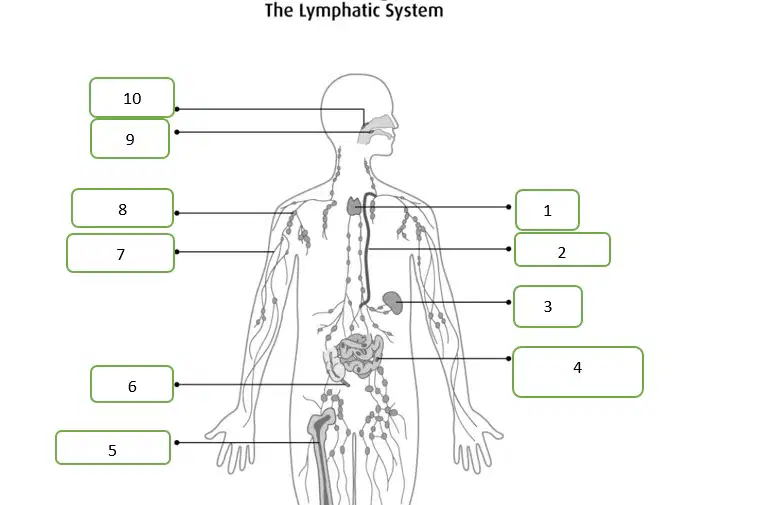
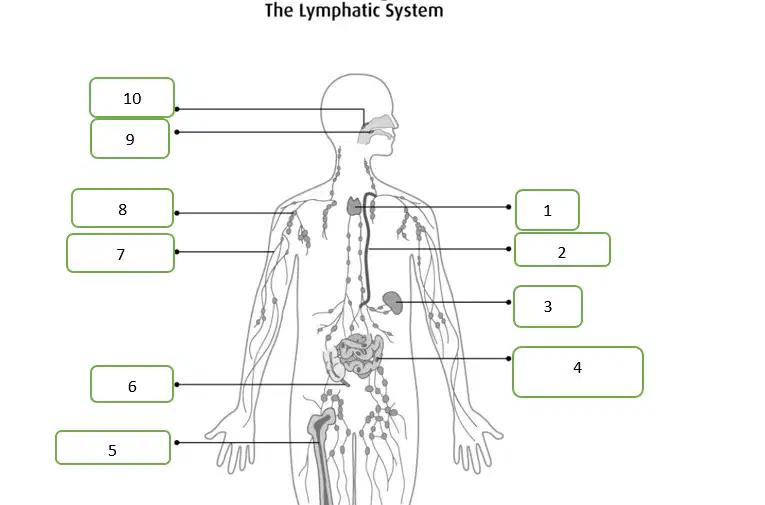
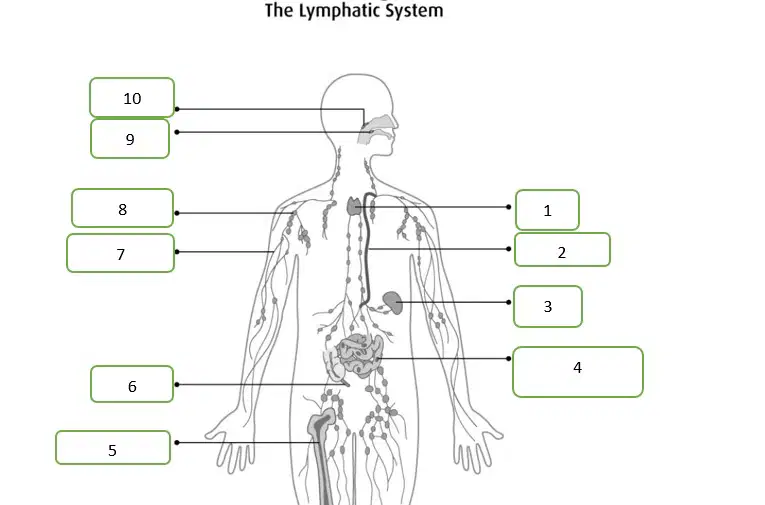
What is number 6 in the diagram?
Peyer's patch
Lymph node
Spleen
Appendix
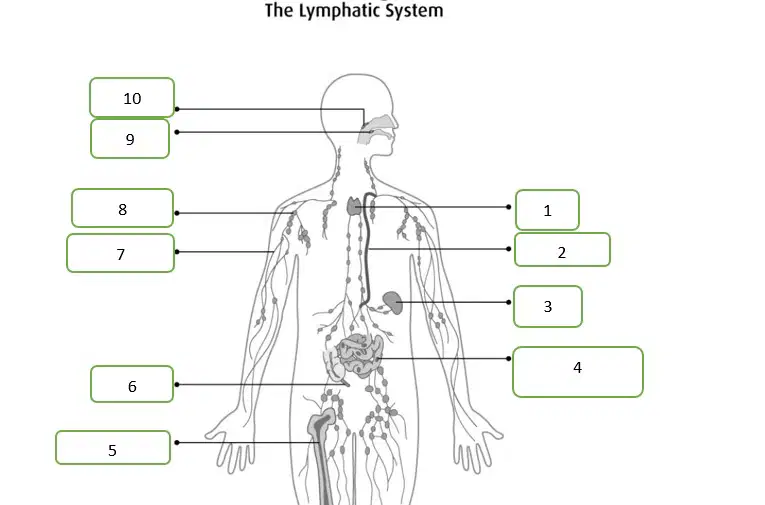
What is number 10 in the diagram?
adenoid
tonsil
spleen
Peyer's patch
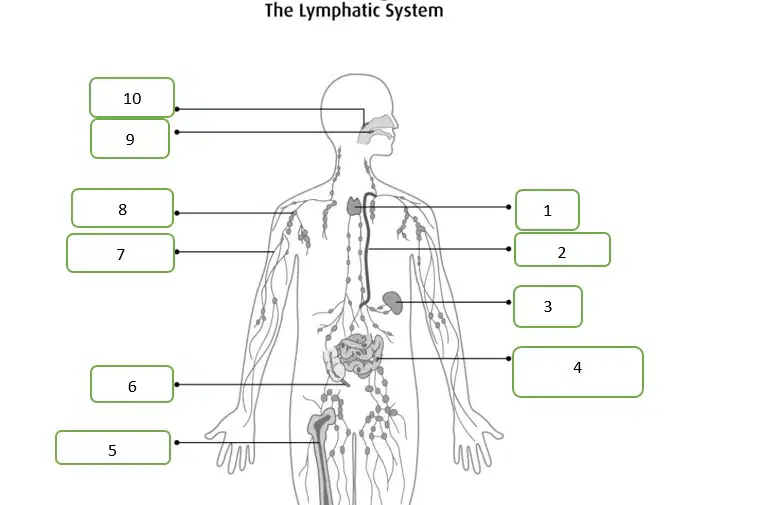
What is number 7 in the diagram?
spleen
tonsil
Lymph node
Lymph vessel
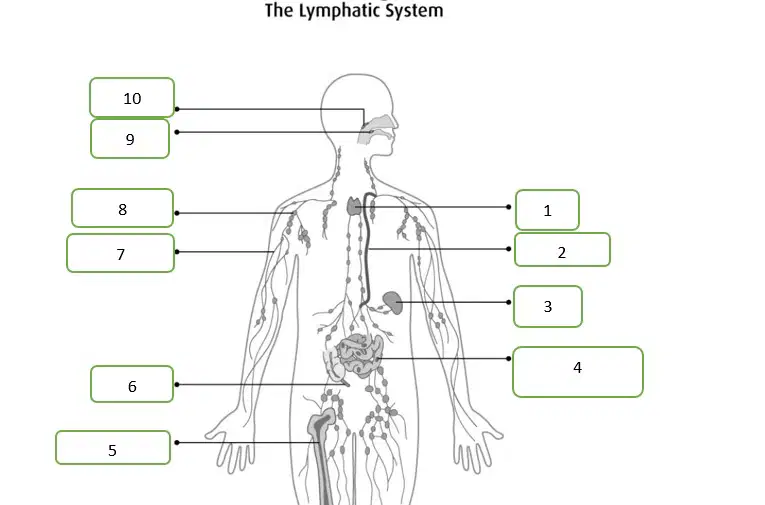
What is number 4 in the diagram?
appendix
lymph node
Peyer's patch
thymus
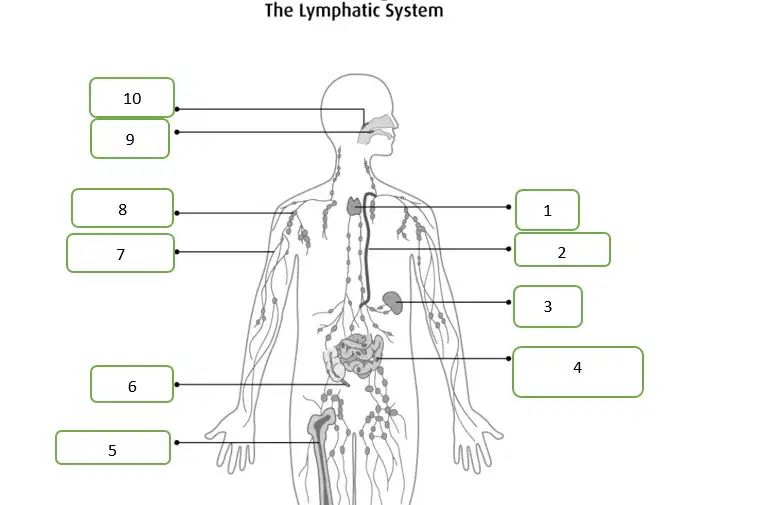
What is number 1 in the diagram?
Spleen
thymus
Peyer's patch
lymph node
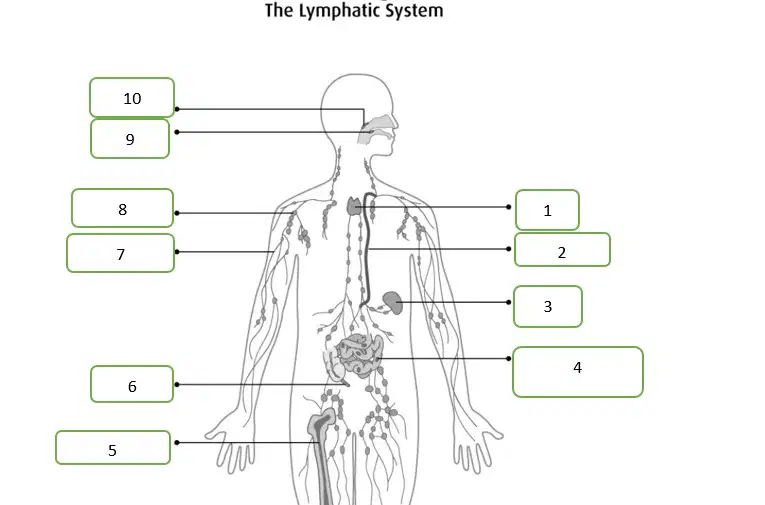
What is number 5 in the diagram?
Lymph vessel
Bone Marrow
lymph node
Peyer's patch
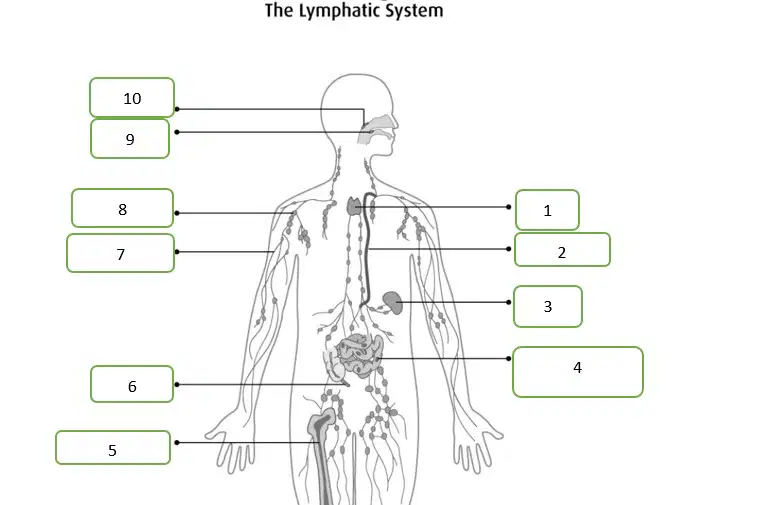
What is number 2 in the diagram?
Adenoid
Tonsil
Peyer's patch
thoracic duct
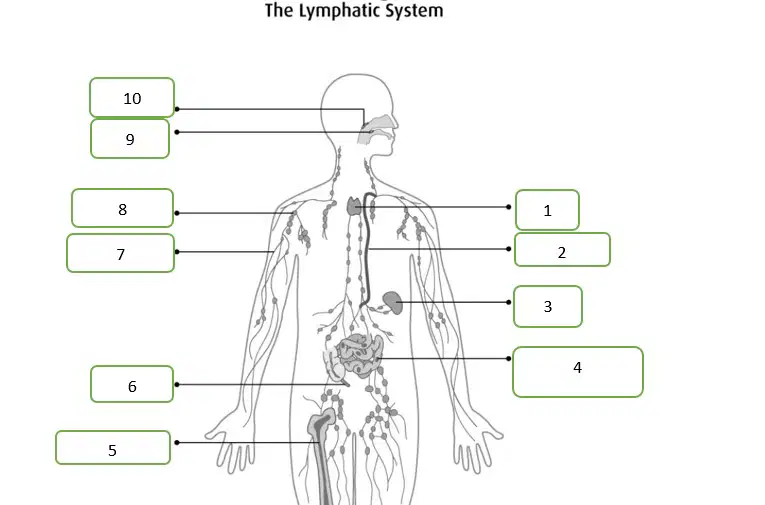
What is number 3 in the diagram?
Spleen
Appendix
Payer's patch
lymph node
What is number 9 in the diagram?
tonsil
adenoid
Peyer's patch
appendix
What is number 8 in the diagram?
Lymph vessels
Lymph node
Peyer's patch
adenoid

