NEW
Font size
 Worksheets
ET Meiosis & Monohybrid Review 3/10/25
Total questions: 11
Worksheet time: 8mins
Cells that have pairs of every chromosome are called______________ while cells that have one copy of a chromosome are called____________________?
complete, incomplete
multiploid, monoploid
diploid, haploid
megaploid, uniploid
Describe the process of anaphase I in meiosis.
Sister chromatids separate and move to opposite poles of the cell.
The cell divides into two daughter cells.
The chromosomes replicate.
Homologous chromosomes separate and move to opposite poles of the cell.
What is the difference between meiosis I and meiosis II?
Separation of homologous chromosomes in meiosis I and separation of sister chromatids in meiosis II
Pairing of homologous chromosomes in meiosis I and pairing of sister chromatids in meiosis II
Meiosis I occurs in males and meiosis II occurs in females
No difference between meiosis I and meiosis II

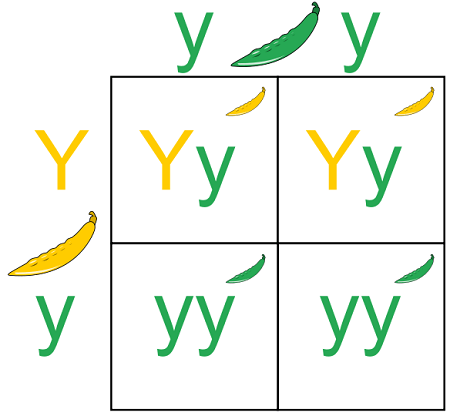
What are the chances that the offspring will have homozygous recessive traits?
1 in 4
3 out of 4
75%
50%
What are the chances that the offspring will have homozygous recessive traits?
1 in 4
3 out of 4
75%
50%

What is the genotypic ratio represented by the punnett square?
1:1
3:1
1:3
1:2:1