
 Worksheets
Circulatory System Overview
Total questions: 41
Worksheet time: 15mins
The function of the circulatory system is
To distribute blood, oxygen, and nutrients throughout the body.
To digest food and absorb nutrients.
To transmit nerve signals to the brain.
To remove waste products from the body.
The major components of the circulatory system are:
Heart only
Blood vessels only
Heart, blood vessels, and blood
None
The role of the heart is to pump blood.
It filters blood.
It pumps blood.
It regulates body temperature.
It digests food.
Which of the following is a chamber of the heart?
Right Atrium
Left Atrium
Right Ventricle
All of the above
What is the function of valves in the heart?
Regulate the direction of blood flow
Pump blood through the heart
Supply oxygen to the blood
Store blood temporarily
Fill in the blank: Blood enters the Right Atrium through the ________.
Vena Cava
Pulmonary Veins
Aortic Arch
Coronary Sinus
Gas exchange in the lungs involves oxygen from inhaled air diffusing into the blood while carbon dioxide diffuses out.
Oxygen enters the blood and carbon dioxide exits
Oxygen exits the blood and carbon dioxide enters
Both oxygen and carbon dioxide enter the blood
No gas exchange occurs
Fill in the blank: Blood returns to the Left Atrium via the ________.
Pulmonary Veins
Superior Vena Cava
Inferior Vena Cava
Pulmonary Arteries
Arteries are responsible for carrying blood away from the heart.
They carry oxygenated blood from the heart to the body.
They transport deoxygenated blood back to the heart.
They filter blood to remove waste.
They store fat and cholesterol.
Which blood component carries oxygen using hemoglobin?
White Blood Cells
Red Blood Cells
Platelets
Which of the following is NOT a function of the circulatory system?
Transporting oxygen and nutrients
Removing waste products
Digesting food
Regulating body temperature
Which part of the heart pumps oxygenated blood to the body?
Right atrium
Right ventricle
Left atrium
Left ventricle
Which type of blood vessel carries oxygenated blood away from the heart?
Arteries
Veins
Capillaries
Platelets
Which of the following blood cells is responsible for clotting?
Red blood cells
White blood cells
Platelets
Plasma
Atherosclerosis is a condition caused by:
Fill in the blank: The circulatory system consists of the heart, blood __________, and blood.
vessels
cells
nerves
ligaments
Fill in the blank: The heart has four chambers: two ______ and two ventricles.
atria
arteries
capillaries
veins
Fill in the blank: ________ are the smallest blood vessels and connect arterioles and venules.
Capillaries
Arterioles
Venules
Lymphatics
Fill in the blank: White blood cells protect the body from __________.
pathogens
toxins
hormones
enzymes
Fill in the blank: Red blood cells contain __________, a protein that binds to oxygen.
hemoglobin
myoglobin
collagen
keratin
True or False: The circulatory system helps regulate body temperature.
True
False
True or False: Veins have thicker walls than arteries.
True
False
True or False: Platelets are whole cells.
True
False
True or False: Pacemakers are used to treat arrhythmias.
True
False
True or False: Atherosclerosis can lead to heart attacks and strokes.
True
False
Which of the following is the main function of the circulatory system?
Transporting oxygen, nutrients, and waste throughout the body
Fighting infections
Producing hormones
Regulating body temperature
What type of blood vessel carries blood away from the heart?
Veins
Capillaries
Arteries
Venules
What is the main function of the heart?
To filter blood
To pump blood throughout the body
To produce blood cells
To store blood
Blood that is rich in oxygen is called:
Deoxygenated blood
Oxygenated blood
Plasma
Serum
Which chamber of the heart pumps oxygen-rich blood to the body?
Right atrium
Right ventricle
Left atrium
Left ventricle
Which blood vessels allow for gas and nutrient exchange with body cells?
Arteries
Veins
Capillaries
Arterioles
What prevents the backflow of blood in the heart?
Arteries
Veins
Valves
Capillaries
Why does pulse rate increase during exercise?
The heart pumps faster to deliver more oxygen to the muscles
The heart pumps slower to conserve energy
The heart stops temporarily
The heart pumps blood only to the brain
Which of the following best describes the correct pathway of blood flow through the heart?
Right atrium → Right ventricle → Lungs → Left atrium → Left ventricle → Body
Left atrium → Left ventricle → Lungs → Right atrium → Right ventricle → Body
Right ventricle → Right atrium → Lungs → Left ventricle → Left atrium → Body
Left ventricle → Left atrium → Lungs → Right ventricle → Right atrium → Body
What is the primary role of red blood cells in the circulatory system?
To fight infections
To carry oxygen to body cells
To remove waste products
To regulate body temperature
The digestive system breaks down food and absorbs nutrients, which are then transported by the circulatory system to body cells.
The digestive system breaks down food and absorbs nutrients, which are then transported by the circulatory system to body cells.
The circulatory system directly digests food before transporting it.
The digestive system stores nutrients while the circulatory system breaks them down.
Nutrients are provided to body cells without the need for any system.

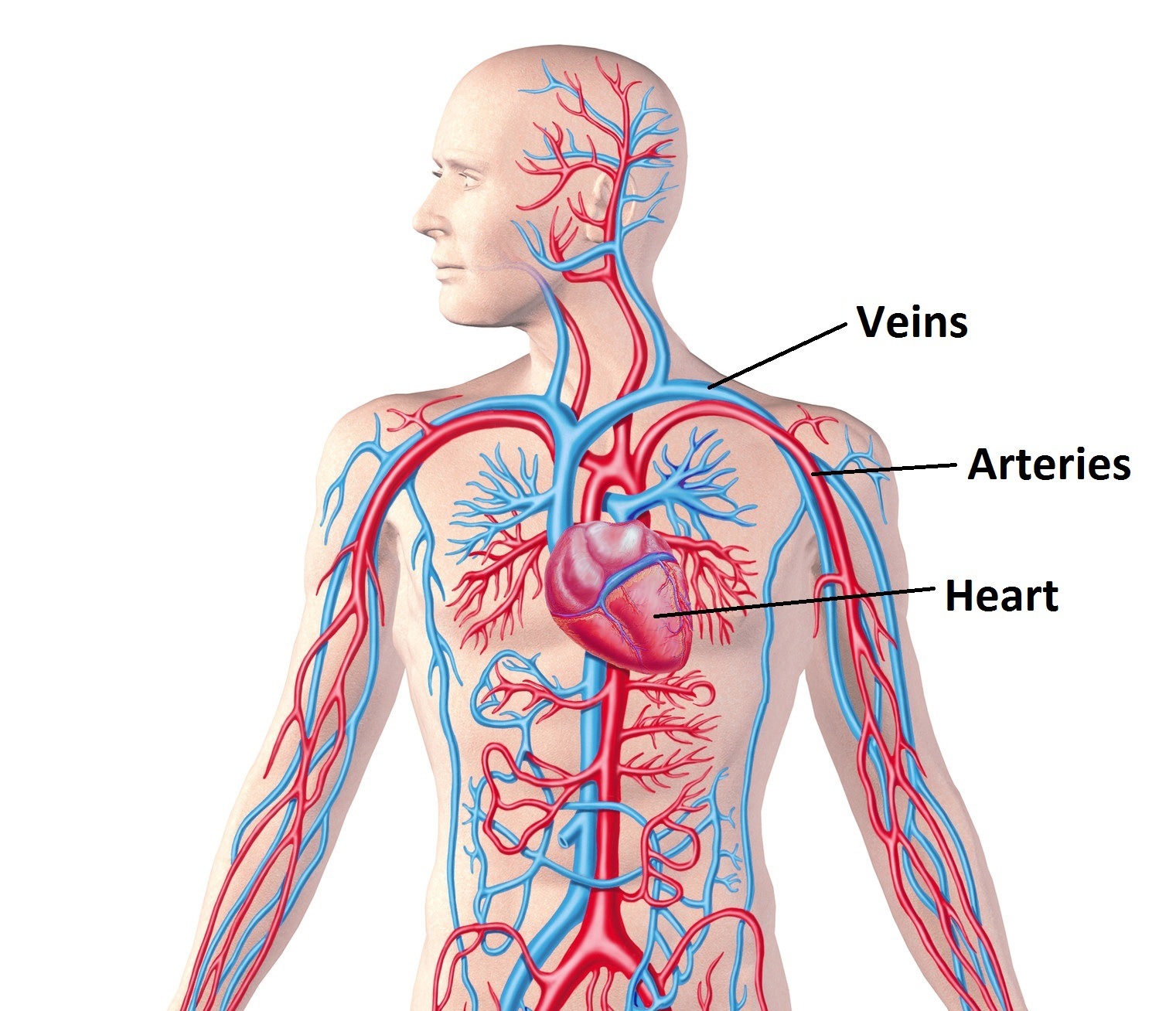
Which of the following does blood help transport throughout the body?
undigested food
Nutrients
Gases (oxygen and carbon dioxide)
hormones like adrenaline

The diagram shows part of the human circulatory system. Which part carries deoxygenated blood at high pressure?
A - Pulmonary Artery
B - Pulmonary Vein
C - Aorta
D - Left Ventricle

What is the main function of the heart?
Make blood
Strengthen body cells
Filter wastes
Pump Blood
Carries nutrients to cells

