
 Worksheets
Gizmos Cell Types
Total questions: 72
Worksheet time: 49mins
Mia is studying biology and she learns about the smallest structural and functional unit of living organisms. What is the basic unit of life?
Atom
Cell
Tissue
Organ
Sophia is observing different organisms in her biology class. She wants to identify a characteristic that is common to all living things. Which of the following should she choose?
They breathe oxygen.
They grow and reproduce.
They can move.
They all have a brain.
Grace is curious about the tiny structures that make up living organisms. What tool should she use to see cells?
Telescope
Binoculars
Microscope
Magnifying glass
Aiden is exploring the forest and comes across various things. Which of the following things he finds is made of cells?
Rock
Water
Air
Mushroom
Grace is studying biology and she wants to know what all cells need to survive?
DNA
Energy
Cells
All of these
Ethan is looking through a microscope in his science class. He observes a tiny organism that consists of only one cell. Which of the following is he most likely observing?
Dog
Bacteria
Tree
Human
(a) is an example of a multicellular organism.
Aiden is building a model of a plant cell for his biology class. He wants to know which part of the plant cell gives it structure and protection, specifically for plants. Can you help him identify it?
Cell Wall
Cell membrane
Cytoplasm
Chloroplast
Ethan is studying different types of cells in his biology class. He learns that one type of cell does NOT have a nucleus. Which type of cell is it?
Animal Cell
Plant Cell
Bacteria
Fungi
In a biology class, Maya and Arjun are discussing cell structures. Maya says that one type of cell has a nucleus while the other does not. What is the main difference between prokaryotic and eukaryotic cells?
Eukaryotic cells have a nucleus, prokaryotic cells do not.
Prokaryotic cells have a nucleus, eukaryotic cells do not.
Only eukaryotic cells are alive.
Prokaryotic cells are always multicellular.
Match the following cell organelles with their functions in the cell.
Mitochondria
Produces energy for the cell
Nucleus
Oversees cell activities and contains genetic material
Cell membrane
Regulates what enters and exits the cell
Vacuole
Stores nutrients and waste products
Noah is learning about cell biology in his science class. His teacher explains that a certain part of the cell is responsible for producing energy. What is the function of the mitochondria?
Store food
Control the cell
Produce energy
Protect the cell
During a biology class, Aria is learning about plant cells. Her teacher asks, "Which organelle is responsible for making food in plant cells?"
Mitochondria
Chloroplast
Nucleus
Ribosomes
Imagine a security guard at the entrance of a building. What is the function of the cell membrane in a similar way?
Controls what goes in and out of the cell
Stores food and water
Helps the cell make energy
Makes proteins
Ethan is working on a science project and needs to describe the function of the cytoplasm in a cell. He learns that the cytoplasm is (a)
Aria is curious about why her garden plants have green leaves. Why do plant cells need chloroplasts, but animal cells do not?
a) Animals do not need food.
b) Animals get energy from eating food, while plants make their own.
c) Animals do photosynthesis at night.
d) Plants do not need energy.
Luna is exploring a forest and finds a new organism. She observes it under a microscope and notices it has a nucleus, a cell wall, and chloroplasts. What type of organism is it most likely?
Animal
Plant
Bacteria
Virus
Why do red blood cells not have a nucleus?
They do not need to divide
They need more space to carry oxygen
They don’t need energy
They don’t need DNA
Abigail and Noah are looking at different types of cells under a microscope. Abigail points out that one type of cell has a nucleus, while the other does not. What is the main difference between these two types of cells?
Eukaryotic cells have a nucleus, prokaryotic cells don't
Prokaryotic cells are larger than eukaryotic cells
Eukaryotic cells can't divide
Prokaryotic cells have more organelles
Grace is learning about cells in her biology class. Her teacher explains that certain structures within a cell, called (a) , help the cell perform specific functions.
Luna is studying cell biology and she wants to know which of the following is NOT an organelle?
Nucleus
Cytoplasm
Bacteria
Chloroplast
Rohan is studying microorganisms in his biology class. He learns that E. coli is an example of (a)
Maya is observing different types of cells under a microscope. She notices that some cells are much smaller than both plant and animal cells. What type of cells is she likely observing?
Bacteria are much smaller than both plant and animal cells.
Bacteria are much larger than both plant and animal cells.
They are smaller than plant cells but larger than animal cells.
They are larger than plant cells but smaller than animal cells.
What does it mean that bacteria are prokaryotic?
They are rare
They have a nucleus
They do not have a nucleus protecting their DNA
They are found in plants
In a school, the principal's office is like the nucleus of the school. What does the principal's office do?
It expands and contracts
It contains DNA and controls the cell
It is a gel-like substance
It transports electrical signals
Kai is studying the human body and wants to know which cells have dendrites and axons. Can you help him identify them?
Human neurons (nerve cells)
Human skin cells
Human muscle cells
Human blood cells
When Ethan lifts weights at the gym, what allows his muscles to expand and contract?
Nucleus
Cytoplasm
Striations
Cell Membrane
Evelyn is studying human biology and learns about different cell types. She wonders, which organelle do red blood cells not contain?
Nucleus
Cytoplasm
Cell membrane
Imagine James is learning about the nervous system. He discovers the job of the axon and dendrites. What would happen if there were a problem with these structures?
a) Electrical signals would not travel around the body very well.
b) The body would not be able to transport oxygen.
c) The body would not be able to use energy.
d) The body would not be able to maintain water.
Lily is conducting an experiment in her biology class. She observes a cell under the microscope and notices a certain part of the cell. What is the physical description of the cytoplasm she observes?
Gel-like substance
Rough exterior
Long branches
Flexible fibers
Emma is studying cell biology and wonders what would happen if there was a problem with the cell membrane. What could go wrong?
The cell would not be able to protect itself from foreign invaders.
The cell would not be able to move around.
The cell would not be able to complete photosynthesis.
The cell would not be able to transport oxygen.
William and Maya are observing cells under a microscope in their biology class. William asks Maya, "How can we tell that a eukaryotic cell is more evolved/advanced than a prokaryotic cell?"
Eukaryotic cells lack a nucleus, they do not have a way to directly control the cell's activity.
Prokaryotic cells lack a nucleus
Prokaryotic cells are bigger, stronger, and faster.
Eukaryotic cells are bigger, stronger, and faster.
Avery noticed that she was getting sick more often than usual. After visiting the doctor, she was told there was a problem with her white blood cells. What would be a symptom of this issue?
You would become sick more often because you would not be able to fight off infections like bacteria and viruses.
You would not be able to send electrical signals around your body.
You would not be able to extend and contract your muscles.
You would be low on energy.
Ethan and Aria are discussing their biology homework. Ethan says, "Which statement is true about cells?"
There are similarities and differences of organelles between cell types.
All cells are the same; it does not matter where they come from.
There are no similarities between cell types; they are completely different with nothing in common.
There are no common organelles between plants and animals.
Benjamin is running a marathon and needs his body to function efficiently. What is the main job of red blood cells in helping him during the race?
To carry oxygen around the body.
To control the cells.
To make energy.
To fight infections.
What is ATP?
A molecule that provides energy for cell processes.
A type of blood cell.
A kind of bacteria.
A part of the cell membrane.
Evelyn and Mason are observing cells under a microscope. Evelyn notices something unique about the plant cells. What is the main difference between plant and animal cells?
Plant cells have cell walls, animal cells don't.
Animal cells have nuclei, plant cells don't.
Animal cells are always larger.
Plant cells can't divide.
Michael is growing a plant in his room. Which of these is NOT needed for the plant to perform photosynthesis?
Soil
Light
Water
Carbon Dioxide
Sophia observed that all living things can move in their environment. Is this statement true?
True
False
All cells have cell membranes that allow substances (a) and out of the cell.
Liam is curious about the vegetables he eats, like potatoes, carrots, and beets. He wonders if the parts of these root vegetables that we consume all have chloroplasts.
True
False
Scarlett is learning about how cells in the human body get their energy. She discovers that mitochondria are organelles that...
Make energy
Make sugar
Make proteins
Make DNA
Vacuoles are used for
Photosynthesis
Energy
Storage of food and water
Making DNA
Priya and Arjun are discussing the differences between plant and animal cells in their biology class. Priya asks, "What structures are missing from animal cells that can be found in plant cells?"
Cell wall and chloroplast
Cell wall and cell membrane
Cytoplasm and cell wall
Nucleus and chloroplast
In a school project, students Luna, Aiden, and Kai are assigned different roles to complete a task. They must collaborate effectively to succeed. Do organelles in a cell work in a similar way?
True
False
The parts of a cell that help it function are called _______.
DNA
organelle
atom
nucleus
List 3 different organelles found inside of a cell:
nucleus, mitochondria, lysosome
stomach, nucleus, atom
atom, tissue, cell
nucleus, heart, lungs
The parts of a cell that help it function are called _______.
DNA
organelle
atom
nucleus
The ______of a plant cell are where photosynthesis takes place. Animals do not have these.
cell membrane
nucleus
cytoplasm
chloroplast
What is the purpose of the cell wall?
This organelle gives the plant structure.
give plants support and structure
Found outside the cell membrane.
All of these are correct
The gooey, jelly-like part of a cell is called the:
chlorophyll
chloroplast
cytoplasm
cell wall
DNA is found in this part of a cell:
nucleus
cell membrane
chloroplast
vacuole
What PART of the plant did you look at under the microscope in the Gizmo, that absorbed water and nutrients for the plant?
the leaves
the stem
the petals
the root
WHY did we not see any chloroplasts in the onion cells that we observed?
Because onion plants don't go through photosynthesis
Because the root of the onion is not exposed to sunlight and can't go through photosynthesis
Because the chloroplasts are too small to be seen with our microscopes
We DID see chloroplasts in the onion cells we observed

Which of the following is NOT part of the cell theory:
The cell is the smallest living unit in all organisms.
All cells have a nucleus.
All living things are made of cells.
All cells come from other pre-existing cells.

The difference between prokaryotic cells and eukaryotic cells is that eukaryotic cells do not have a nucleus nor membrane-bound organelles.
True
False

Which part of the cell surrounds the cell and is selectively permeable, meaning it only allows certain molecules in and out.
cytoplasm
Golgi apparatus
Vacuole
Plasma Membrane

What is the jelly-like material inside cells that surrounds all the internal cell structures.
Plasma membrane
Cytoplasm
Nucleus
Vacuole

What do we call the collection of fibers within the cell that provide support for the cell and its organelles.
cytoskeleton
cytoplasm
plasma membrane
vacuole
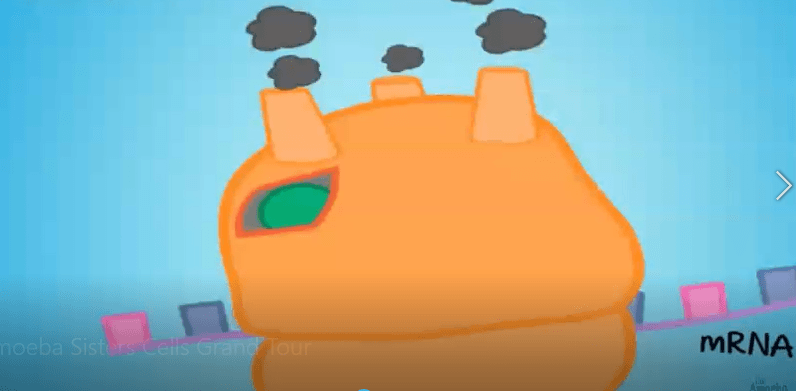
Which organelle in the cell is not a membrane-bound organelle and makes proteins?
Mitochondria
Golgi Apparatus
Nucleus
Ribosomes
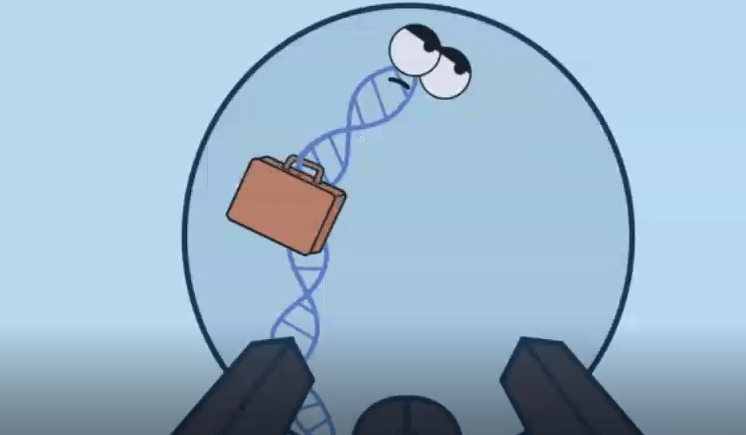
Which membrane-bound organelle contains the genetic material of the cell (such as DNA) ?
Cytoplasm
Nucleus
Endoplasmic Reticulum (ER)
Mitochondria
Match the following
Cells
All living things are made of one or more
DNA
All living things have genetic material.
Reproduce
All living things have offspring
Grow
All living thing increase in size, develop and die
A common characteristic of all organisms in Kingdoms Animal, Plant, and Fungi is (a) and (b)
Cells found the Kingdom Animalia are
(a)
UNIT 1. I can be either an autotroph or (a) . I am a single-celled organism or (b) , and I am often found in (c) . Based on all these characteristics, I am identified as part of the kingdom (d) .
Label the following Cells with the correct Cell Type.
Prokaryotes
Eukaryotes
Viruses
These cells HAVE a nucleus
Prokaryotic
Eukaryotic
Both
These cells have no nucleus
Prokaryotic
Eukaryotic
Both

