
Font size
 Worksheets
Gilded Age Political Cartoons Quiz
Total questions: 10
Worksheet time: 54mins
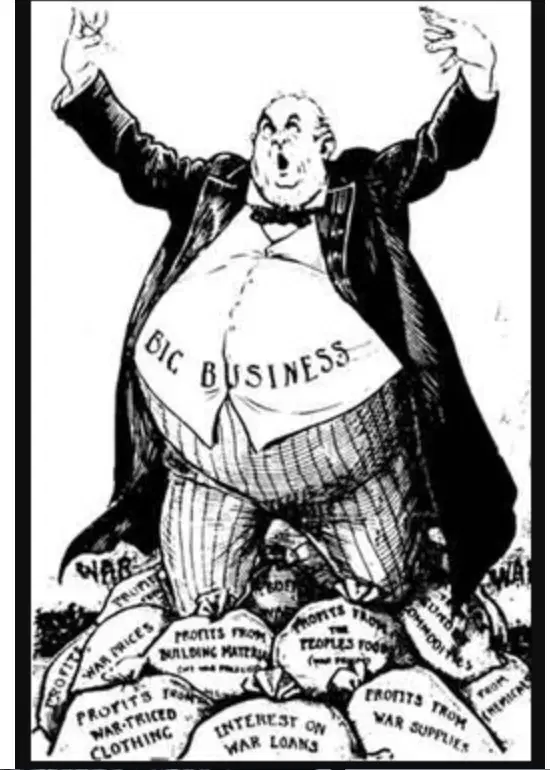
What do you think the Gilded Age is going to be about based on what you see in the cartoon?
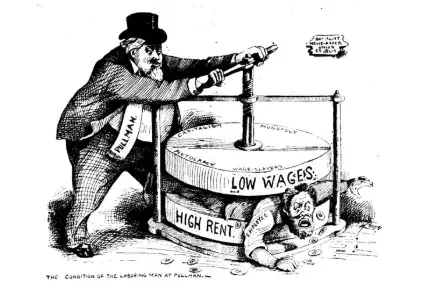
What are the two problems the worker has in this cartoon?
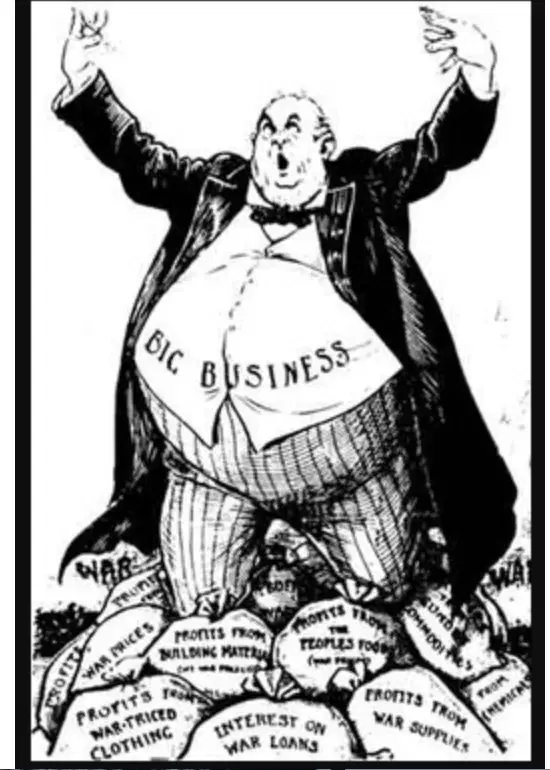
Who might the big guy be in the image?

Using the political cartoons and what you know about the Gilded Age so far, explain how each cartoon shows that big business wins and the government or workers lose.
5-9.
Answer the questions below after watching the video
What position did Boss Tweed first serve in?
Governor of New York
Mayor of New York
U.S. Congressman
Senator
How much was Boss Tweed estimated to have stolen?
Between 1 and 5 million dollars
Between 50 and 100 million dollars
Between 5 and 10 million dollars
Between 25 and 45 million dollars
When was Tammany Hall founded?
1950
1821
1905
1789
Until what year did Tammany Hall retain some of its local power base?
1950
1966
1978
1985
Who was one of the infamous Tammany bosses?
William 'Boss' Tweed
John D. Rockefeller
Abraham Lincoln
Theodore Roosevelt
10-12.
Answer the questions below after watching the video
How did the labor movement affect weekends?
No impact
Shortened them
Introduced work-free weekends
Made them longer
What did the Fair Labor Standards Act regulate?
Only overtime pay
Only child labor
40-hour workweek, child labor, minimum wage, and overtime pay
Health benefits
What did unions achieve regarding work hours by the late 1800s?
100-hour work weeks
No change in work hours
Longer breaks
Shorter work weeks

Which issue is this cartoon addressing?
Political corruption
Temperance
Civil-service reform
Segregation

Samuel Gompers President of American Federation of Labor 1913
With the power of wealth and concentration of Industry, the tremendous development in machinery, and power to drive machinery, with the improvement of the tools of labor, so that they are wonderfully tremendous machines, and with these all on the one hand: with labor, the workers, performing a given part of the whole product, probably an infinitesimal part, doing the thing thousand or thousands of times over and over again in a day- labor divided and subdivided and specialized, so that a working man is but a mere cog in the great industrial modern plant; his individuality is lost, alienated from the tools of labor; with concentration of wealth, concentration of industry, I wonder whether any of us can imagine what would be the actual condition of the working people of our country today without their organizations to protect them.
What would be the condition of the working men in our country in our day by acting as individuals with a great concentrated wealth and industry on every hand? it is horrifying even to permit the imagination full swing to think what would be possible. Slavery! Slavery! Demoralized, degraded slavery. Nothing better.
Both the Knights of Labor and American Federation of Labor AFL directly discussed the negative impact emerging monopolies and trusts had on the American worker. The Knights of Labor declaration states, " Development and aggressiveness of great capitalists and corporations " were leading to the pauperization of workers. Samuel Gompers, the president of the AFL, discusses “the power of wealth and concentration of industry” could potentially lead to conditions similar to slavery for the American worker.
What is the main concern expressed by Samuel Gompers regarding the concentration of wealth and industry?
Loss of individuality among workers
Increase in worker wages
Improvement in working conditions
Decrease in industrial accidents
According to the passage, what role do labor organizations play in the context of concentrated wealth and industry?
They protect workers from potential exploitation.
They increase the power of monopolies.
They reduce the need for skilled labor.
They promote individualism among workers.
Analyze the potential consequences of workers acting as individuals in a highly concentrated industrial environment, as suggested by Samuel Gompers.
What similarities does Samuel Gompers draw between the conditions of workers and slavery?
How might the development of machinery and specialization impact the individuality of workers, according to the passage?
Which goal was shared by both the Knights of Labor and the American Federation of Labor (AFL)?
to help large corporations to increase their production
to introduce new and innovative techniques to factories
to promote immigration of skilled workers from Asia and Europe
to organize workers demand better conditions from employers.
The Interstate Commerce act and the Sherman Anti Trust Act were efforts by the federal government to
regulate aspects of business
expand the positive features of the trusts
favor big business over small companies
move toward government ownership of key industries

