
 Worksheets
IED Make Up Day Assignment
Total questions: 30
Worksheet time: 17mins
What type of tolerance allows equal variation, both larger and smaller, than the specified dimension?
Limit dimensions
Unilateral
Bilateral
General
What type of tolerance states both the upper limit and lower limit, without needing to calculate them?
Limit dimensions
Bilateral
Unilateral
General
What type of tolerance is shown here? 2.50 ±0.02
Limit dimensions
Bilateral
Unilateral
General
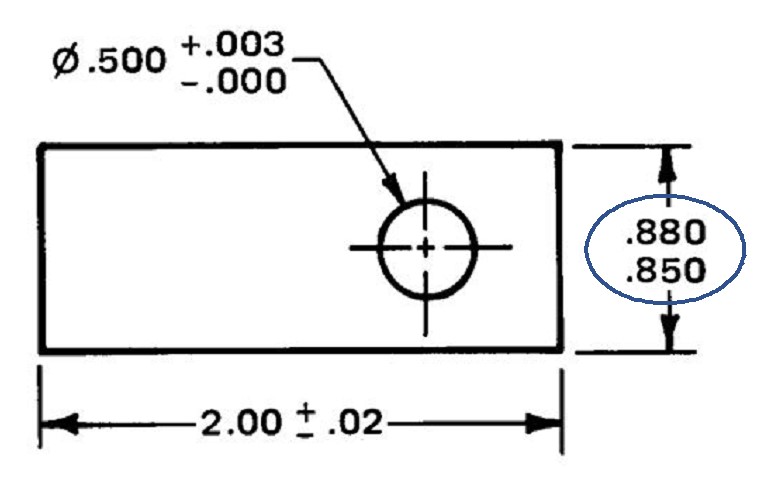
What type of tolerance is circled in this drawing?
Limit dimensions
Bilateral
Unilateral
General
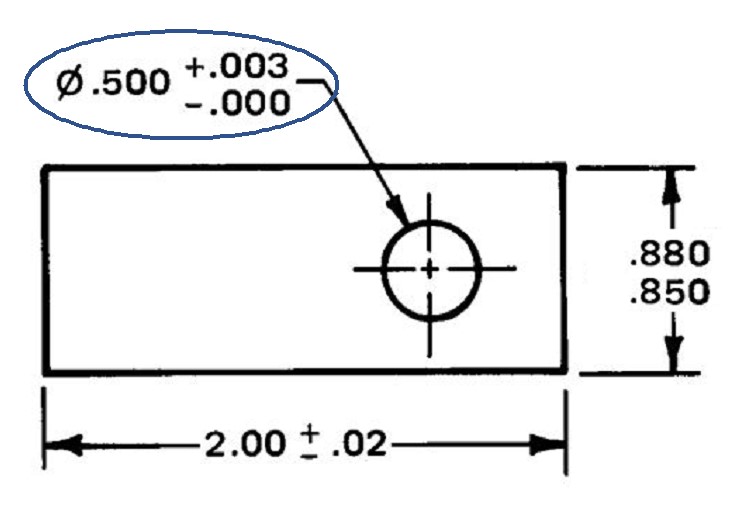
What type of tolerance is circled in this image?
Limit dimensions
Bilateral
Unilateral
General
What is upper limit for this tolerance? 0.250±0.01
0.250
0.240
0.260
0.02
When a hole is always smaller than the part being placed inside of it, what type of fit is this?
Clearance
Interference
Transition
Tension

The shaft is smaller than the hole, this is called:
Transition Fit
Clearance Fit
Interference Fit
Loose Fit
self-contained unit.

Revolute mate. Select all that apply
0 degrees of freedom
It has one degree of freedom (translation)
It has one degree of freedom (rotation)
It has both translational and rotational degrees of freedom

Which type of joints shown in the picture?
Ball joint
Pin-slot joint
Cylindrical joint
Revolute joint

Component rotates around Joint Origin.
Ball
Revolute
Cylindrical
Planar

Component moves along a single axis.
Ball
Revolute
Cylindrical
Slider

What type of drawing/view best describes the image?
Multiview
Orthographic
Exploded
Assembly

If you wanted to design a room that would give a peaceful, relaxing mood, what color would you choose?


What type of balance is shown in the image?
Symmetric
Asymmetric
Radial
Gradated
A mark created by a path of a moving point.
line
value
contrast
form
The empty or open area between, around, above, below and within objects.
form
balance
color
space

Disassembly or tear down of a product is a major step in the reverse engineering process, it uncovers the principles behind how a product works. It is always fun to tear apart a product, but nothing will be accomplished if data is not collected during the process. To gather this data, we will use ________________________________.
Gantt chart
product disassembly chart
concurrent engineering table
a workflow chart
Why do we disassemble products?
To Identify components and their interactions with each other.
To discover the strength and weaknesses of the parts.
To understand how the product functions/operates.
To create documentation, typically using a computer.

This is an example of what?
Structural Engineering
Reverse Engineering
Product Disassembly
Functional Analysis

