
 Worksheets
Duplicate of Copyright and Privacy Laws
Total questions: 23
Worksheet time: 12mins
A form of legal protection given to the creator of “original works of authorship,” (book, music, screenplay) is called
Copyright
Attribution
License
File Sharing
If you took a photo of a celebrity and put that photo in an advertisement without their permission, that's called ____________.
Commercial Appropriation
Commercial Libel
Commercial Duplicity
Commercial Deceit
If you printed false information about a person that lowered the community's estimation of the person, you are guilty of ________________.
libel
slander
If you said false information about a person that lowered the community's estimation of the person, you are guilty of ___.
libel
slander
To intentionally intrude, physically or otherwise, upon the solitude or seclusion of another person is called:
invasion of privacy
defamation
shield law
libel
Can you secretly tape a conversation and use it as legal evidence in the U.S. court system?
It depends on the state
Yes, secretly recorded conversations are allowed in all American courts.
No, secretly recorded conversations are NOT allowed in American courts.
Yes, if your crime is considered a misdemeanor.
If you are working for the paparazzi, when can you freely access a certain location to take photos of celebrities?
when the location is on public property it's almost always ok.
In the U.S. you have the right to take photos anywhere.
If you can prove you work for a news station and are covering a story.
You can photograph celebrities anytime because their job is public.
Which of the following statements is correct in regards to accessing private property?
A) You can access only if the owner of the property gives permission.
B) In American, you have the right to enter any property you choose.
C) You can enter private property if you work for a news agency.
D) All answers are correct.
Passing off another author’s works or ideas as your own is called:
File sharing
Plagiarism
Public domain
Attribution
Public domain refers to artistic works:
That have been produced for public entertainment
Not restricted to copyright and do not require a license or fee to use
Produced for general audiences
That can be bought by the public 170 years after the original author dies
How long can a work generally be copyrighted?
For the life of the author plus an additional 70 years
For the life of the author, then it becomes public domain
For the life of the author and 150 years.
Until the death of copyright holder and immediate members of the family.
What law gives artists the legal right to control how others use their works?
Fair Use
Creative Contents
First amendment
Copyright
When adding music to a video, which of the following procedures should you follow in order to obey copyright laws?
A. file share from anyone who owns a copy of the music you want
B. purchase and use royalty-free music
C. obtain written permission from copyright holder to use their music
B and C.
This law allows sample parts of copyrighted material to be temporarily used in limited ways for criticism, parody, education, news, or research without permission of the copyright holder.
Shield Laws
Public Domain
The Fair Use Act
Invasion of Privacy
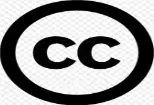
What does this symbol mean?
the work has a creative commons license and can be used by others.
An artist has labeled their work common creative for government use.
the art was community created meaning more than one artist worked on piece.
the intellectual property was cost calculated for reuse for others.
What is a Creative Common license?
copyright license shared by two artists who work on a single work.
when an artist gives permission for others to use their work.
allows full use of any copyrighted work after copyright holder passes away.
a license to have control of work after copyright expires.
Which of the following is an example of copyright infringement?
A. Using photos created by the U.S government without asking permission.
B. Downloading movies and music without proper payment for use.
C. changing the lyrics to a well-known song for as part of a comedy skit.
Both A and C
When is a work copyrighted?
After you register it with your government's copyright office
After it's printed, written down, recorded, or saved in any digital format
As soon as you write © and the date on it
As soon as your local city council approves
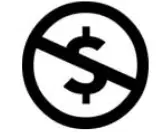
This Creative Commons symbol means you can copy:
🔺 as long as you give credit to the original author of the work
🔷 but you aren't allowed to make money off the work
🟡 but any work you create from this must be shared the same.
🟩 the work as is but it can't be altered
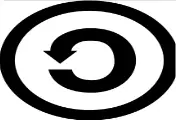
This Creative Commons symbol means you can copy:
the work as is but it can’t be altered
but you aren’t allowed to make money off the work
As long as you give credit to the original author of the work.
but any changes made to the original must be shared with the same license as creator
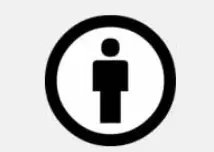
This Creative Commons symbol means you can copy but you must
but any work you share must be shared the same.
the work as it but it can’t be altered
but you aren’t allowed to make money off the work
give credit to the original author of the work, the title and the license the work is under.
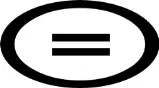
This Creative Commons symbol means you can copy
the work as it but it can’t be altered in any way.
but you aren’t allowed to make money off the work.
As long as you give credit to the original author of the work.
but any work you share must be shared the same.
For a work to be protectable under copyright, it must
be of professional quality.
Include a copyright notice.
be fixed in a tangible form of expression.
be clear and precise.

