
 Worksheets
Unit 3 Test Review
Total questions: 47
Worksheet time: 45mins
What is the setting of the passage below?
One summer day, Randolph slept alone in his room in the castle at Reddington. The light of the morning seeped slowly through his curtains. Randolph blinked against the day, smiling as his dream came to a peaceful conclusion.
Some plots can take place only in certain times and places.
Which option describes a plot that can only take place in a specific setting?
Which sentence is NOT about the setting?
The sun warmed the sand.
Waves crashed loudly on the shore.
She was so excited to be there.
A story's theme is usually stated directly in the text.
True
False
A story's theme is usually hidden in the text. We have to infer it.
True
False
Which of the following is an example of a theme?
Happiness
Cinderella was thoughtful and kind.
Jack risked his life to save Jane.
Don't judge others by the way they look.
"Acceptance" is an example of a...
Topic
Theme
"Hard work pays off in the end." This is an example of a...
Topic
Theme
"It's important to tell the truth." This is an example of a...
Topic
Theme
"Friendship" is an example of a...
Topic
Theme
A story can have multiple themes.
True
False
A theme can be one word.
True
False
A theme is a life lesson.
True
False
Denotation is a word's ____________.
Literal, dictionary definition
Emotional meaning
synonym
antonym
Referring to someone's house as a "shack" would have a __________ connotation.
positive
negative
Identify the word that has the more positive connotation
Immature
Youthful
the emotion that a word generates, extra implied meaning
Denotation
Connotation

Which text structure would use the following key words:
as a result, because, since, due to
Which text structure would use the following key words:
both, same, like, unlike, at the same time

What is the text structure of this paragraph?
Problem/Solution
Sequence
Compare/Contrast
Description

What is the text structure of this paragraph?
sequence
compare/contrast
problem/solution
description

What is the text structure of this paragraph?
sequence
compare/contrast
cause/effect
description

What is the text structure of this paragraph?
sequence
compare/contrast
problem/solution
description
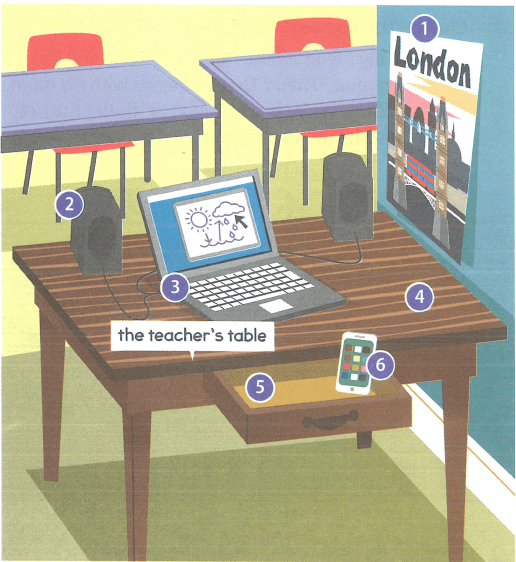
The laptop is __________ the speakers.
under
next to
between
near
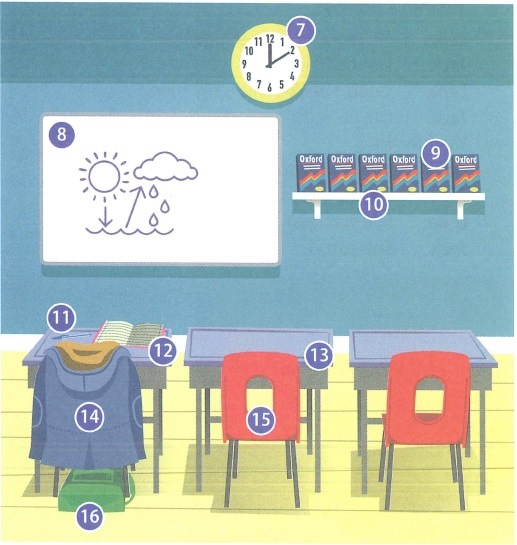
The dictionaries are __________ the shelf.
on
near
between
next to
The students' chairs are __________ their desks.
under
opposite
on
next to
The poster is __________ the teacher's table.
under
next to
on
between
James wandered ______________ the pet store
on
into
for
Which has the correct use of a comma?
Alex, back from his visit to California, showed us some vacation pictures.
Alex back from his visit to California, showed us some vacation pictures.
Alex back from his visit to California showed us some vacation pictures.
Alex back, from his visit to California, showed us some vacation pictures.
Which has the correct use of a comma?
Ms. Torres our teacher says that grammar is very important.
Ms. Torres, our teacher, says that grammar is very important.
Ms. Torres, our teacher says that grammar is very important.
Ms. Torres our, teacher says that grammar is, very important.
CONJUNCTIONS connect words and phrases.
true
false
Which word below is NOT a CONJUNCTION?
and
but
or
an
Name the conjunction in the sentence below.
Monkeys have long tails, but apes have none.
have
long
but
none
Name the conjunction in the sentence below.
Did Mr. Zold study wildlife in South Africa or in Zimbabwe?
did
in
or
Mr.
Choose the correct conjunction to complete the sentence below.
She did not study, _____ she failed the test.
so
but
nor
yet
Choose the correct conjunction below to complete the sentence.
Should we go by train _____ take the bus?
also
and
or
but
How can context clues help in making inferences?
They provide direct definitions of words.
They are hints or information surrounding a word or phrase that help readers understand its meaning and make inferences.
They are unrelated to the text and do not aid comprehension.
They only help in memorizing facts.
What is an inference?
A guess made without evidence.
A logical conclusion drawn from available information or evidence.
A statement that cannot be proven.
An assumption based on personal beliefs.

