
Font size
 Worksheets
T2B Medieval Europe and the making of Christendom
Total questions: 25
Worksheet time: 14mins
Spelling: 'The time in Europe from about 5th century to 15th century AD'
(a)
Spelling: 'Kings gave lands to nobles in return for their loyalty'
(a)
Spelling: 'A system where titles or positions are passed down in families'
(a)
Spelling: 'A soldier on horseback, often of noble birth'
(a)
Spelling: 'The leader of the Church'
(a)
Spelling: 'Wars fought by Christians to take back the Holy Land from Muslims(穆斯林)'
(a)
Spelling: 'A poor farmer or worker in medieval times'
(a)
Spelling: 'A religion based on the life and teachings of Jesus Christ'
(a)
Spelling: 'able to provide everything you need, especially food, for yourself without the help of other people'
(a)
Spelling: 'A city important to Christianity'
(a)
Which of the following statements of the Middle Ages of Europe is not correct?
Different kingdoms were founded in Western Europe
Kings gave lands to noble to secure his power
The social mobility was low
The Pope controlled the whole Europe
Sequencing 排序:Put the following social classes in the European feudal society from the highest to the lowest
King
Lord
Knight
Peasant
Which of the following were not a responsibility 責任 of the upper classes to the lower classes during the Middle Ages?
Grant land
Offer protection
pay taxes
manage land
Which of the following were not a responsibility 責任 of the lower classes to the upper classes during the Middle Ages?
pay taxes
manage land
grant land
swear loyalty
Which of the following are advantages of the hereditary system?
Helped maintain the power and the wealth of the ruling class
Sustained the contractual relationship
Maintained a rigid class structure
Maintained the loyalty of the lower classes
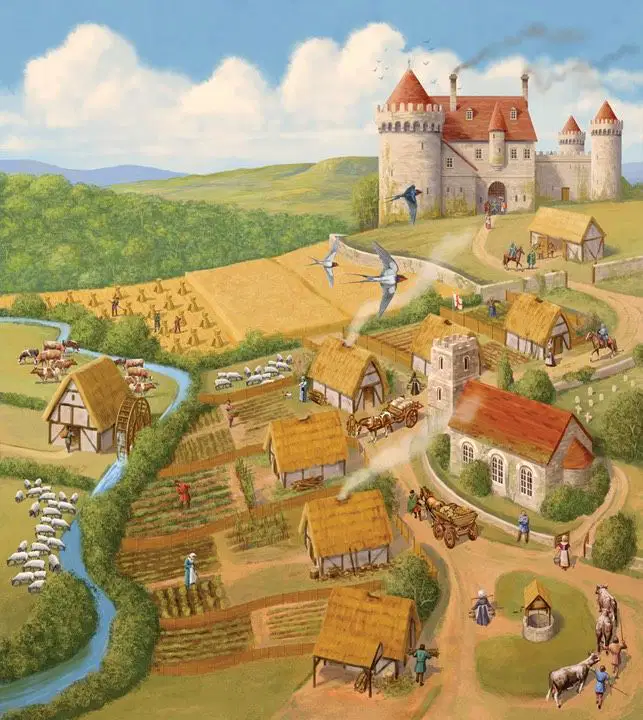
The place in the picture is most likely to be:
A manor
A pyramid
A castle
A city
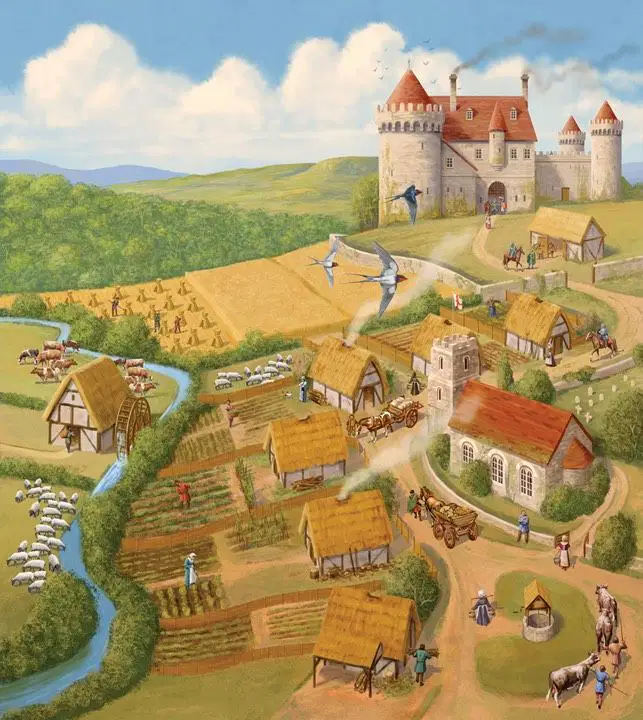
The place in the picture is most likely governed by
Upper Noble
Pope
Peasant
Monk
In medieval Europe, the rules of chivalry emphasized not only excellent combat skills, but also:
Good moral standards
Excellent business skills
Followed the order from the peasant
All of the above
Who turned Christianity into a state religion of the Roman Empire?
Constantine I
William II
Peter
Paul
After the Great Schism in 1054, Christianity was divided into:
Roman Catholic Church
Eastern Orthodox Church
Papal Church
Anglican Church
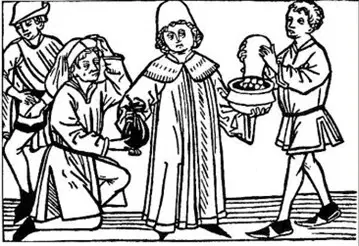
What influence of the church during the European Middle Ages is shown in the picture?
Economic influence: Right to collect Tithe
Political influence: Power to crown Kings
Social influence: To provide medical treatment
Cultural influence: To copy ancient texts and classics
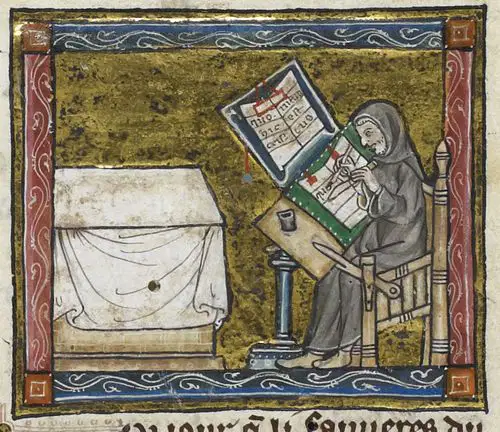
What influence of the church during the European Middle Ages is shown in the picture?
Economic influence: Right to collect Tithe
Political influence: Power to crown Kings
Social influence: To provide medical treatment
Cultural influence: To copy ancient texts and classics
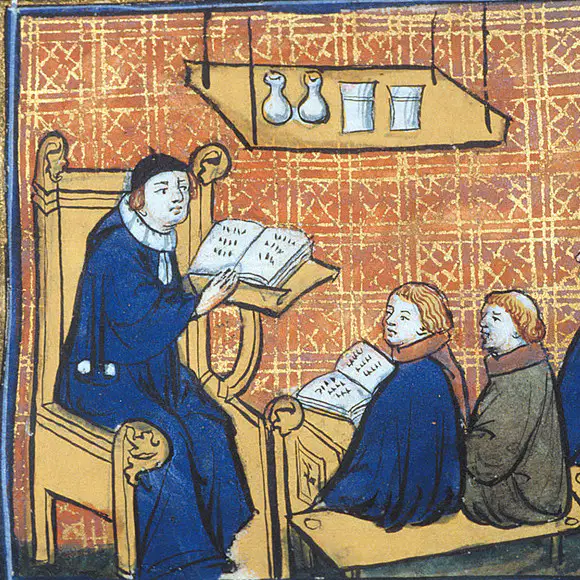
What influence of the church during the European Middle Ages is shown in the picture?
Economic influence: Right to collect Tithe
Political influence: Power to crown Kings
Education influence: To provide education such as teaching Latin
Cultural influence: To copy ancient texts and classics

The picture shows a plague that occurred in Europe in the 14th century, it is:
The Black Death
Covid 19
The Blank Death
The White Death
Which of the following is not a reason for the end of the Middle Ages?
Decline of feudalism
Decline of Church influence
Fall of the Eastern Roman Empire
Decline of Christianity

