
 Worksheets
(Savvas 18.1) Ch. 18.1 Electromagnetic Waves
Total questions: 18
Worksheet time: 9mins
What are electromagnetic waves?
They are transverse waves that consist of changing electric fields and changing magnetic fields.
They are longitudinal waves that require a medium to travel.
They are waves that can only travel through vacuum.
They are mechanical waves that consist of oscillating particles.
Electromagnetic waves are generated by a(n)
stationary charge.
moving charge with constant velocity.
vibrating or accelerating charge.
What can electromagnetic waves travel through? (Mark all that apply.)
Solids
Liquids
Gases
Vacuum (empty space)
What is the correct speed of light in a vacuum?
3.00×10⁸ kilometers per second
3.00×10⁸ meters per hour
3.00×10⁸ meters per second
3.00×10⁸ kilometers per hour
In a vacuum, as the wavelengths of electromagnetic waves increase, the frequencies
decrease.
increase.
remain constant.
The emission of electrons from a metal caused by light striking the metal is called the ________ effect.
photoelectric
thermoelectric
piezoelectric
electromagnetic
Blue light has a higher frequency than red light. Photons of blue light have ________ energy than photons of red light.
more
less
equal
no
As photons travel farther from the source, the ________ of light decreases.
intensity
wavelength
frequency
speed
Electromagnetic waves can behave as particles that are called ______.
photons
protons
electrons
neutrons
Light bends as it passes through a new medium. Which of the following theories can explain why this occurs?
Particle theory of light
Wave theory of light
Kinetic theory
Classical mechanics
Dim blue light can knock electrons off the surface of metal, but bright red light cannot. Which of the following theories can explain why this occurs?
Particle theory of light
Wave theory of light
Kinetic theory
Classical mechanics

The waves with the longest wavelengths in the electromagnetic spectrum are
Infrared rays.
radio waves
gamma rays
X-rays
The waves with the greatest energy in the electromagnetic spectrum are
Infrared rays.
radio waves
gamma rays
X-rays
The waves with the greatest frequency in the electromagnetic spectrum are
Infrared rays.
radio waves
gamma rays
X-rays
Which of the following occurs as light travels farther from its source?
Far from the source, photons come together in a small area.
The intensity of light increases as photons move away from the source.
The source gives off less light as photons move away from it.
Far from the source, photons spread over a larger area.
The energy of a photon is directly proportional to the
speed of the wave
frequency of the wave
wavelength of the wave
amplitude of the wave
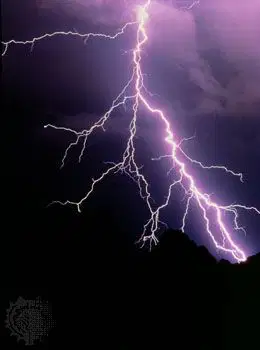
Why does a person see lightning first, and then hear the sound of thunder?
The light waves move faster than the sound waves in the air.
The sound waves are reflected by the air particles, but the light waves are not reflected.
The wavelength of sound waves is shorter than the wavelength of light waves.
The sound waves are partially absorbed by air, but the light waves are completely transmitted
through air.

