
 Worksheets
Design and Fly a Kite Pre
Total questions: 13
Worksheet time: 20mins
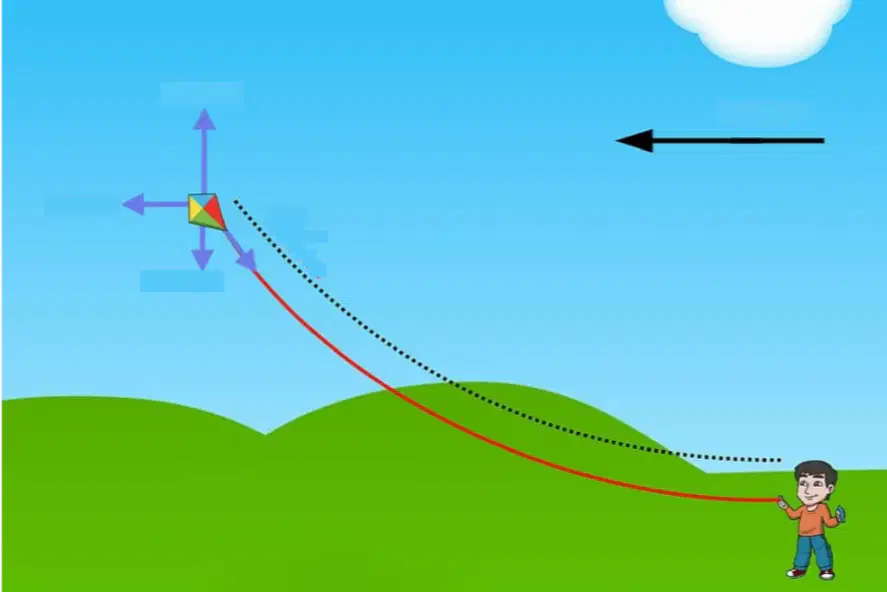
When flying a kite, which of the following best describes the forces you need to consider?
The force of gravity pulling it downwards, the tension in the string pulling it upwards, and the wind pushing it sideways.
The force of gravity pulling it upwards, the tension in the string pulling it downwards, and the wind pushing it sideways.
The force of gravity pulling it sideways, the tension in the string pulling it upwards, and the wind pushing it downwards.
The force of gravity pulling it downwards, the tension in the string pulling it sideways, and the wind pushing it upwards.
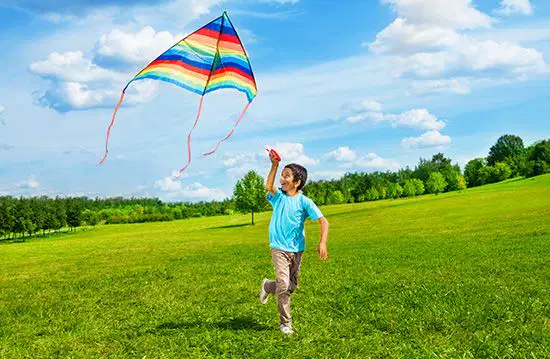
To successfully fly a kite, one must:
test and validate wind conditions
increase the weight of the kite
delay the launch until the wind stops
reduce the length of the string
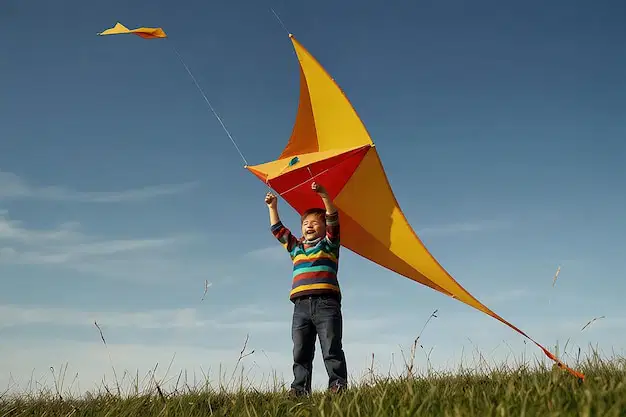
The process of flying a kite involves several steps. Which of the following is the correct sequence of these steps?
Identify the location, assemble the kite, launch the kite, control the kite, land the kite
Assemble the kite, identify the location, control the kite, launch the kite, land the kite
Launch the kite, identify the location, assemble the kite, control the kite, land the kite
Control the kite, identify the location, assemble the kite, launch the kite, land the kite
Match the word to its definition by connecting them with lines.
lift
The act of pushing, pulling or applying pressure.
drag
A system (such as a kite) that consists of multiple subunits that complete the whole design.
force
A force, opposite to gravitational force, created by fluid (air) flowing past an object.
tetrahedron
Force that opposes the motion of an object traveling through fluid.
modular
A three-dimensional shape made of four equilateral triangles.

Run fast with the kite in the air. Let go of the kite. Hold onto the string.
What happens next?
The kite will fall down.
The kite will fly up with the wind.
You will fall down.
Nothing.
You should run slow with the kite in the air.
True
False
If the wind does not catch the kite, __________ __________!
give up
run away
eat pizza
try again
You need __________ to fly a kite.
nothing
food
wind
water
Which of the following is true?
Kites were invented long ago. They have provided help and entertainment to people throughout the years.
Kites are an important tool in history. The most famous kite flying experiment was performed by Benjamin Franklin in 1752. He wanted to prove that lightning was made of electricity.
Kites were used in World War II. The Navy wanted the kites to tangle up the propellers in enemy planes. Today people “battle” at kite-flying contests.
Kites have carried weather instruments to help meteorologists. Today people fly kites at festivals around the world.
What happened as a result of military airplanes becoming more popular during wars?
Battles are fought only between kites at festivals.
Scientists used kites more often to learn about weather and the atmosphere.
Kites were used less to help soldiers beat the enemy.
Kite design moved from bigger and bulkier to smaller and sleeker
What is the primary reason for a kite to stay airborne?
The lift generated by the wind
The color of the kite
The weight of the kite
The tension in the string
Which of the following is NOT necessary for flying a kite?
A strong wind
A long string
A kite tail
A clear sky
What should you do if the kite starts to dive towards the ground?
Run faster
Let go of the string
Pull the string tighter
Release more string

