
 Worksheets
Non-Destructive Testing
Total questions: 13
Worksheet time: 2mins
Non-Destructive Testing (NDT) is a method used to:
evaluate the properties of a material without causing damage
destroy the material to test its properties
test the material by altering its structure
none of the above
True or False: Non-Destructive Testing allows inspection of components while they are in operation or service, minimizing downtime.
True
False
Non-Destructive Testing is applicable to which of the following materials?
Metals
Plastics
Ceramics
All of the above
Liquid Penetrant Testing (PT) highlights surface-breaking cracks and defects using ______.
liquid dyes.
ultrasound waves.
magnetic fields.
X-rays.
Eddy Current Testing (ECT) detects defects in conductive materials using ______.
electromagnetic fields.
ultrasonic waves.
infrared radiation.
mechanical vibrations.
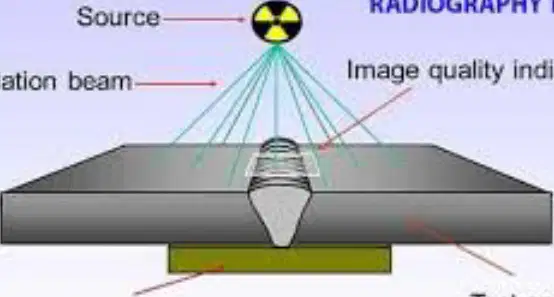
What is the purpose of Radiographic Testing (RT)?
To detect internal defects in materials
To measure temperature
To test electrical conductivity
To analyze chemical composition
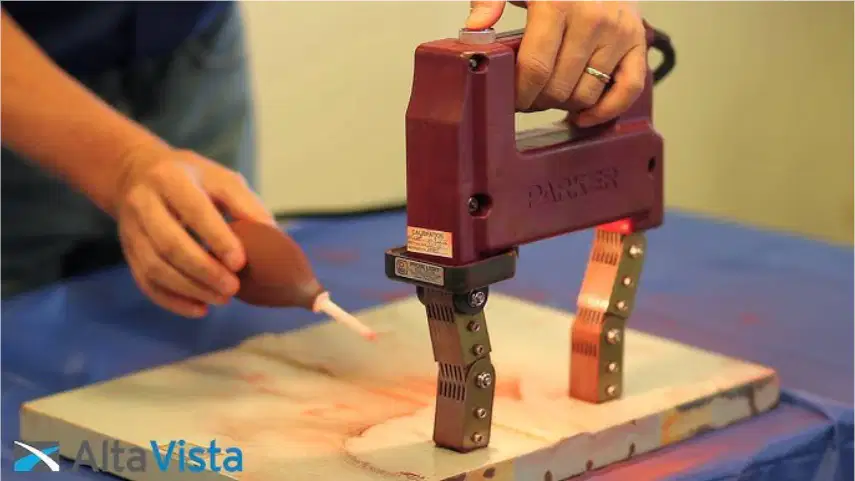
What is observed during the Magnetic Particle Testing process to identify flaws?
Formation of magnetic lines of force
Accumulation of magnetic particles
Change in color of the test surface
Emission of light from the test surface
The purpose of Liquid Penetrant Testing (PT) is to:
detect surface defects
measure thickness
determine material composition
assess hardness
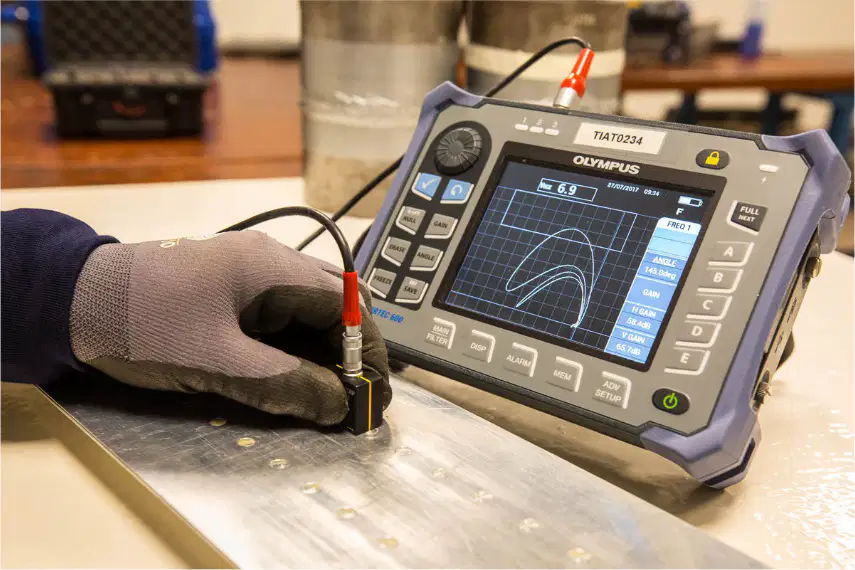
Applications of Eddy Current Testing (ECT) include:
Detecting surface and sub-surface defects in conductive materials
Measuring the thickness of non-conductive coatings on conductive substrates
Inspecting welds and heat-affected zones
All of the above

How does Eddy Current Testing (ECT) detect defects?
By using magnetic fields to induce currents in the material and detecting disruptions
By visual inspection of the material surface
By measuring the thermal conductivity of the material
By analyzing the chemical composition of the material
The tool used in thermography to measure heat distribution is:
Thermometer
Thermal camera
Barometer
Hygrometer
What does Acoustic Emission Testing monitor?
Sound waves in materials
Temperature changes in materials
Electrical conductivity in materials
Magnetic fields in materials
One application of Acoustic Emission Testing is:
Detecting leaks in pipelines
Measuring temperature
Calculating pressure
Analyzing chemical composition

