
 Worksheets
Ecosystem and Symbiotic Relationships Quiz
Total questions: 19
Worksheet time: 11mins
What is the primary source of all energy in an ecosystem?
Plants
Producers
Fungus and bacteria
The sun
Which statement correctly describes the relationship between deer and green plants?
The deer supplies food and oxygen to the green plants
The deer supplies food and carbon dioxide to the green plants
The green plants supply food and carbon dioxide to the deer
The green plants supply food and oxygen to the deer
In a symbiotic relationship where a fish attaches to a manta ray for a free ride without affecting the ray, this is called:
Predation
Competition
Mutualism
Commensalism
Which organisms in an ecosystem are considered consumers?
Plants and algae
Herbivores, carnivores, and omnivores
Bacteria and fungi
All producers
What is the most accurate definition of a food chain?
A diagram showing all feeding relationships in an ecosystem
A linear sequence showing how energy flows from one organism to another
A chart showing population changes over time
A pyramid showing biomass at different trophic levels
In a predator-prey relationship between lions and hyenas competing for a gazelle, this represents:
Mutualism
Competition
Parasitism
Commensalism
Which of these represents only abiotic factors in an ecosystem?
Trees, soil, and water
Temperature, water, and soil
Bacteria, sunlight, and rocks
Plants, air, and temperature
When a flea feeds on a mouse's blood and harms the mouse, this relationship is called:
Competition
Predation
Parasitism
Mutualism
What is the correct order of ecological organization from smallest to largest?
Organism, ecosystem, community, population, biosphere
Organism, population, community, ecosystem, biosphere
Population, organism, community, ecosystem, biosphere
Organism, community, population, ecosystem, biosphere
Which organisms would be considered decomposers in an ecosystem?
Termites and rabbits
Fungi and bacteria
Foxes and wolves
Plants and algae
Why do arrows in a food web point in only one direction?
To show which animal is larger
To show the flow of energy
To show animal relationships
To show population sizes
A bird that eats insects, worms, and plant material is classified as:
A producer
A carnivore
An omnivore
A herbivore
Which level of an energy pyramid contains the most available energy?
Third-level consumer
Second-level consumer
First-level consumer
Producer level
In a food web, organisms that have arrows pointing away from them but none pointing toward them are:
Decomposers
Consumers
Producers
Herbivores

What comes next in Ecological organization? Species---population---community--?
ecosystem
biosphere
population
biome
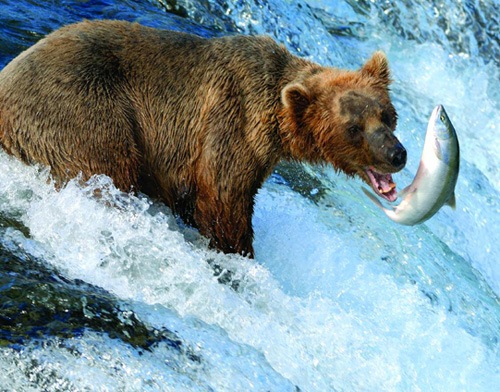
An organism that needs to eat other organisms to get energy is known as a:



