
 Worksheets
The President and Presidency Powers
Total questions: 34
Worksheet time: 17mins
Name
Class
Date
1.
In the unofficial role of symbolic figurehead representing the United States internationally, the president acts as the
a)
commander in chief.
b)
chief administrator.
c)
chief citizen.
d)
chief of state.
2.
Which of the following is a necessary qualification for anyone wishing to be president of the United States?
a)
minimum age of 35
b)
maximum age of 65
c)
lived in the country for 10 years
d)
served in the military
3.
The president is elected by
a)
a majority vote of eligible voters.
b)
a vote of the electoral college.
c)
members of Congress.
d)
the 50 state legislatures.
4.
In the electoral college that chooses the president, each state gets one vote for every
a)
member of the House of Representatives.
b)
member of Congress
c)
500,000 people.
d)
the 50 state legislatures.
5.
If a president dies in office, the vice president
a)
assumes the duties but not the title of president.
b)
becomes president and serves out the term.
c)
becomes president and serves until a special election can be held.
d)
serves until the speaker of the House can take over.
6.
What happens if a president becomes disabled?
a)
The vice president takes over presidential duties temporarily.
b)
The vice president becomes president and serves out the term.
c)
The president’s spouse takes over presidential duties temporarily.
d)
The Speaker of the House takes over presidential duties temporarily.
7.
Under the Presidential Succession Act of 1947, The person next in line after the vice president is the
a)
Secretary of State
b)
President pro tempore
c)
President of the Senate
d)
Speaker of the House
8.
Which of the following is one of the executive powers of the president?
a)
making a law to cut down pollution
b)
appointing an ambassador to France
c)
appointing the Speaker of the House
9.
An executive branch employee who serves “at the pleasure of the president” may be dismissed by the president
a)
with the consent of the Senate.
b)
after impeachment by the House.
c)
only when Congress is not in session.
d)
at any time and for any reason.
10.
A president who wants to establish rules and regulations for the operation of a federal agency may do so by taking what action?
a)
issuing a signing statement
b)
amending a law passed by Congress
c)
issuing an executive order
d)
declaring executive privilege
11.
What can a president do to bypass the Senate approval that is required for a treaty?
a)
ratify the treaty as commander in chief
b)
make an executive agreement instead
c)
submit the treaty to the people in a referendum
d)
ask the Supreme Court to rule on the treaty
12.
The War Powers Resolution of 1973 requires the president to notify Congress within ___________ of committing armed forces to military action.
a)
48 hours
b)
90 days
c)
30 days
d)
6 months
13.
Proposing a law to expand educational opportunities for preschool-age children would be an example of what kind of presidential power?
a)
legislative
b)
diplomatic
c)
judicial
14.
The presidential veto is
a)
one of the president’s judicial powers.
b)
exercised by the White House chief of staff.
c)
a significant check on Congress.
15.
Which of the following would probably be the most effective way for a president to achieve the goal of getting changes made to an important bill when Congress is controlled by the other party?
a)
threatening a veto and negotiate with legislative leaders over changes
b)
asking members of the president’s party to vote against the bill unless it is changed
c)
calling on voters to defeat legislators who oppose the president
16.
Which of the following is an important Informal power of the president?
a)
pardoning convicted criminals
b)
appointing Supreme Court justices
c)
declaring war on other nations
d)
using the media to persuade the public
17.
What department was created during the 1930s to advise and assist the president in carrying out presidential duties?
a)
Department of Homeland Security
b)
Council of Economic Advisers
c)
National Security Council
d)
Executive Office of the President
18.
What organization forms the heart of the Executive Office of the President?
a)
Executive Office Building
b)
White House Office
c)
National Security Council
d)
Cabinet
19.
Which of the following is a part of the Executive Office of the President that produces studies on economic trends?
a)
secretary of the treasury
b)
Federal Reserve Board
c)
Council of Economic Advisers
d)
Office of Management and Budget
20.
Who is the executive branch official in charge of opening and counting the electoral votes for president every four years?
a)
Vice President
b)
Secretary of State
c)
Speaker of the House
d)
Chief of Staff
21.
What is the title of a cabinet department head?
a)
chief of staff
b)
chief executive
c)
chancellor
d)
secretary
22.
What official duty/role of the President includes negotiating treaties and receiving ambassadors from other countries?
a)
Chief Executive
b)
Chief Agenda Setter
c)
Foreign Policy Leader
d)
Chief Administrator
23.
What official duty/role gives the President the authority to order troops into action and to call them back home.
a)
Chief Executive
b)
Chief Agenda Setter
c)
Commander and Chief
d)
Chief Administrator
24.
Which amendment states that the Vice President will become President if the Presidency becomes vacant?
a)
10th
b)
15th
c)
20th
d)
25th
25.
The power that allows a president to refuse to release information to Congress or a court.
a)
Executive Order
b)
Executive Privilege
c)
Diplomatic Recognition
d)
Pardon
26.
The art of negotiating with foreign governments
a)
Succession
b)
Executive Power
c)
Diplomacy
d)
Reprieves
27.
The presidential power that allows a president to recognize the legitimacy of a foreign country.
a)
Executive Order
b)
Executive Privilege
c)
Diplomatic Recognition
d)
Executive Recognition
28.
Formal, signed statements from the president that instruct or guide executive officials and have the force of law.
a)
Executive Order
b)
Executive Privilege
c)
Diplomatic Recognition
d)
Pardon
29.
Which of the following is a Judicial power practiced by the President?
a)
State of the Union address
b)
Proposing a Budget
c)
Granting Pardons
d)
Proposing a Law to Congress
30.
The largest organization in the Executive Office of the President. Employs more than 500 people.
a)
National Security Council (NSC)
b)
Council of Economic Advisers (CEA)
c)
Office of Management and Budget (OMB)
31.
Cabinet members are nominated by the president and must be confirmed by the Senate.
a)
True
b)
False
32.
How many cabinet positions are there today, including the vice president?
a)
4
b)
10
c)
16
d)
20
33.

The official who manages the everyday operations of the White House Office. (Susie Wiles)
a)
Chief of Staff
b)
White House Press Secretary
c)
Secretary of State
d)
White House Manager
34.
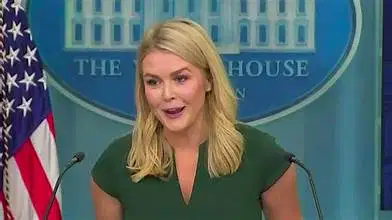
This position has become more important as the media has become more important to the success of a presidency. (Karoline Leavitt)
a)
Chief of Staff
b)
White House Press Secretary
c)
Secretary of State
d)
White House Manager
100 %

