
NEW
Font size
 Worksheets
Mastering Sight Reading
Total questions: 30
Worksheet time: 14mins
What is the time signature of a piece with 4 beats per measure?
3/4
4/4
6/8
2/4
Identify the rhythm pattern: quarter note, eighth note, quarter note.
3 beats
4 beats
2.5 beats
1.5 beats
During music class, Kachi is learning about different musical notes. His teacher shows him a whole note. What does a whole note look like in sheet music?
A whole note looks like a filled black circle with a stem.
A whole note appears as a hollow square shape with a stem.
A whole note is represented by a solid rectangle.
A whole note looks like a hollow oval shape without a stem.
How many beats does a half note receive in 4/4 time?
3 beats
1 beat
4 beats
2 beats
What is the difference between 3/4 and 4/4 time signatures?
4/4 has 2 beats per measure; 3/4 has 4 beats per measure.
3/4 is faster than 4/4; both have the same number of beats.
3/4 has 3 beats per measure; 4/4 has 4 beats per measure.
3/4 has 5 beats per measure; 4/4 has 3 beats per measure.
Name a musical term that indicates to play loudly.
mezzo
forte
piano
allegro
What does a crescendo indicate in a piece of music?
A sudden decrease in tempo.
A pause in the music.
A change in key signature.
A gradual increase in loudness or intensity.
How do you recognize a major scale by ear?
The pattern of a major scale is H-W-W-H-W-W-H.
A major scale has a dark and somber sound.
A major scale can be recognized by its bright sound and the pattern of whole and half steps: W-W-H-W-W-W-H.
A major scale can only be recognized by its tempo.
What is the interval between C and E?
Minor second
Perfect fourth
Major third
Diminished fifth
Identify the dynamic marking for 'soft' in music.
forte
pianissimo
mezzo
piano
What is the purpose of a key signature?
To indicate the tempo of a piece of music.
To show the dynamics of a piece of music.
To provide the lyrics of a song.
The purpose of a key signature is to indicate the key of a piece of music.
How do you sight sing a simple melody?
Use only numbers instead of solfege
Identify key and time signatures, use solfege, maintain rhythm.
Sing without any rhythm
Ignore the key signature
What does a fermata symbol indicate?
A fermata indicates to pause the music completely.
A fermata indicates to play a note louder.
A fermata indicates to repeat a section of music.
A fermata indicates to hold a note or rest longer than its usual duration.
What is the name of the note that is one step higher than G?
G♭
G#
A
F#
How do you read a treble clef staff?
The treble clef staff has only one line for notes.
The treble clef staff is used for percussion instruments.
The treble clef staff represents only rhythm, not pitch.
The treble clef staff represents musical notes, with lines and spaces corresponding to specific pitches.
What is the function of a time signature in music?
To determine the dynamics of the music
To indicate the tempo of a piece
The function of a time signature in music is to define the rhythmic structure by specifying the number of beats per measure and the note value of each beat.
To specify the key signature of a composition
What does the term 'legato' mean in musical performance?
Legato means to play notes in a staccato manner.
Legato indicates a fast tempo in a piece of music.
Legato means to play or sing notes smoothly and connectedly.
Legato refers to a specific type of musical instrument.
Identify the note that is two steps lower than D.
F#
C
B
E
What is the symbol for a sharp note?
♮
b
#
♭
How do you determine the tempo of a piece?
Use a metronome or listen for the pulse to find the BPM.
Ask a friend for their opinion on the speed.
Play the piece backwards to find the tempo.
Count the number of notes in the piece.
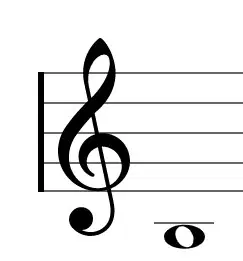
Choose the correct answer.
G
B
E
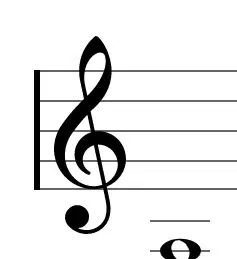
Choose the correct answer.
G
A
B
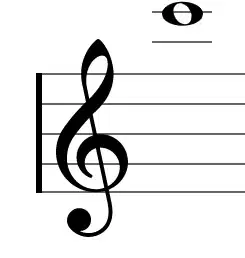
Choose the correct answer.
F
D
C


B
C
D
E

G
B
D
F
A

