
 Worksheets
Imperialism Quiz
Total questions: 30
Worksheet time: 15mins
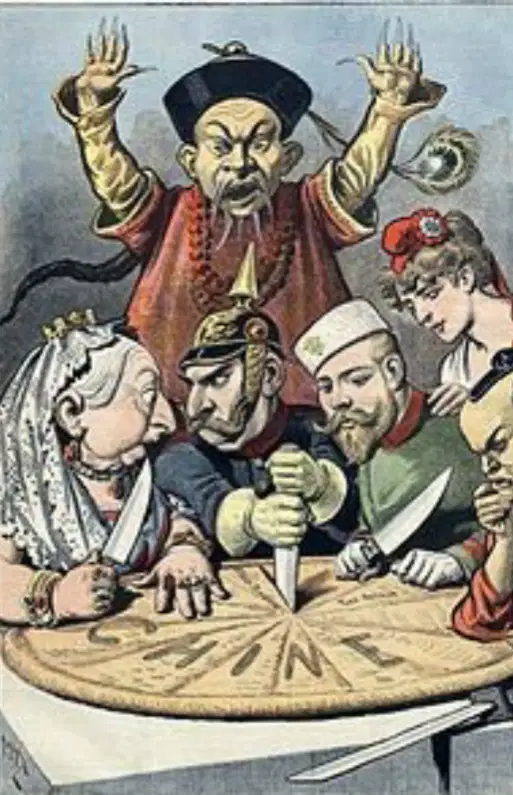
What is the definition of imperialism?
A policy of extending a country's power through diplomacy or military force.
A policy of reducing a country's influence in global affairs.
A strategy to promote cultural exchange between nations.
A method of achieving economic independence.
What is the main goal of mercantilism?
To create favorable trade balances
To promote cultural exchange
To establish democratic governments
To encourage technological innovation
For whose benefit did colonies exist?
Settlers or natives
The imperial centre
Local governments
International organizations
How did the Industrial Revolution change the way industrial nations viewed their colonies?
As independent allies
As markets for goods and sources for raw materials
As places to avoid
As equal partners
What was one of the economic goals that we spoke about?
Create new markets
Stamp out slave trade
Get raw materials: ivory, copper
Bring Christianity to the continent
What was one benefit of setting up colonies?
Poverty
Wealth
Conflict
Independence
What did Americans fear during this time period?
Losing their cultural identity
Losing the U.S.'s vitality, energy, and spirit
Economic recession
Political instability
What was the purpose of the Monroe Doctrine?
To promote trade with Europe
To discourage European intervention in the Western Hemisphere
To establish a military alliance with Europe
To encourage European colonization
What was one reason imperialist nations built up their military strength?
To improve trade relations
To expand and protect their interests
To reduce military spending
To promote cultural exchange
By 1900, where did the U.S. rank in terms of navy size?
First largest
Second largest
Third largest
Fourth largest
Who believed it was their duty to spread the "blessings" of Western civilization?
Colonial officials, doctors, and missionaries
Farmers and traders
Artists and musicians
Soldiers and generals
What concept did the U.S. use to justify expansion?
Social Darwinism
Communism
Capitalism
Isolationism
What was introduced to other peoples around the world as a result of U.S. expansionism?
Modern civilization
Ancient traditions
Medieval practices
Primitive cultures
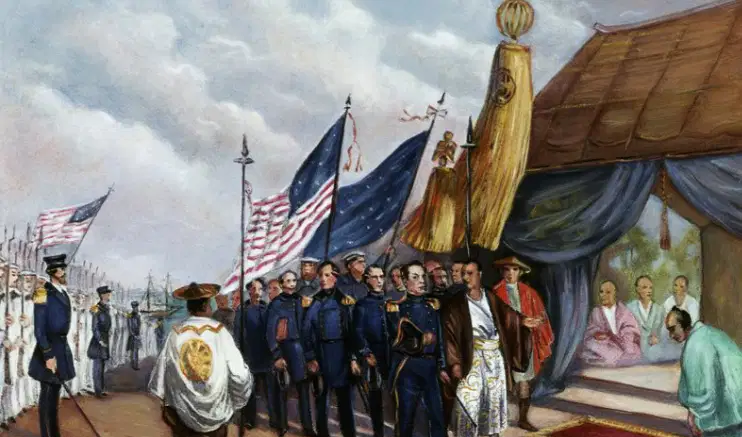
Who was the U.S. naval commodore who successfully opened Japan to trade with the U.S. in 1854?
Matthew Perry
George Dewey
John Paul Jones
Chester Nimitz
In what year did Matthew Perry open Japan to trade with the U.S.?
1845
1854
1861
1870
What was one of the outcomes of Matthew Perry opening Japan to trade?
U.S. expansion in the Atlantic
U.S. expansion in the Pacific
U.S. expansion in Europe
U.S. expansion in Africa
What did the opening of Japan allow the U.S. to establish in the Pacific?
Trade and naval bases
Agricultural colonies
Space research centers
Gold mines
What feeling developed within the U.S. as a result of the Monroe Doctrine?
Isolationism
Jingoism
Pacifism
Neutrality
What was a key factor that drove European nations to pursue imperialism in the late 19th century?
Need for new markets and raw materials
Effort to reduce military expenditures
Desire for cultural exchange
Interest in promoting global peace
Which of the following was a consequence of the U.S. adopting the policy of imperialism?
Decline in military strength
Reduction in economic growth
Increased isolation from world affairs
Expansion of U.S. influence in the Pacific and Caribbean
What was a significant impact of the Industrial Revolution on global trade?
Decrease in demand for raw materials
Increase in self-sufficiency
Expansion of international markets
Reduction in technological advancements
Which ideology was used to justify the expansion of empires in the 19th century?
Isolationism
Feudalism
Manifest Destiny
Socialism
What was one of the main reasons for the U.S. to pursue a policy of imperialism?
To promote global peace
To acquire new territories for resources
To reduce military expenditures
To establish cultural exchanges
What was a significant contributing factor to the heightened tensions that followed the sinking of the USS Maine?
a) Diplomatic treaties between the U.S. and Spain.
b) The role of "yellow journalism" in sensationalizing the event.
c) The immediate and factual reports from the U.S. Navy.
d) The calm and rational responses from Spanish officials.
Which two events significantly escalated tensions between the United States and Spain, directly contributing to the outbreak of the Spanish-American War in 1898?
a) The Platt Amendment and the Teller Resolution.
b) The sinking of the USS Maine and the publication of the de Lôme letter.
c) The Treaty of Paris and the Foraker Act.
d) The Open Door Policy and the Roosevelt Corollary.
As a result of the Spanish-American War, the United States gained control of several territories. Which of the following sets accurately lists three of the key territories acquired by the U.S.?
a) Cuba, Panama, and Hawaii.
b) Alaska, Cuba, and Puerto Rico.
c) Guam, the Philippines, and Puerto Rico.
d) Hawaii, Guam, and the Panama Canal Zone.
Which of the following best describes the primary motivation behind the United States' construction of the Panama Canal?
a) To promote international trade and cooperation with Latin American nations.
b) To facilitate rapid naval movement and enhance U.S. economic and strategic power.
c) To provide employment opportunities for Central American workers.
d) To establish a neutral zone for international shipping.
Which country initially began the construction of the Panama Canal before the United States took over the project?
a) Spain
b) Great Britain
c) France
d) Germany
The Panama Canal's construction and subsequent control by the United States is often cited as an example of:
a) Isolationism
b) Manifest Destiny
c) Imperialism
d) Neutrality
The United States Open Door Policy, issued in 1899 and 1900, primarily aimed to:
a) Establish exclusive U.S. control over Chinese trade and resources.
b) Support Chinese independence and territorial integrity against foreign influence.
c) Ensure equal trade access for all nations within China, preventing any single power from dominating.
d) Promote Chinese industrialization and modernization through U.S. investment.

