
 Worksheets
Module 18 Test
Total questions: 20
Worksheet time: 13mins
What shows the elements a compound contains and the exact number of the atoms of each of those elements in a unit of that compound?
An electron dot diagram includes the chemical symbol for an element surrounded by dots representing ___________?
electrons
Match the element, with the number of dots to use when making electron dot diagrams.
Li
1
B
3
Ba
2
O
6
Ar
8
How many electrons are needed in the outermost energy level to make it stable?
True or false: The properties of a compound are often very different from those of its component elements.
Atoms with unstable outer energy levels can lose, gain, or share electrons by combining with ______.
When sodium and chlorine combine to form a compound, each sodium atom (a) one electron and each chlorine atom (b) one electron.
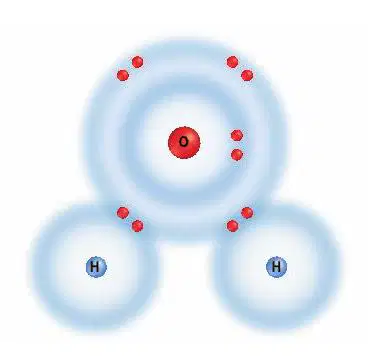
Which concepts is/(are) being illustrated by the diagram?
In a water molecule the oxygen atom has a complete outer energy level but the hydrogen atoms do not.
In water, each oxygen atom shares two electrons and each hydrogen atom shares one electron.
In water, each oxygen atom loses two electrons and each hydrogen atom gains one electron.
Each hydrogen and oxygen atom has a complete outer energy level.
Which statements about the chemical stability of atoms is true?
Group 17 elements are stable when their outer energy levels have eight electrons.
Hydrogen is stable when its outer energy level has two electrons.
Fluorine is stable when its outer energy level has seven electrons.
Sulfur is stable when its outer energy level has eight electrons.
Group 15 elements are stable when their outer energy levels have five electrons.
What is the force that holds atoms together in a compound?
Atoms with unstable outer energy levels can do what to obtain a stable outer energy level?
What is an Ion?
a charged particle that has either more or fewer electrons than protons.
Choose the options that correctly complete this sentence:When sodium and chlorine react to form sodium chloride, ______.
The force of attraction between the opposite charges of the ions in an ionic compound is called a(n) ______ bond.
Match the following descriptions to the type of bond.
Occurs between two nonmetals - (a)
Occurs between a metal and a nonmetal - (b)
Which of the following is true about noble gases in terms of their electron configuration?
They need to gain electrons to become stable.
They have a full outer energy level.
They have an incomplete outer energy level.
They readily form compounds with other elements.
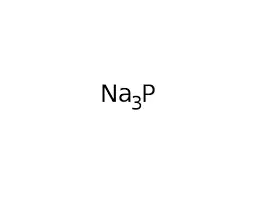
Name the compound
Trisodium Phosphide
Sodium Phosphide
Nobelium Pentachloride
Sodium Palladium
Magnesium Nitride
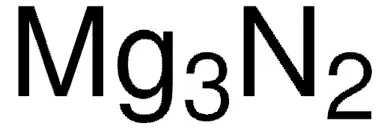
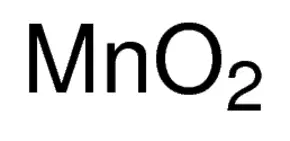
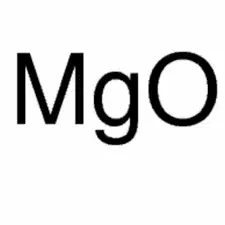

Name the compound
Nitrogen Iodine
Nitrous Idoxide
Nitrogen Triiodide
Nitrogen Iridium
Write the correct formula for "Iodine Heptaflouride"

IF7

IF8
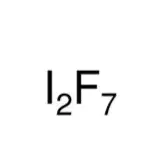
I2F7

