
 Worksheets
Key Content Areas - C1 Heat
Total questions: 60
Worksheet time: 40mins
Air temperature affects the built environment by influencing:
the structural integrity of buildings
the energy consumption for heating and cooling
the aesthetic design of urban areas
the availability of construction materials
Mean radiant temperature is defined as:
The average temperature of all the surfaces in a space, weighted by their area and emissivity.
The temperature of the air in a room.
The temperature of the coldest surface in a room.
The average temperature of the human body.
What is relative humidity and why is it important in the built environment?
Relative humidity is the amount of moisture in the air compared to what the air can hold at that temperature.
Relative humidity is the temperature of the air, and it is important for determining weather patterns.
Relative humidity is the amount of sunlight in a room, and it is important for energy efficiency.
Relative humidity is the level of pollution in the air, and it is important for air quality control.
Air movement in the built environment is important for:
Temperature regulation
Aesthetic appeal
Structural integrity
Noise reduction
What are dry and wet bulb temperatures and how are they used in the built environment?
Dry and wet bulb temperatures are measures of air temperature and humidity.
Dry and wet bulb temperatures are unrelated to the built environment and are used only in meteorology.
Dry and wet bulb temperatures are used to measure wind speed and direction in the built environment.
Dry and wet bulb temperatures are used to determine the structural integrity of buildings.
Explain the mechanism of conduction in heat transfer.
Conduction is the transfer of heat through direct contact of particles.
Conduction is the transfer of heat through electromagnetic waves.
Conduction is the transfer of heat through fluid motion.
Conduction is the transfer of heat through vacuum.
Convection in heat transfer involves the movement of which of the following?
Solids
Liquids and gases
Only gases
Only liquids
Radiation in the context of heat transfer is:
the transfer of heat through gases
the transfer of heat through a fluid
the transfer of heat through electromagnetic waves
the transfer of heat through solids
The role of air temperature inside buildings is to:
regulate humidity levels
provide structural support
enhance aesthetic appeal
increase energy consumption
Mean radiant temperature is defined as:
The average temperature of all the surfaces surrounding a person.
The average temperature of the air in a room.
The average temperature of the human body.
The average temperature of the sun.
The effect of relative humidity on the human body is:
It causes dehydration.
It affects body temperature regulation.
It improves digestion.
It enhances mental clarity.
What instrument is used to measure relative humidity?
Hygrometer
Thermometer
Barometer
Anemometer
The importance of air movement inside a building is to:
improve air quality and comfort
reduce noise levels
increase energy consumption
decrease structural integrity
The difference between dry bulb temperature and wet bulb temperature is:
Dry bulb temperature is measured by a regular thermometer, while wet bulb temperature is measured with a thermometer wrapped in a wet cloth.
Dry bulb temperature is always higher than wet bulb temperature.
Wet bulb temperature is used to measure humidity, while dry bulb temperature is not.
There is no difference between dry bulb and wet bulb temperatures.
What might the effects be on the occupants of a building with insufficient heating during the winter, or which gets too hot in the summer? Describe how comfortable you would feel outside on a still, dry day in temperatures of 5°C, 15°C, 25°C and 35°C.
Occupants may feel cold in winter and hot in summer; comfort levels vary with temperature.
Occupants will always feel comfortable regardless of temperature.
Occupants will only feel uncomfortable in winter.
Occupants will only feel uncomfortable in summer.
Task 4: Explain how age impacts thermal comfort requirements.
Age affects thermal comfort as older individuals may require warmer environments.
Age has no impact on thermal comfort requirements.
Younger individuals always prefer warmer environments.
Thermal comfort is solely determined by humidity levels.
Task 4: Explain how gender impacts thermal comfort requirements.
Gender has no impact on thermal comfort requirements.
Men and women have the same thermal comfort requirements.
Women generally prefer warmer temperatures than men.
Men generally prefer warmer temperatures than women.
Task 4: Explain how clothing impacts thermal comfort requirements.
Clothing acts as an insulator, affecting heat retention and loss.
Clothing has no impact on thermal comfort.
Clothing only affects thermal comfort in cold environments.
Clothing impacts thermal comfort only through color.
Task 5. Managing heat is an important consideration in controlling thermal comfort and providing comfortable living and working environments. Why is this so? Explain your answer. (6 marks)
To ensure energy efficiency and reduce costs.
To maintain optimal temperature for comfort.
To prevent overheating and ensure safety.
All of the above.
A thermometer is used for determining human comfort conditions by measuring:
temperature
humidity
air pressure
wind speed
The role of an anemometer in determining human comfort conditions is to measure:
temperature
humidity
wind speed
air pressure
Electronic control systems are used for determining human comfort conditions by:
regulating temperature and humidity
monitoring air quality
adjusting lighting levels
all of the above
What factors are considered in acceptable thermal comfort parameters according to current building regulations?
Temperature, humidity, and air velocity
Only temperature
Only humidity
Only air velocity
How does age affect thermal comfort requirements?
Age does not affect thermal comfort requirements.
Older individuals may require warmer environments for comfort.
Younger individuals need warmer environments for comfort.
Age affects thermal comfort requirements only in extreme climates.
What is the impact of clothing on thermal comfort requirements?
Clothing has no impact on thermal comfort requirements.
Clothing affects thermal comfort by providing insulation.
Clothing only impacts thermal comfort in extreme weather conditions.
Clothing impacts thermal comfort by changing air quality.
How does the level of activity influence thermal comfort requirements?
Higher activity levels increase thermal comfort requirements.
Higher activity levels decrease thermal comfort requirements.
Activity levels do not influence thermal comfort requirements.
Thermal comfort requirements are the same regardless of activity level.
The significance of metabolic rate in determining thermal comfort is:
It affects the body's heat production and influences comfort levels.
It has no impact on thermal comfort.
It only affects thermal comfort in extreme weather conditions.
It is the sole determinant of thermal comfort.
The principles of heat losses and gains in buildings include:
Conduction, convection, and radiation
Insulation and ventilation only
Heating and cooling systems
Lighting and electrical appliances
Which of the following is a type of heat loss in buildings?
Fabric heat losses
Solar heat gains
Electrical heat losses
Fill in the blank: Ventilation heat losses contribute to ______ in buildings.
energy inefficiency
increased comfort
reduced noise
improved air quality
The impact of thermal bridges on heat losses is:
Significant increase in heat losses
No effect on heat losses
Reduction in heat losses
Insulation improvement
Which of the following is a factor contributing to heat gains and losses in buildings?
Insulation quality
Building orientation
Window size
All of the above
The significance of the insulating material and its thickness is:
To enhance the aesthetic appeal of the structure
To provide structural support
To reduce heat transfer and improve energy efficiency
To increase the weight of the structure
The determination of fabric and ventilation heat losses is conducted by:
measuring the temperature difference across the fabric and ventilation system
using a thermal imaging camera
calculating the heat transfer coefficient
estimating based on weather conditions
The purpose of roof, wall, and floor insulation in buildings is to:
reduce energy consumption by maintaining temperature
increase the structural integrity of the building
enhance the aesthetic appeal of the building
provide additional storage space
Draught reduction is used for what purpose in buildings?
To increase ventilation
To reduce energy consumption
To enhance structural integrity
To improve aesthetics
The location and type of heating installations are important in a building because:
they affect the building's energy efficiency and comfort.
they determine the building's aesthetic appeal.
they influence the building's market value.
they are required by building codes.
Condensation in buildings is caused by:
High humidity levels and poor ventilation
Low temperatures and dry air
Excessive sunlight and heat
Strong winds and open windows
The impact of dew-point temperature profiles on buildings is:
Increased energy efficiency
Potential for mold growth
Improved structural integrity
Reduced maintenance costs
Condensation in buildings can be predicted and prevented by:
using dehumidifiers and proper ventilation
increasing indoor humidity levels
sealing all windows and doors
using more insulation materials
Interstitial condensation is a phenomenon that occurs when:
moisture accumulates within the layers of a building structure
water vapor turns into liquid on the surface of a wall
humidity levels drop significantly in a room
air temperature rises above the dew point
Extractor fans play a role in controlling condensation by:
removing excess moisture from the air
increasing the air temperature
adding moisture to the air
decreasing the air temperature
What might the effects be on the occupants of a building with insufficient heating during the winter, or which gets too hot in the summer?
Discomfort and health issues
Improved energy efficiency
Increased property value
Enhanced indoor air quality
Managing heat is an important consideration in controlling thermal comfort and providing comfortable living and working environments because:
it affects the efficiency of heating and cooling systems.
it influences the design of buildings.
it impacts human health and productivity.
it determines the cost of energy consumption.
The importance of air temperature in understanding the behavior of heat in the built environment is:
It helps in determining the thermal comfort of occupants.
It has no impact on the built environment.
It is only important for outdoor environments.
It is irrelevant to energy consumption.
Mean radiant temperature affects the behavior of heat in the built environment by influencing:
thermal comfort and energy efficiency
only thermal comfort
only energy efficiency
neither thermal comfort nor energy efficiency
How does air velocity influence the behavior of heat in the built environment?
Air velocity increases heat dissipation, leading to cooler environments.
Air velocity decreases heat dissipation, leading to warmer environments.
Air velocity has no effect on heat behavior in the built environment.
Air velocity only affects humidity, not heat.
The importance of dry bulb temperature in the behavior of heat in the built environment is:
It determines the humidity level.
It affects the thermal comfort and energy efficiency.
It influences the color of the walls.
It controls the lighting conditions.
What is the role of wet bulb temperature in understanding the behavior of heat in the built environment?
It helps in determining the cooling efficiency of air conditioning systems.
It measures the amount of moisture in the air.
It indicates the temperature at which water vapor condenses.
It is used to calculate the heat index.

Inside buildings, the air temperature is controlled to:
maintain comfort and health
reduce energy consumption
increase humidity
decrease air quality
The amount of water vapour present in air compared to the maximum possible moisture content at a given temperature is called:
Relative Humidity
Absolute Humidity
Dew Point
Saturation Point
The effect of air velocity on heat transfer between air and surfaces is:
Increases heat transfer
Decreases heat transfer
No effect on heat transfer
Varies unpredictably
High air velocity can be beneficial because it:
Increases heat dispersion
Decreases evaporation
Promotes dampness
Reduces air movement
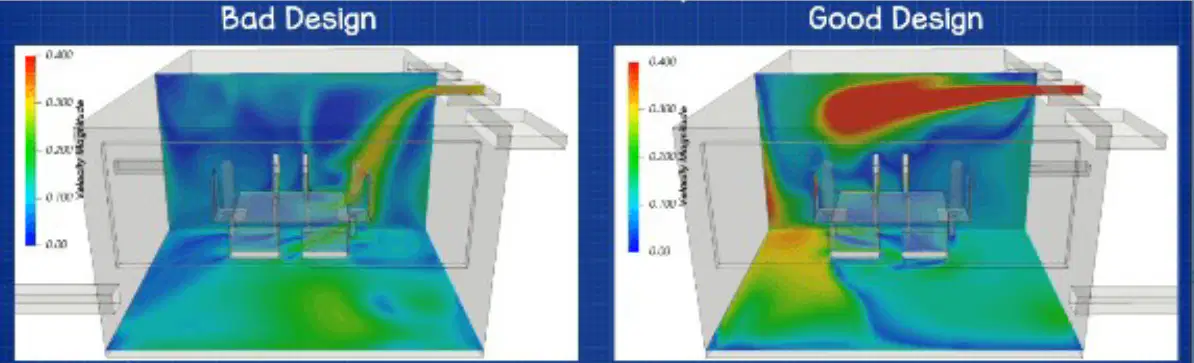
What negative impact can the movement of cool air have on thermal comfort?
It can enhance thermal comfort by providing a cooling effect.
It can lead to discomfort by causing a chill.
It has no impact on thermal comfort.
It improves air quality without affecting thermal comfort.
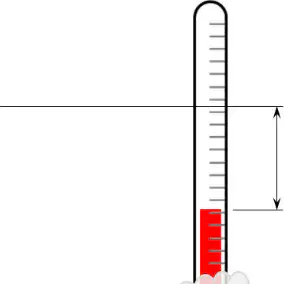
The purpose of using a thermometer with a damp cloth moistened with distilled water wrapped around its bulb is to:
measure the air temperature accurately
measure the wet-bulb temperature
prevent the thermometer from overheating
ensure the thermometer remains clean
At low humidity, what happens to the rate of evaporation and the cooling effect observed?
The rate of evaporation increases and the cooling effect is enhanced.
The rate of evaporation decreases and the cooling effect is reduced.
The rate of evaporation remains the same and the cooling effect is unchanged.
The rate of evaporation increases but the cooling effect is reduced.
list five personal factors needing considered in human comfort levels
list five materials within a building affected by heat gains/losses
list seven ways condensation affects buildings
list seven reasons why illuminance levels need considered for a hotel