
 Worksheets
Geothermal, Hydrogen, and Wind Energy
Total questions: 21
Worksheet time: 13mins
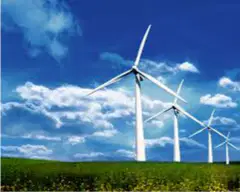
Fill in the blank: A wind turbine is a machine that converts the kinetic energy of wind into mechanical energy of a rotating turbine, and then into electrical energy via a ________.
generator
transformer
battery
motor
What device converts mechanical energy from a spinning turbine into electrical energy?
generator
motor
battery
transformer
Which of the following birds is at risk of being struck by turbine blades, particularly during migration?
whooping crane
bald eagle
peregrine falcon
golden eagle
What is one of the causes of bat fatalities near wind turbines in North America?
Electrocution
Collision with blades
Starvation
Predation
What is the primary purpose of grouping wind turbines in a wind farm?
To enhance aesthetic appeal
To improve maintenance efficiency and electricity distribution
To increase land usage
To reduce noise pollution
Arjun and Hannah are discussing renewable energy sources for a school project. They come across off shore wind farms, which are:
A type of renewable energy source located in the ocean.
Farms that grow crops near the sea.
Facilities for breeding marine animals.
Tourist attractions on the coast.

The diagram above shows a wind turbine. Which section of the wind turbine converts wind energy to electrical energy?
blades
generator
rotor
pitch system
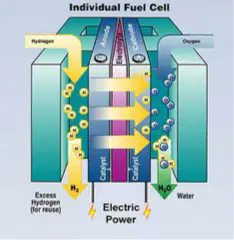
Hydrogen gas is produced by which of the following methods?
Electrolysis of water
Combustion of methane
Photosynthesis
Oxidation of iron
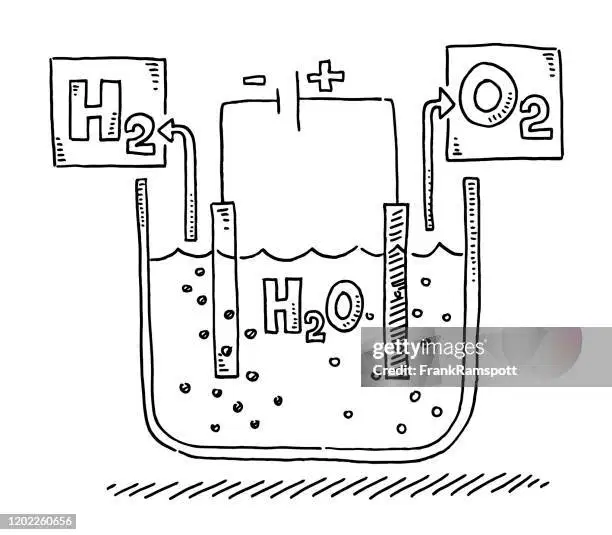
The process of electrolysis of water involves:
the decomposition of water into oxygen and hydrogen gases using an electric current.
the combination of hydrogen and oxygen to form water using an electric current.
the conversion of water into steam using heat.
the freezing of water into ice using cold temperatures.

A hydrogen fuel cell generates electricity by:
combining hydrogen and oxygen to produce water and electricity
burning hydrogen gas to produce heat and electricity
using solar energy to split water into hydrogen and oxygen
storing electrical energy in hydrogen molecules
What is an electric motor?
A device that converts electrical energy into mechanical energy
A device that converts mechanical energy into electrical energy
A device that stores electrical energy
A device that generates electrical energy
What is the efficiency of a hydrogen fuel cell?
80% efficient (potential energy of H gas to electrical energy)
60% efficient
50% efficient
70% efficient
What is the efficiency of an internal combustion engine?
20% efficient (potential energy of hydrocarbon fuel to mechanical energy of axle to kinetic energy of moving car)
30% efficient
40% efficient
50% efficient
What is the efficiency of an electric motor?
60% efficient (electrical energy to mechanical energy of axle to kinetic energy of moving car)
70% efficient (electrical energy to mechanical energy of axle to kinetic energy of moving car)
80% efficient (electrical energy to mechanical energy of axle to kinetic energy of moving car)
90% efficient (electrical energy to mechanical energy of axle to kinetic energy of moving car)
What is geothermal electricity?
Steam generated from ground water sources heated by magma from earth's core is piped up to the surface at a geothermal power plant where it turns a turbine, which powers an electrical generator, after which the cooled water is returned to the ground water source.
Electricity generated by burning fossil fuels to heat water and produce steam.
Electricity generated by harnessing the power of ocean waves.
Electricity generated by using solar panels to convert sunlight into energy.
What is geothermal home/building heating?
Hot water or steam from hot water sources underground is piped into a home or building, where it warms the air in the building via a radiator. NOT TO BE CONFUSED WITH GROUND SOURCE HEAT PUMPS.
Using solar panels to convert sunlight into electricity for heating.
Burning fossil fuels to generate heat for the building.
Using wind turbines to generate electricity for heating.
What is hydrogen sulfide?
A toxic gas that can be produced as a byproduct of the steam generation at geothermal power plants. Highly lethal to humans, even in small dosages.
A harmless gas used in balloons.
A type of mineral found in rocks.
A form of renewable energy.
What is a ground source heat pump?
A system that uses solar panels to generate electricity
A heating system for buildings that takes advantage of the constant, 50-60 degree temperature of the ground, about 10 feet below the surface
A device that cools buildings using wind energy
A type of geothermal power plant
What does a heat exchanger do in a ground source heat pump system?
Transfers heat from hot gas to the air in a building
Generates electricity from geothermal energy
Cools the building using underground water
Absorbs heat from the sun
Fill in the blank: One of the advantages of geothermal energy is its ability to supply ________ electricity.
base-load
intermittent
sporadic
variable
Fill in the blank: A disadvantage of geothermal energy is its high initial ________ cost.
start up
maintenance
operational
fuel

