
 Worksheets
Understanding Matter, Molecules, and Atoms
Total questions: 25
Worksheet time: 28mins
What are the characteristics that differentiate atoms, elements, molecules, or substances?
Atoms are the smallest unit of matter, elements are pure substances consisting of one type of atom, molecules are two or more atoms bonded together, and substances are forms of matter with distinct properties.
Atoms are the largest unit of matter, elements are mixtures of different atoms, molecules are single atoms, and substances are forms of energy.
Atoms are the smallest unit of energy, elements are pure substances consisting of different types of molecules, molecules are single atoms, and substances are forms of matter with no distinct properties.
Atoms are the largest unit of energy, elements are mixtures of different molecules, molecules are two or more elements bonded together, and substances are forms of energy with distinct properties.
The evolution and/or characteristics of celestial bodies that make up the Universe can be explained by:
The Big Bang Theory
The Theory of Relativity
Quantum Mechanics
Newton's Laws of Motion
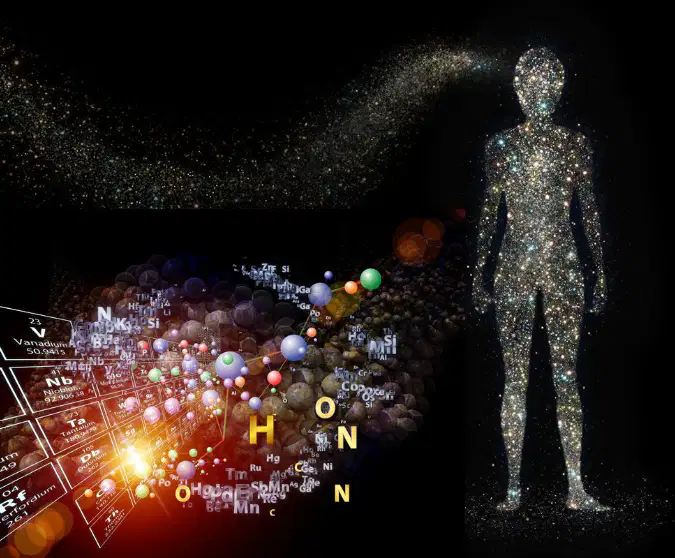
What do you think this means about who we are and our place in the universe?
It reflects our quest for identity and understanding of our role in the cosmos.
It shows our indifference to cosmic events.
It highlights our technological advancements.
It suggests our dominance over the universe.
After analyzing 1500 stars, what did astronomers discover about humans and bright stars?
A) They share 97% of the same type of atoms.
B) They are made of different atoms.
C) They share 50% of the same type of atoms.
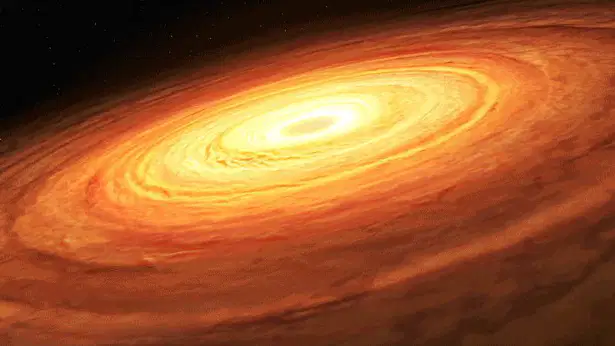
Explain the process of accretion in the universe.
Accretion is the process by which particles come together to form larger bodies, such as stars and planets, in the universe.
Accretion is the process of nuclear fusion in stars.
Accretion is the expansion of the universe over time.
Accretion is the collision of galaxies.
What event is said to have given origin to time, space, and matter?
Fill in the blank: Tudo o que existe no Universo é constituído por ______ e energia.
matéria
luz
som
tempo
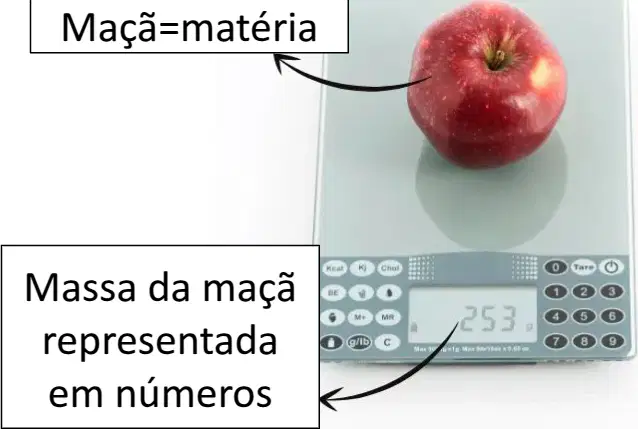
What is matter according to the text?
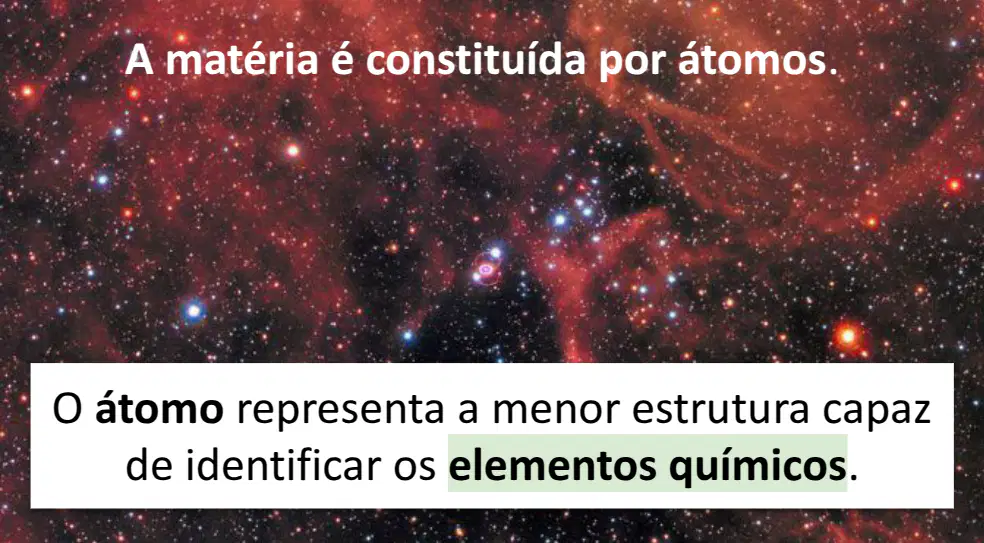
What is matter composed of according to the image?
Atoms and molecules
Energy and waves
Light and sound
Heat and temperature
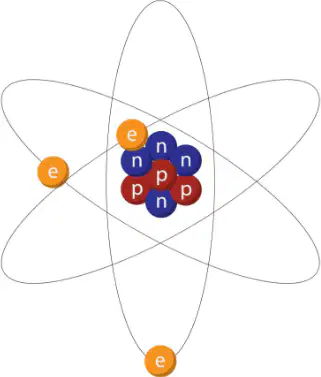
What is the smallest structure capable of identifying chemical elements?
Atom
Molecule
Compound
Mixture
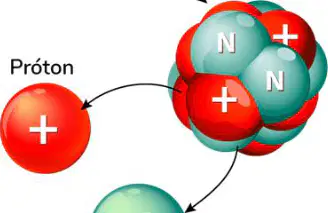
What differentiates a chemical element?
Number of electrons
Number of protons
Number of neutrons
Number of atoms
Fill in the blank: There are 118 chemical elements found in nature, with 92 being _______ and 26 being artificial.
natural.
synthetic.
man-made.
laboratory-created.

What is the chemical element used in decorative balloons that makes them float when released?
Oxygen
Helium
Nitrogen
Carbon
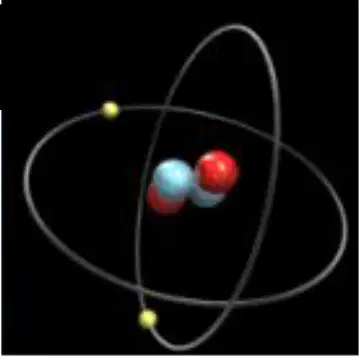
Fill in the blank: Helium is the second most abundant element in the ________.
universe.
ocean.
earth's crust.
atmosphere.

What happens when an atom joins with another atom?
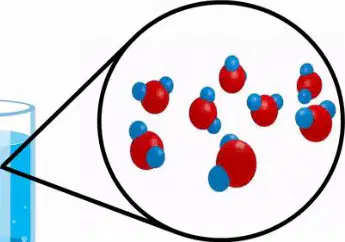
Fill in the blank: When different chemical elements join together, they form _______.
compounds
mixtures
solutions
elements

Which of the following substances were formed during the Earth's formation?
CH4
NH3
H2
H2O
Fill in the blank: During the Earth's formation, various molecules formed and combined to create different _______ found on our planet.
substances
elements
organisms
minerals
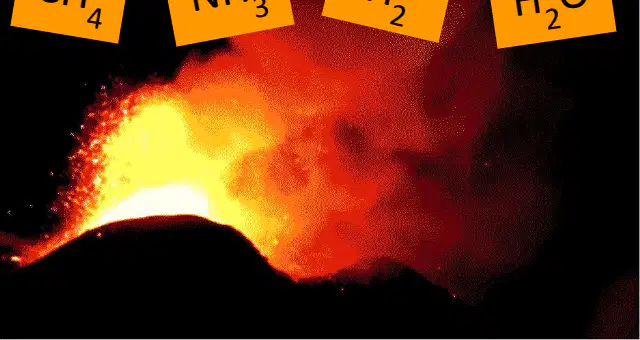
What gases were released by volcanic eruptions in the primitive Earth atmosphere?
CH4
NH3
H2
H2O
Fill in the blank: Constant volcanic eruptions on primitive Earth released gases that constituted the _______ atmosphere.
primitive
modern
ancient
future

What is represented by the red and blue circles in the diagram?
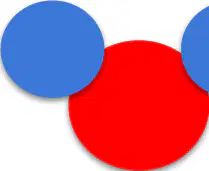
In the diagram, what do the combined red and blue circles form?
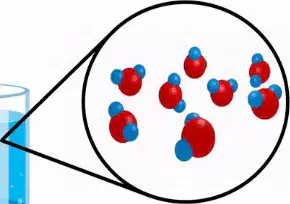
What is the final representation in the sequence shown in the diagram?
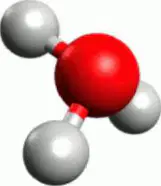
What concepts did we understand in the lesson?
Concept A
Concept B
Concept C
Concept D
The composition of matter that forms the Universe is:
Dark energy, dark matter, and ordinary matter
Only ordinary matter
Only dark energy
Only dark matter

