
 Worksheets
Catholic Church in the 1500s
Total questions: 50
Worksheet time: 13hrs 30mins
By the 1500s, what was the status of the Catholic Church?
A minor religious group
A dominant religious institution
A new religious movement
A declining religious institution
Who held almost all the power in the Catholic Church during the 1500s?
The King
The Pope
The Bishops
The Cardinals
What financial situation did the Catholic Church face in the 1500s?
They were very wealthy
They had no financial issues
They did not have a lot of money and needed funding
They were funded by the government
What was one of the main issues of corruption within the church mentioned in the text?
Simony
Indulgences
Nepotism
Pluralism
Who were enjoying their wealth while corruption was growing in the church?
The common people
The merchants
The Pope and the other nobility
The clergy
What were indulgences during the Reformation?
Certificates granting land ownership
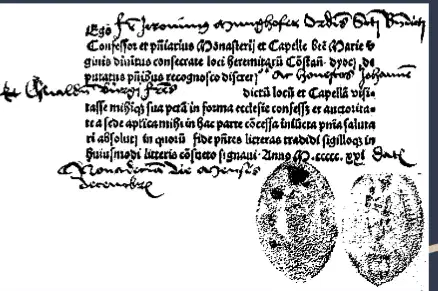
Certificates sold by the Catholic Church for forgiveness of sins
Certificates for free education
Certificates for tax exemption
What was one of the effects of selling indulgences during the Reformation?
It led to increased church attendance
It sparked widespread criticism
It resulted in more religious holidays
It increased the number of priests
Which of the following was a cause of the Protestant Reformation?
Industrial Revolution
Religious Corruption
Scientific Revolution
Exploration of the New World
What invention helped spread the ideas of the Protestant Reformation?
Steam Engine
Printing Press
Telegraph
Radio
Which intellectual movement contributed to the Protestant Reformation?
Romanticism
Renaissance Humanism
Enlightenment
Realism
What type of factors also played a role in causing the Protestant Reformation?
Technological Factors
Political and Economic Factors
Environmental Factors
Cultural Factors
Which of the following was a key figure in the Protestant Reformation?
Martin Luther
Julius Caesar
Napoleon Bonaparte
Alexander the Great
Who is known for establishing the Church of England?
John Calvin
King Henry VIII
Huldrych Zwingli
Martin Luther
Which key figure was a leader in the Swiss Reformation?
Martin Luther
John Calvin
Huldrych Zwingli
King Henry VIII
Who was a prominent theologian and reformer in Geneva?
John Calvin
Martin Luther
King Henry VIII
Huldrych Zwingli
Which of the following was a major event of the Reformation?
95 Theses
The French Revolution
The Industrial Revolution
The American Civil War
What was the Diet of Worms?
A religious council
A type of food
A military strategy
A scientific theory
The Peace of Augsburg was significant because it:
Ended the Thirty Years' War
Allowed rulers to choose their state's religion
Established the Church of England
Started the Protestant Reformation
The English Reformation led to the creation of which church?
The Lutheran Church
The Anglican Church
The Eastern Orthodox Church
The Roman Catholic Church
Why did many rulers in the Holy Roman Empire support Lutheranism?
To gain more power from the Pope
To separate themselves from the Catholic Church
To increase trade with other countries
To support Charles V
Who did the rulers want to get away from by supporting Lutheranism?
Martin Luther
The Pope
Charles V
The French King
What was the main decision allowed by the Peace of Augsburg in 1555?
Rulers could choose their territories' religion as Lutheran or Catholic.
Rulers could choose their territories' language.
Rulers could choose their territories' economic system.
Rulers could choose their territories' political system.
What was a significant result of the Peace of Augsburg?
It created a lot of controversy.
It ended all religious conflicts.
It unified all territories under one religion.
It established a new economic policy.
Who, like Martin Luther, rejected the Catholic Church’s traditions such as the idea of saints?
John Calvin
Huldrich Zwingli
Thomas More
Ignatius of Loyola
What did John Calvin establish based on predestination?
A strict Protestant reign
A democratic government
A monarchy
A scientific society
What is the belief of predestination?
God has already chosen who would be saved
Everyone will be saved
Salvation is based on good deeds
Salvation is random
In what form did Calvinism spread to France?
Lutheranism
Huguenots
Anglicanism
Methodism
What was Calvinism called in Scotland?
Anglicanism
Lutheranism
Presbyterianism
Methodism
Why were Calvinism's names different in France and Scotland?
Due to different religious beliefs
Based on culture and language
Because of political reasons
Due to geographical differences
Which countries adopted Lutheranism by the 1530s due to royal support?
Denmark, Norway, and Sweden
France, Spain, and Italy
England, Scotland, and Ireland
Germany, Austria, and Switzerland
Why did Henry VIII break up with Rome and declare the king as the head of the church?
Because he wanted more power
Because the Pope would not annul his marriage
Because he wanted to change the religion
Because he wanted to expand his territory
Under whose reign did Protestantism grow stronger?
Mary I
Elizabeth I
Edward VI
Henry VIII
Who briefly restored Catholicism?
Elizabeth I
Mary I
Edward VI
James I
During whose reign was the Protestant Doctrine established by the Anglican Church?
Edward VI
Mary I
Elizabeth I
Charles I
Who were the Huguenots?
A group of French Protestants
A type of French cuisine
A French royal family
A French art movement
During which years did the French Wars of Religion take place?
1562-1598
1600-1650
1500-1550
1590-1620
What was the St. Bartholomew’s Day Massacre?
A peaceful protest
A battle between two armies
A massacre where thousands of Huguenots were killed
A festival celebrating peace
What was the Dutch Revolt against?
Protestant England
Catholic Spain
Orthodox Russia
Islamic Ottoman Empire
What was the result of the Dutch Revolt?
Independence of Catholic Spain
Independence of Orthodox Russia
Independence of Protestant United Provinces
Independence of Islamic Ottoman Empire
Who introduced Calvinism, which led to the Presbyterian Church of Scotland?
Martin Luther
John Knox
John Calvin
Henry VIII
What was a key belief of Calvinism?
Strong belief in predestination
Did not support the idea of predestination
Believed in democracy
Cooperation between church and state
What was a key belief of Lutheranism?
Strong belief in predestination
Did not support the idea of predestination
Religious figures should be leaders
Family-based rule
Which religious group believed that religious figures should also be leaders?
Calvinism
Lutheranism
Both Calvinism and Lutheranism
Neither Calvinism nor Lutheranism
Which invention played a crucial role in spreading the ideas of the Reformation across Europe?
The compass
The telescope
The printing press
The steam engine
What role did the printing press play in Martin Luther's Reformation?
It was used to suppress his teachings
It helped make his 95 Theses more accessible and other writings as well
It had no significant role
It was used to print counter-arguments against Luther's ideas

Why did people split from the Catholic Church and form Protestant churches?
They believed only Martin Luther could have a church
People were not happy with the Catholic Church's taxes & indulgences.
Which was a result of the Protestant Reformation in Europe?
Spain became a mostly Calvinist nation.
England became mostly a Lutheran nation.
Catholic Church accepted the dominance of new religions.
Catholic Church weakened in power from numerous protests.
Identify the role of Henry VIII in the Protestant Reformation.
He was a staunch supporter of the Pope.
He initiated the English Reformation, breaking away from the Catholic Church.
He led the Council of Trent.
He was a Protestant theologian.

