
 Worksheets
Macroeconomics Test # 2
Total questions: 67
Worksheet time: 34mins
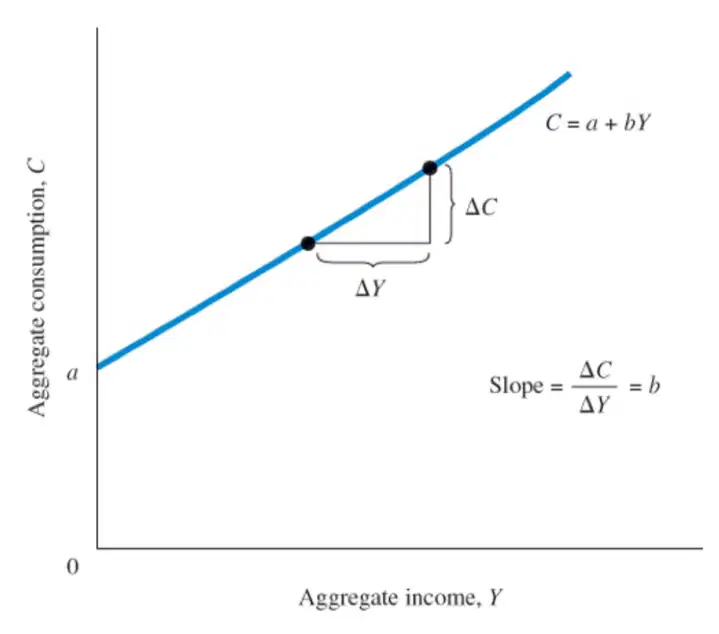
The fraction of a change in income that is consumed or spent is called
the marginal propensity of income.
the marginal propensity to consume.
the marginal propensity to save.
average consumption.

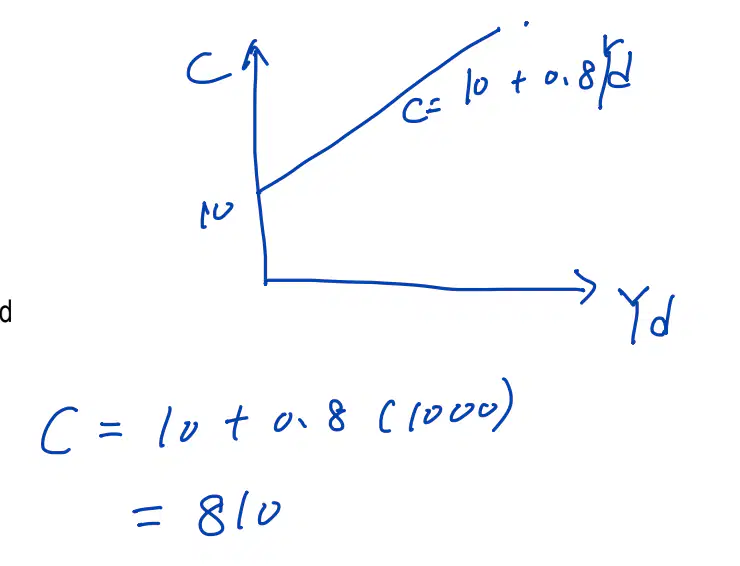
If the Keynesian consumption function is C = 10 + 0.8 Yd then, if disposable income is $1000, what is amount
of total consumption?
0.8
800
810
0.81
An increase in the marginal propensity to consume will:
Lead to the consumption function becoming steeper
Shift the consumption function upwards
Shift the consumption function downwards
Not affect the consumption function
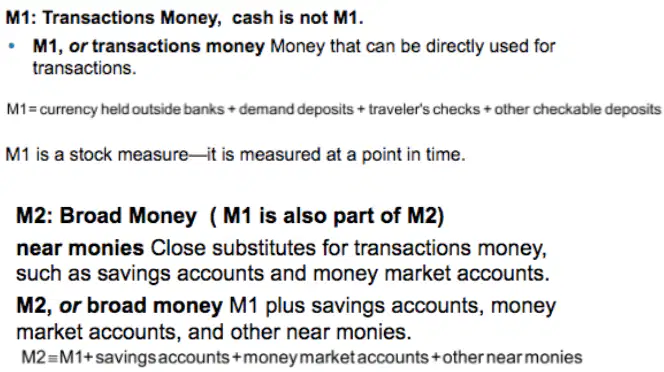
Dana transfers $5,000 from her checking to her savings account. This transaction will
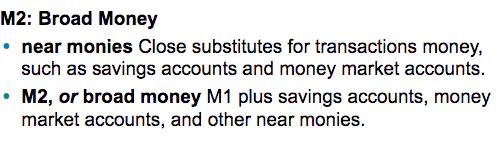
( M1: Transaction money, such as stock, bond, check, money order),
M2: M1 + saving+ money market + ect. ( broad money)
decrease both M1 and M2.
decrease M1 and not change M2.
not change M1 and decrease M2.
increase both M1 and M2.
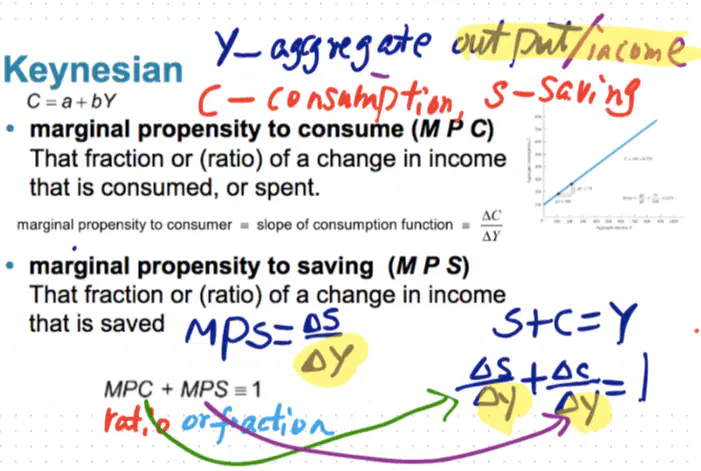
The MPS is
the ratio of saving to income.
the ratio of income to saving.
the average amount of income that is saved.
the fraction of a change in income that is saved.
Automatic-transfer savings accounts are
included only in M1.
included only in M2.
included in both M1 and M2.
not included in either M1 or M2.
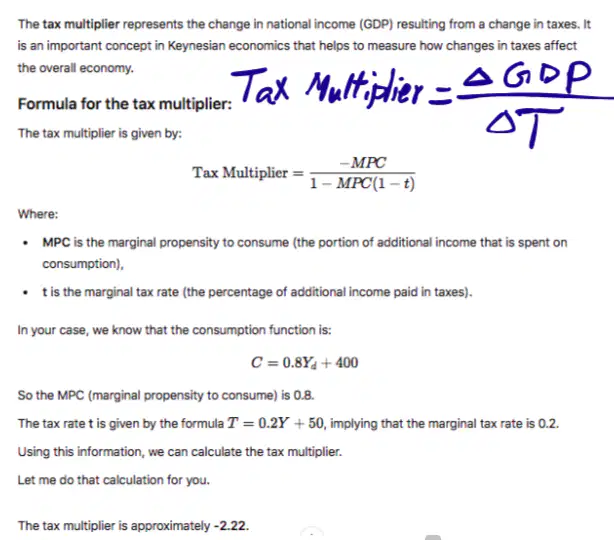
The tax multiplier is
the ratio of the change in taxes to the change in the equilibrium level of output.
the ratio of the change in the equilibrium level of output to the change in taxes.
the difference in taxes multiplied by the change in the equilibrium level of output.
the MPC multiplied by the MPS.
Over which component of investment do firms have the least amount of control?
purchases of new equipment
construction of new factories
inventory adjustment
the buying and selling of common stock
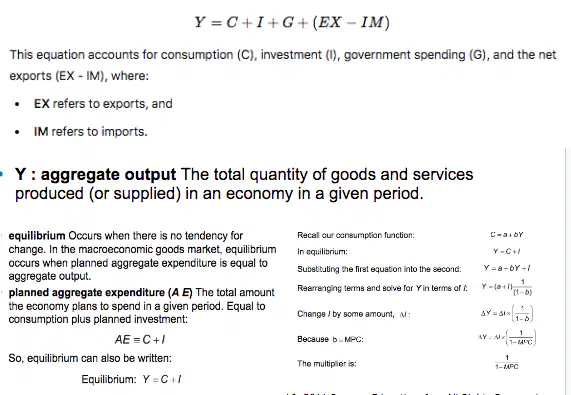
The equilibrium position for an open economy is
Y = C + I + G + (EX - IM)
Y = C + I + G + (IM - EX)
Y = C + I + G + EX + IM
Y = C + I + G + EX
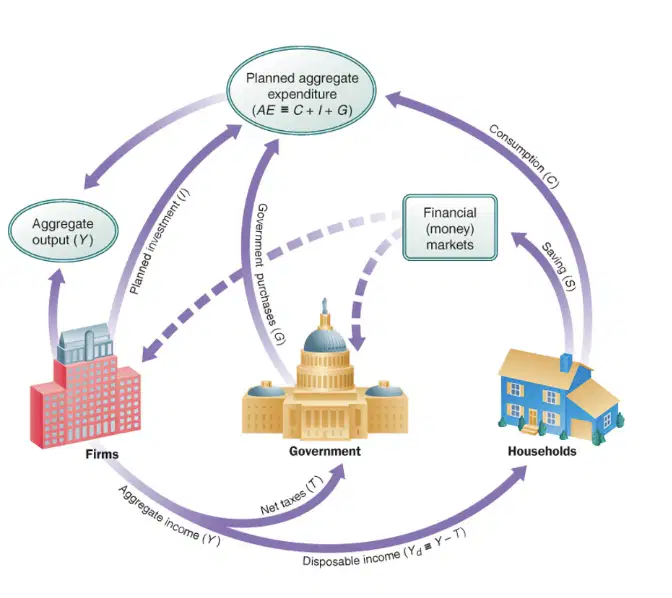
"Imports are __________ the circular flow and exports are __________ circular flow."
a leakage from, a leakage from,
injection into, an injection into
aninjection into, a leakage from
a leakage from, an injection into
Inventory investment is higher than firms planned, therefore
actual and planned investment are equal.
actual investment is less than planned investment.
actual investment is greater than planned investment.
actual investment must be negative.
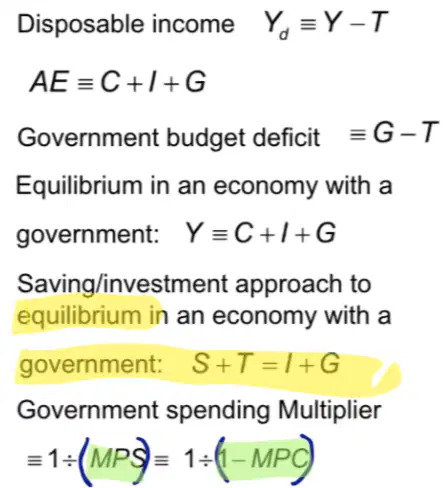
For the economy to be in equilibrium,
government spending must equal tax revenue and saving must equal investment.
government spending must equal the sum of tax revenue, saving and investment.
investment plus tax revenue must equal government spending plus saving.
government spending plus investment must equal saving plus tax revenue.
Firms react to unplanned increases in inventories by
reducing output.
increasing output.
increasing planned investment.
increasing consumption.
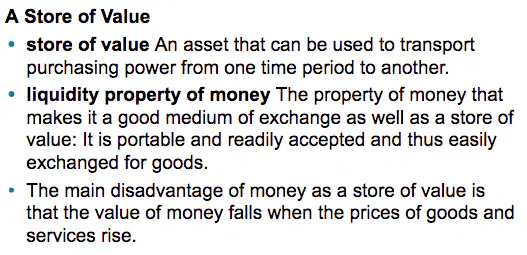
Evelyn won $10,000 at a bingo game. She deposits her winnings into a money market fund so that she can use the money next year to pay her tuition. This is an example of money serving as
a unit of account.
a store of value.
a medium of exchange.
an investment good.
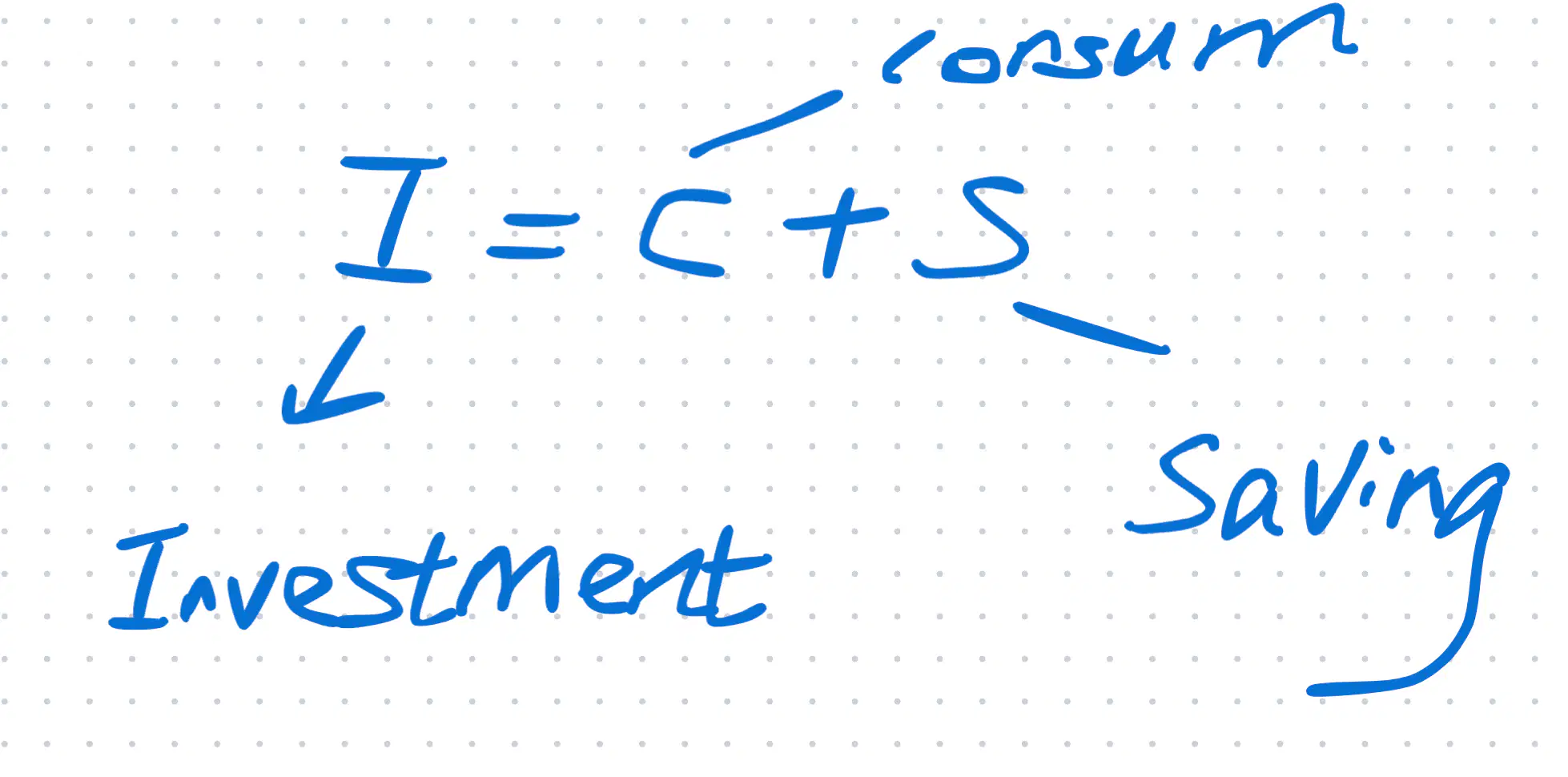
TRUE or FALSE: Saving = Income + Consumption
TRUE
FALSE
TRUE or FALSE: If G exceeds T, the federal government must borrow from the public to finance the deficit.
TRUE
FALSE
TRUE or FALSE: Monetary policy deals with the behavior of the executive and legislative branches of the federal government concerning the nation’s money supply.
TRUE
FALSE
TRUE or FALSE: The government spending multiplier is the ratio of the change in the equilibrium level of input to a change in government spending.
TRUE
FALSE
TRUE or FALSE: The multiplier for a change in taxes is the same as the multiplier for a change in government spending.
TRUE
FALSE
TRUE or FALSE: The federal government’s budget is an interplay of social, economic, and political forces.
TRUE
FALSE
TRUE or FALSE: The federal budget has nothing to do with the goals the federal government wants to achieve.
TRUE
FALSE
TRUE or FALSE: The federal debt is the total amount of money owed by the federal government.
TRUE
FALSE
TRUE or FALSE: People with more income tend to consume less than people with less income.
TRUE
FALSE
TRUE or FALSE: A key reason for the large budget deficits of the 1980’s was that interest payments as a percentage of GDP rose substantially.
TRUE
FALSE
TRUE or FALSE: To an economist, an investment is something produced that is used to create value in the future.
TRUE
FALSE
TRUE or FALSE: Uncertainty about the future is likely to increase current spending.
TRUE
FALSE
TRUE or FALSE: Inventory change is wholly determined by how much households decide to buy, which is under the complete control of firms.
TRUE
FALSE
TRUE or FALSE: A firm will always end up investing the exact amount that it planned to.
TRUE
FALSE
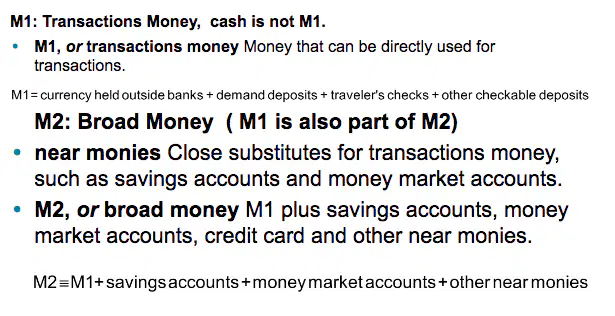
TRUE or FALSE: M2 = M1 + savings accounts + money market accounts + other near monies
TRUE
FALSE
TRUE or FALSE: First Union, Met Life, and Washington Mutual Savings are examples of financial intermediaries.
TRUE
FALSE
TRUE or FALSE: In any given period, there is an exact equality between aggregate output and aggregate income.
TRUE
FALSE
TRUE or FALSE: Money is the same as income.
TRUE
FALSE
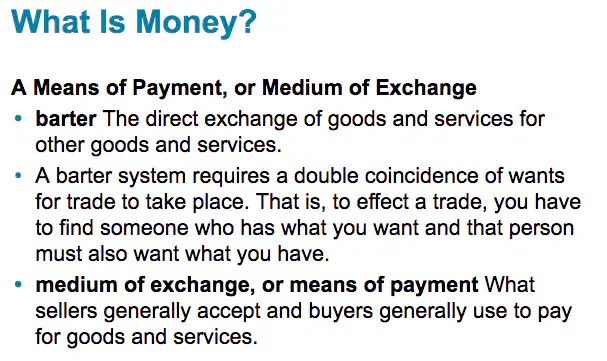
TRUE or FALSE: Kate deposits 10% of her paycheck into a savings account monthly. This is an example of money serving as a medium of exchange.
TRUE
FALSE
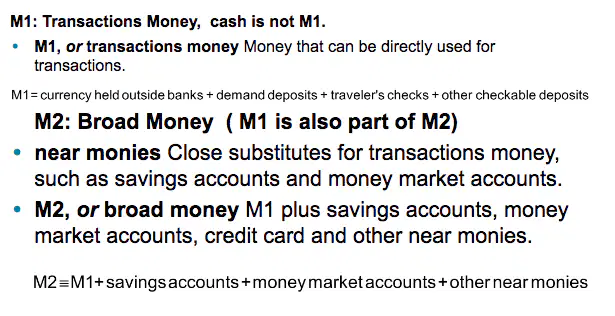
TRUE or FALSE: M1 = currency held outside banks + demand deposits + traveler’s checks + other checkable deposits
TRUE
FALSE
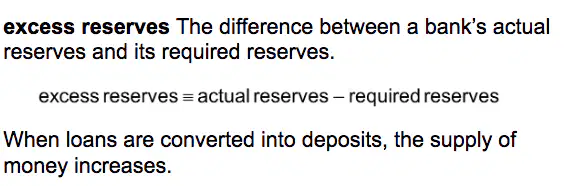
TRUE or FALSE: Excess reserves = actual reserves - required reserves
TRUE
FALSE
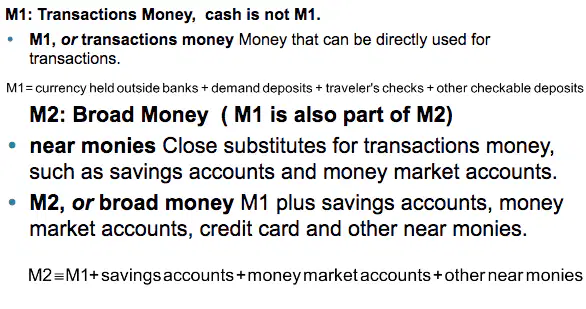
TRUE or FALSE: M1 is also known as broad money.
TRUE
FALSE
TRUE or FALSE: As interest rates fall, spending increases.
TRUE
FALSE
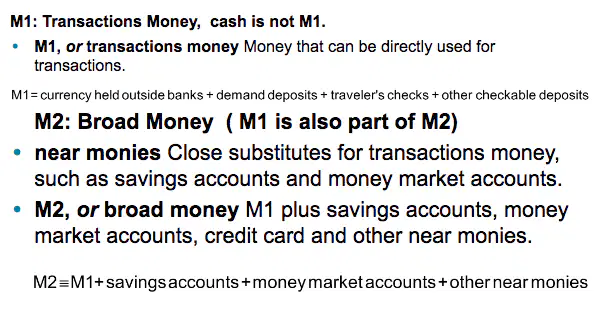
M2 is known as transactions money.
True
False
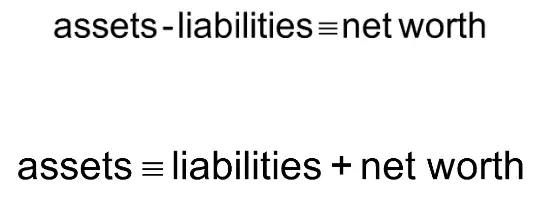
Assets = Liabilities / Net Worth. (True or False)
True
False
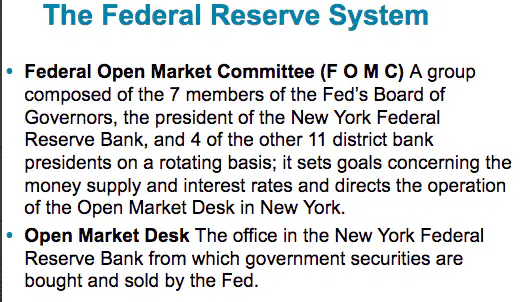
The FOMC consists only of 10 members of the Fed’s Board of Governors. How many members of Fed Board of Governors, How many President of new york Federal Reserve Bank, How many of the other 11 district bank presidents ?
True
False
Some items on the expenditure side of the federal government’s budget, such as unemployment benefits, depend on the state of the economy.
True
False
The tax revenues of the federal government are independent of the state of the U.S. economy.
True
False
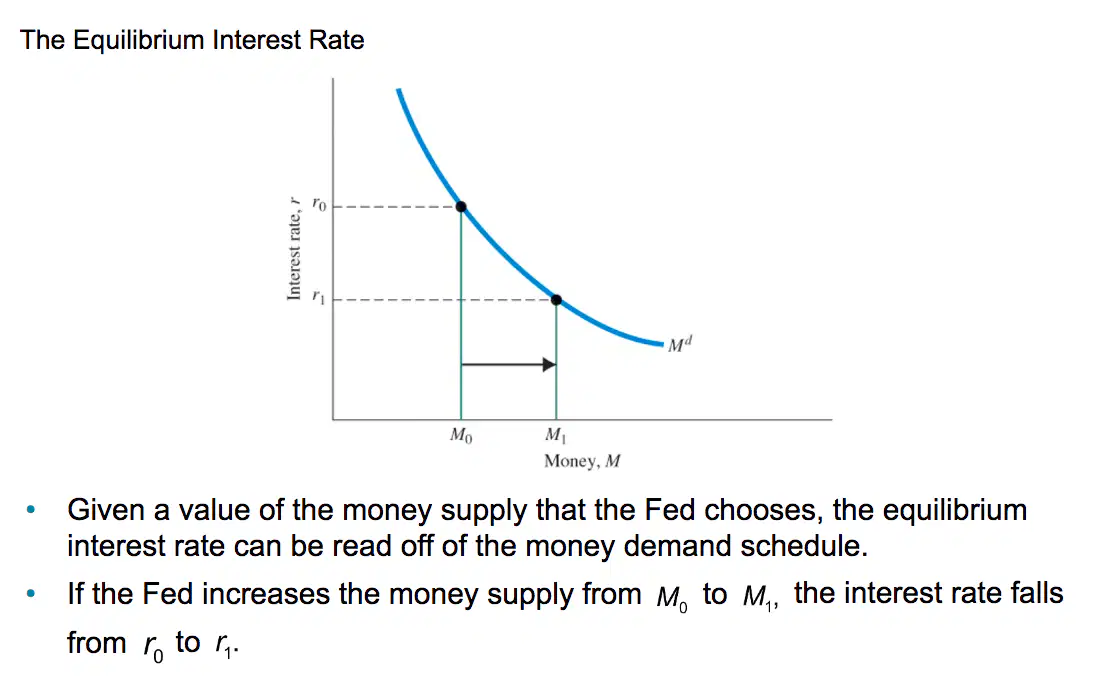
Bank borrowing from the Federal Reserve leads to an increase in the money supply.
True
False
The Treasury Department often prints money to finance the deficit.
True
False
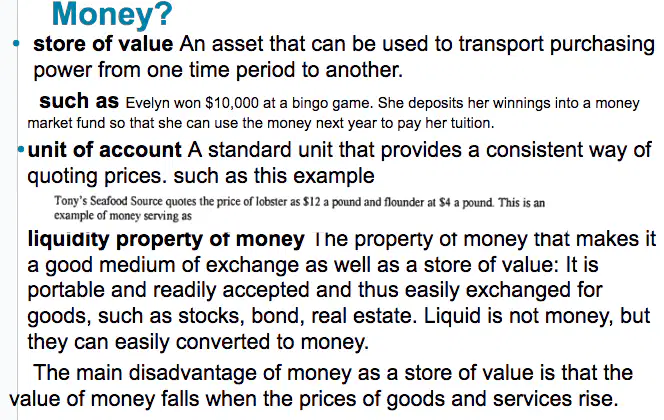
Evelyn won $10,000 at a bingo game. She deposits her winnings into a money market fund so that she can use the money next year to pay her tuition. This is an example of money serving as
a unit of account.
a store of value.
a medium of exchange.
an investment good.

is gold ?
fiat money
commodity money
legal lender
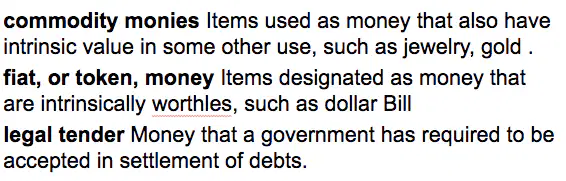
dollar bill is
fiat money
commodity money
legal lender
The account that shows international transactions involving currently produced goods and services is called the
capital account.
current account.
balance of payments.
trade balance.
Keynes believed that the government should ______ taxes and/or ______ government spending to get the economy out of a slump."
decrease, decrease
increase, decrease
increase, increase
decrease, increase
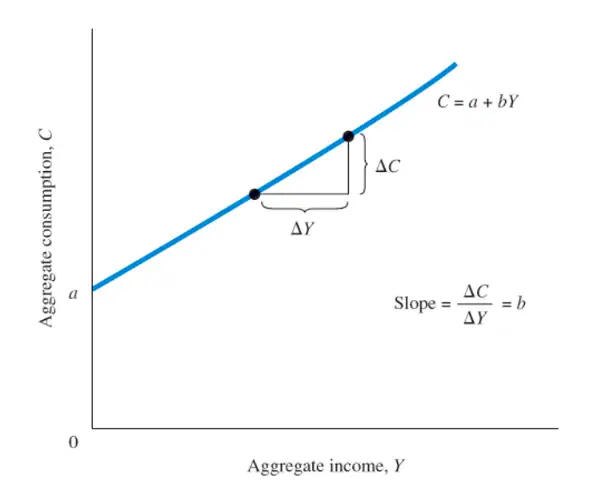
c = a+ b Yd ( Y is disposable income = Y - T), Which letter is standing for MPC ? sometime, they just use Y instead of Yd in the formlua C = a+ bY, but you have to remember Y is disposable income )
a
b
c
y
c = a+ b Yd ( Yd is disposable income Yd = Y- T), MPC = ?
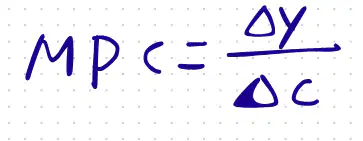
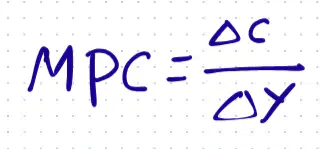
c = a+ b Yd ( Yd is disposable income Yd = Y- T), MPS = ?
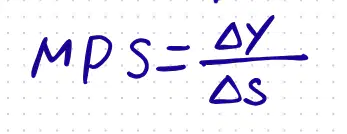
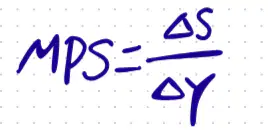
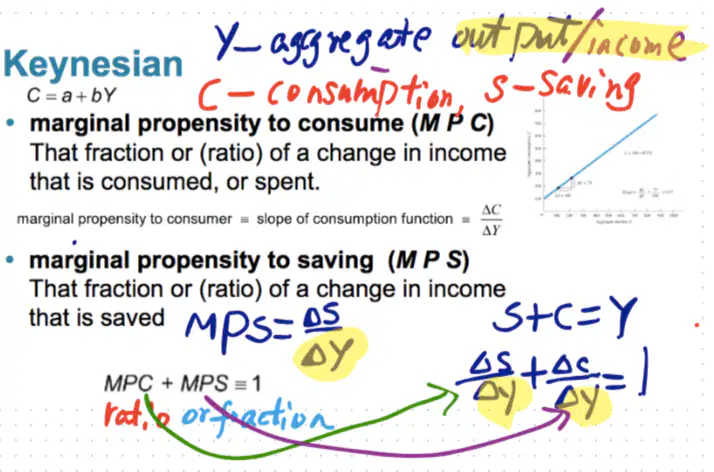
The change in consumption divided by the change in income is equal to
MPC + MPS.
the MPC.
1 - MPC.
the MPS.
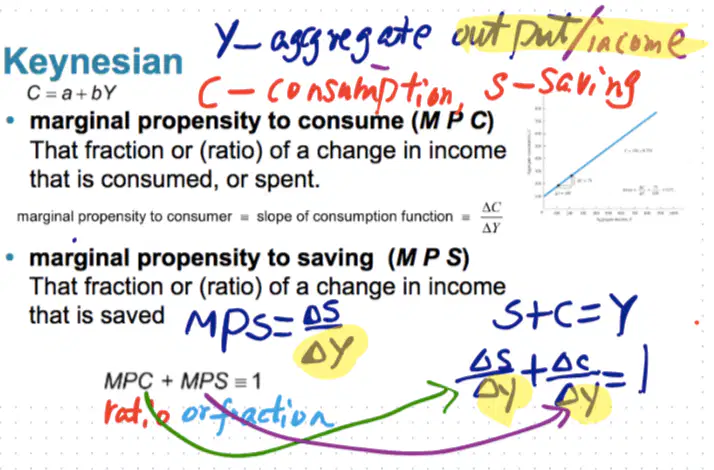
The change in saving divided by the change in income is equal to
MPC + MPS.
the MPC.
1 - MPC.
the MPS.
MPC+MPS=
0
1
2
-1
If consumption is 70,000 when income is 80,000, and consumption increases to 78,000 when income increases to 100, 000, the MPC is
0.2
0.3
0.4
0.8
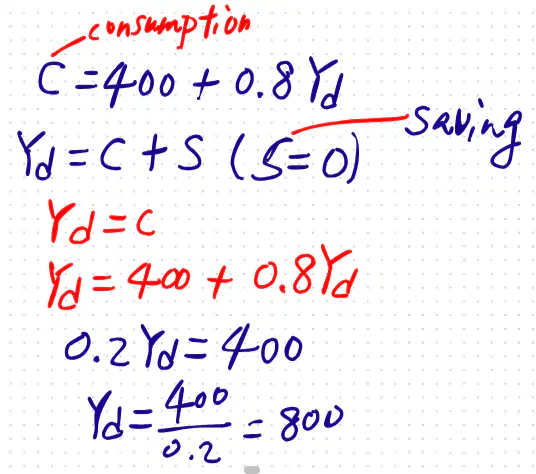
If Teena's consumption function is of the form [C = 400 + 0.75Yd], her saving equals zero at an income level, what is the disposable income Yd ?
150
1600
800
1,500
If Teena's consumption function is of the form [C = 400 + 0.75Yd], what is MPC ?
0.75
0.25
400
1
If Teena's consumption function is of the form [C = 400 + 0.75Yd], what is MPS?
0.75
0.25
400
1
If Teena's consumption function is of the form [C = 400 + 0.8Yd], Yd is disposable income , Y is aggrgated income (output) , T is tax , Yd = ?
Yd = Y
Yd = Y - T
Yd= Y+T
Yd = T
If Teena's consumption function is of the form [C = 400 + 0.8Yd], Yd is disposable income , Y is aggrgated income (output) , T is tax , I =300, G=1300, T =0.2 Y +50 , I for
income
investment
If Teena's consumption function is of the form [C = 400 + 0.8Yd], Yd is disposable income , Y is aggrgated income (output) , T is tax , I =300, G=1300, T =0.2 Y +50 , Y = ?
Y = C +I + G
Y = C+I
Y = C+ G
If Teena's consumption function is of the form [C = 400 + 0.8Yd], Yd is disposable income , Y is aggrgated income (output) , T is tax , I =300, G=1300, T =0.2 Y +50 , C = ?
since Yd= Y-T,
C = 400 + 0.8 * ( Y- (0.2Y+50) = 400 + 0.8 * ( 0.8 Y-50) = 0.64 Y + 360
since Yd= Y-T,
C = 400 + 0.8 * ( Y- (0.2Y+50) = 400 + 0.8 * ( 0.8 Y-50) = 0.64 Y + 300
If Teena's consumption function is of the form [C = 400 + 0.8Yd], Yd is disposable income , Y is aggrgated income (output) , T is tax , I =300, G=1300, T =0.2 Y +50 , since
Y = 0.64Y +360 + 300 + 1300
Y= 0.64 Y+ 1960, Y = ?
Y= 0.64 Y+ 1960,
Y = 1960/0.36 = 5444.14
Y = 544.14
If Teena's consumption function is of the form [C = 400 + 0.8Yd], Yd is disposable income , Y is aggregated income (output) , T is tax , I =300, G=1300, T =0.2 Y +50 , since Y = 5444.44, the federal budget deficit /surplus in equilibrium ( use + for surplus, or - for a deficit) ( two decimals)
deficit = G-T = 1300 - T
= 1300 - ( 0. 2 * 5444.44 +50)
= -161.11
deficit = G-T = 1300 - T
= 1300 - ( 0. 2 * 5444.44 +50) = 161.11
deficit = G-T = 1300 - T
= 1300 - ( 0. 2 * 5444.44 +50) = 61.11
If Teena's consumption function is of the form [C = 400 + 0.8Yd], Yd is disposable income , Y is aggregated income (output) , T is tax , I =300, G=1300, T =0.2 Y +50 , Yf = 7000 since Y = 5444.44, what is the GDP gap ?
155
1555.56
-158
1600

The multiplier is the ratio of the
change in the equilibrium level of real GDP to the change in autonomous expenditures
change in autonomous expenditures to the change in the equilibrium level of real GDP
change in induced expenditures to the change in autonomous expenditures
equilibrium level of real GDP to the change in induced expenditures

