

wayground logo

Free Printable Worksheets

Font size

S
M
L
XL
Worksheets

Ancient Greece: Geography through Golden Age

Total questions: 73

Worksheet time: 1hrs 1mins

Name
Class
Date
1.
One of the most famous ancient Greek poets who wrote the Iliad was...
a)
Homer.
b)
Athena.
c)
Sandburg. 
d)
Pericles
2.
Which invading civilization conquered the Minoans?
a)
Trojans
b)
Spartans
c)
Pericles
d)
Mycenaeans
3.
Why was communication difficult between communities in Ancient Greece?
a)
They did not have telephones
b)
Mountains and Water
c)
communication was easy
d)
most people had horses
4.
Greece is a peninsula which means
a)
a mountain range with a river running through it. 
b)
land surrounded by water on 3 sides
c)
an area with major rivers running through it
d)
a very mountainous region
5.

Decisions made by voting developed?

a)

Teocracy

b)

Democracy

c)

Oligarchy

d)

Burocracy

6.

Democracy was developed in

a)

Sparta

b)

Athens

c)

Larisa

d)

Volos

7.
Women did not play as big of a role in this city-state as they did the other. 
a)
Sparta 
b)
Athens 
c)
Neither 
d)
Both
8.
Why was the Aegean Sea the most important body of water to the ancient Greeks?
a)
It was wide open without a lot of small islands in the way of sailing.
b)
It provided fish for food and was safer and less windy for sailing on trading journeys.
c)
It was the only body of water that surrounded Greece.
d)
It was the largest body of water that bordered Greece.
9.
The location of Sparta affected its people's attitudes and actions.  How so?
a)
They relied on trading to get their necessary goods.
b)
They became a democratic society.
c)
They were suspicious of outsiders.
d)
They changed the way they lived often.
10.
What was most important to Spartans when it came to education?
a)
reading and writing
b)
a strong mind and body
c)
boys and girls receiving military training
d)
boys and girls learning to cook and clean
11.

What idea that is important today came from ancient Athens?

a)

Nobody should be a slave

b)

People should rule themselves

c)

Men and women should be equal

d)

Leaders should be wise and good

12.

One shared characteristic of Greece was that everyone

a)

Made a pilgrimage to Mt. Olympus

b)

Traded with the same countries

c)

had the same government

d)

spoke the same language

13.
In Athens, education was designed to prepare boys to become good
a)
citizens
b)
sailors
c)
soldiers
d)
workers
14.

Why were some tyrants liked by the people?

a)

they united the city-states

b)

they made laws which improved people's lives

c)

they passed the throne to their son

d)

they gave all people a say in government

15.

An independent city, with its own government and culture, surrounded by farmland

a)
city-state
b)
country
c)
continent
d)
New York City
16.

This type of government is ruled by a king or a queen who make all the decisions

a)
oligarchy
b)
monarchy
c)
democracy
d)
aristocracy
17.

This war was fought between Athens and Sparta.

a)
Dorian
b)
Revolutionary
c)
Peloponnesian 
d)
Civil
18.
In what city-state did democracy begin?
a)
Marathon
b)
Sparta
c)
Athens
d)
Delphi
19.
On which continent will you find the country of Greece?
a)
Africa
b)
South America
c)
Asia
d)
Europe
20.
In Sparta, which was not a physical skill?
a)
Running
b)
Ice Skating
c)
Jumping
d)
Wrestling
21.

Accoring to Greek mythology, the home of the Greek gods and goddesses was where?

a)
Mount Olympus
b)
Marathon
c)
Troy
d)
Athens
22.

Who wrote the Iliad and the Odyssey, about the Trojan War?

a)
Pericles
b)
Achilles
c)
Homer
d)
Aristotle
23.

Which group of people could debate laws and vote to make decisions in Athens?

a)

outsiders

b)

slaves

c)

helots

d)

citizens

24.
What is NOT required for a citizen of Athens?
a)
Be male
b)
Be over 18
c)
Be victorious in battle
d)
Be born in Athens
25.

This famous structure was built to honor the Goddess Athena.

a)
The Coliseum
b)
The Parthenon
c)
The Great Pyramids
d)
The Washington Monument
26.
A high hill upon which a Greek fortress was built
a)

Acropolis

b)
Metropolis
c)
The Great Wall
d)
Fort Macon
27.
Ancient Greek leader who held power through the use of force
a)
king
b)
wizard
c)
president
d)
tyrant
28.

The love of wisdom, a logical answer to life's questions.

a)

mythology

b)

philosophy

c)

fables

d)

biology

29.
What was a unified formation of Greek soldiers called?
a)
Phalanx
b)
Phylange
c)
Assembly
d)
Ephor
30.
What is another name for a Greek city-state?
a)
Polling Place
b)
Acropolis
c)
Polis
d)
Oligarchy
31.
Who were the ancient people who lived on the island of Crete and built a grand palace in the city of Knossos?
a)
Minoans
b)
Romans
c)
Persians
d)
Spartans
32.
What ancient civilization eventually replaced the Minoans as the major power in the Aegean sea, after the Minoan civilization disappeared?
a)
Romans
b)
Spartans
c)
Persians
d)
Mycenaeans
33.
What is a government where only a few, very wealthy people rule?
a)
Democracy
b)
Tyranny
c)
Oligarchy
d)
Assembly
34.
A militaristic city-state where boys were trained from an early age to fight.
a)
Athens
b)
Delphi
c)
Corinth
d)
Sparta
35.
A city-state which favored democracy and a well-rounded education. 
(Also, the largest city-state by a wide margin)
a)
Sparta
b)
Athens
c)
Delphi
d)
Corinth
36.
An empire started by Cyrus the Great
a)
Greece
b)
Rome
c)
Persia
d)
Egypt
37.
300 Spartan soldiers held the Persian army to a stalemate for three days before the Persians eventually defeated them in what famous battle?
a)
Battle of the Greeks
b)
Battle of Thermopylae
c)
Battle of Little Big Horn
d)
Battle of Pericles
38.
Who was the leader of Athens after the defeat of the Persians and took athens into a "Golden Age" of prosperity and achievement?
a)
Pericles
b)
Leonidas
c)
Themistocles
d)
Socrates
39.
What is the name for thinkers who reflect on the meaning of life?
a)
Soldiers
b)
Philosophers
c)
Ephors
d)
Helots
40.
Athenian society DID NOT consider educated women as equal to men. 

For instance, women COULD NOT participate in political activities or own property, and they were always under the care of a male family member.
a)
True
b)
False
41.
Even in a democracy like Athens, slavery WAS common.
Most Athenian households had at least one enslaved person. 
a)
True
b)
False
42.
Athens joined with other city-states to form a defensive league, or protective group, to defend its members against the Persians after the Persian War.  
What was it called?
a)
Delian League
b)
Council of Elders
c)
General Assembly
d)
Greek Alliance
43.

Even though Greek city-states had their own government, the people of ancient Greece were united by common _____________________.

a)

food sources

b)

language and gods

c)

laws

44.

How were Athens and Sparta different? Pick 2

a)

Athens was focused on education. Sparta was focused on building a strong army.

b)

Athens was focused on building a strong army, Sparta was focused on education.

c)

They were not different.

d)

Athens was a democracy. Sparta was an oligarchy.

e)

Athens was an oligarchy. Sparta was a democracy.

45.

How were girls treated in Athens?

a)

Girls were able to do anything boys did in Athens.

b)

Girls were uneducated, unless they were from a wealthy family. Girls could not vote.

c)

Girls were allowed to own businesses but not vote.

46.

How were girls treated in Sparta?

a)

Girls were not allowed to fight, but they were trained so they could produce strong children.

b)

Girls had more control of the government.

c)

Girls were educated but not trained in fighting.

47.

Who was the main god in Greece?

a)

Athena

b)

Zeus

c)

Poseidon

d)

Hades

48.

Who was the patron god of Athens, also the goddess of courage and wisdom?

a)

Athena

b)

Hera

c)

Persephone

d)

Artemis

49.

Which Greek philosopher was executed because he suggested the gods were "make believe"?

a)

Aristotle

b)

Plato

c)

Socrates

50.

Which Greek philosopher started The Academy and did not believe in democracy?

a)

Socrates

b)

Aristotle

c)

Plato

51.

Which map shows what Greece looks like today?

a)

Map A

b)

Map B

c)

Map C

52.

Pick ALL the contributions of Ancient Greece.

a)

silk cloth

b)

clocks

c)

olympics

d)

columns

e)

democracy

53.

 Why is Ancient Greece considered important to Western Civilization?

a)

 Greek culture influenced today’s democracy, architecture, and entertainment

b)

Athens defeated Sparta in the Peloponnesian Wars

c)

The Greeks borrowed ideas from Rome and improved upon them

d)

The Greeks invented the world’s first monotheistic religion

54.

Which of the following is NOT a Greek achievement?

a)

Mathematics, such as the formula for pi

b)

Philosophy, such as the work of Socrates, Aristotle, and Plato

c)

Medicine, such as the Hippocratic Oath

d)

 Government, such as using Confucius as the basis for the exam system

55.

Greek cities had a(n) ________, a massive marketplace that was the center of trade and government.

a)

Acropolis

b)

Coliseum

c)

Palace

d)

Agora

56.
How was Athenian democracy different from American democracy?
a)
Citizens were not allowed to serve on juries
b)
People were not allowed to vote for leaders
c)
Women could not participate in public life
d)
People were not allowed to criticize the government
57.

American form of government

a)

Aristocracy

b)

Direct Democracy

c)

Representative Democracy

d)

Tyranny

58.

What is Greece's hilly terrain (land) good for?

a)

lots of farming

b)

communication between city-states

c)

growing grapes and olives

d)

providing water for the crops

59.
The city-state where boys, at the age of 7, would start hardy soldier training
a)
Athens
b)
Sparta
c)
Delphi
d)
Olympia
60.

Which group(s) of people were not allowed to be citizens in Athens? (select all that apply)

a)

Men

b)

Women

c)

Slaves

d)

Foreigners

61.

The ideal Spartan believed that ________.

a)

The family came before Sparta

b)

Sparta came before family

c)

Greece needed to be united as one country

d)

The key to winning a war was all about the size of your army

62.

Olympics are held every ____ years.

a)

four

b)

five

c)

fifteen

d)

forty

63.

The first ancient Olympic games were first held in 1776.

a)

False

b)

True

64.

Who is the god of the seas in Ancient Greek belief?

a)

Mervin

b)

King Triton

c)

Zeus

d)

Poseidon

65.

Who is the god of war in Ancient Greek belief?

a)

Artemis

b)

Ares

c)

Hades

d)

6 / 7

66.

a humorous form of Greek drama that often mocked famous people

a)

joke

b)

tragedy

c)

play

d)

comedy

67.

The first Greeks who established colonies and built fortresses throughout Greece

a)

Mycenaeans

b)

Spartans

c)

Minoans

d)

Persians

68.

According to Ancient Greek belief, originally, athletic events like the Olympics were held to

a)

celebrate the harvest

b)

establish the dominance of a polis

c)

entertain the spectators

d)

honor Zeus, king of the gods

69.

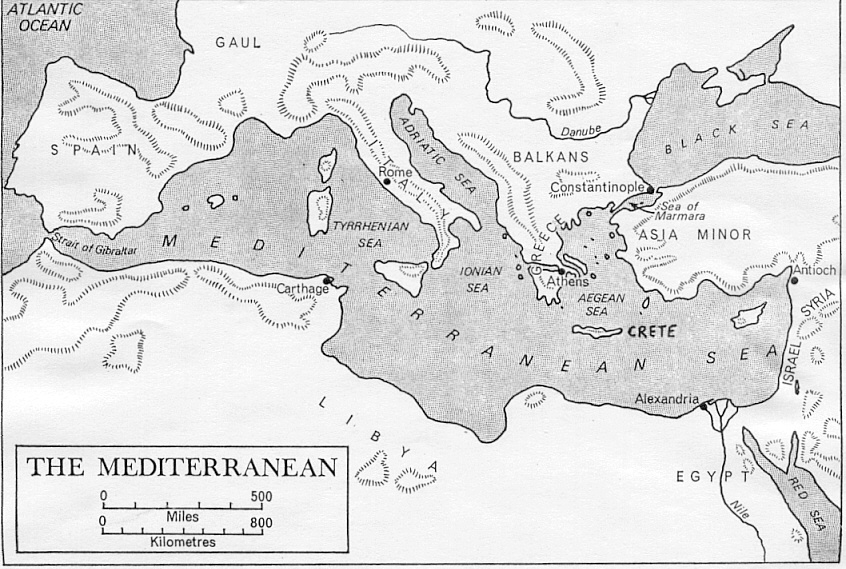
What is an assembly?

a)

a group of people; in ancient Greece, the Assembly made laws.

b)

a peninsula in southwestern Asia; today most of this area is the country of Turkey

c)

a city that is an independent political state with its own ruling government
70.
Which philosopher was a tutor for Alexander the Great when he was a boy?
a)
Aristotle
b)
Plato
c)
Socrates
d)
Sappho
71.
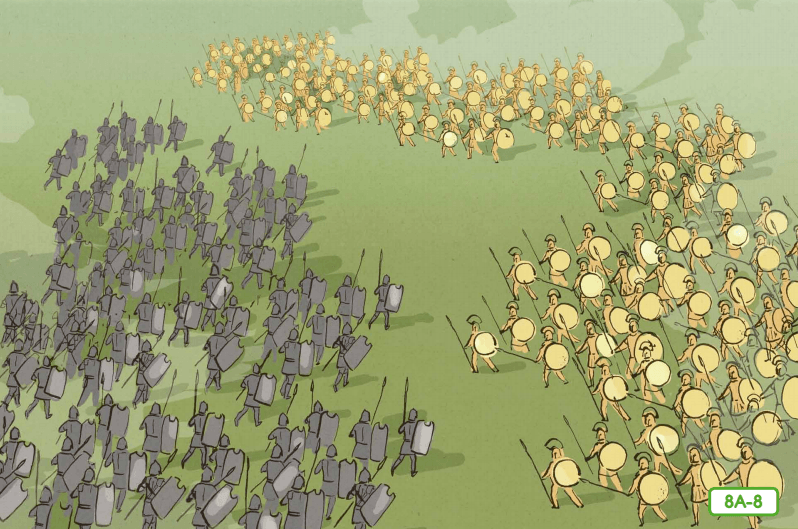
Ten years after the first battle in the Persian Wars, Darius' son Xerxes tried to conquer Greece once more.
Which Greek city-state helped Athens?
a)
Mycenae 
b)
Crete
c)
Sparta
d)
Troy
72.
Why did the first Persian War start?
a)
Persia wanted to punish Athens for interfering in the Ionian Revolt.
b)
Sparta and Athens were competing to be the best city-state .
c)
Persia wanted revenge for their defeat at Marathon.
d)
Sparta and Athens both wanted to defeat Persia.
73.

At the Battle of Marathon, ________________.

a)

the Persian Empire was defeated by Alexander the Great.

b)

Athens was defeated by Persian Empire.

c)

Sparta was defeated by Athens.

d)

the Persian Empire was defeated by Athens.
