
 Worksheets
Unit 1 Practice TEST
Total questions: 56
Worksheet time: 28mins
What is the first step in the decision-making process according to the provided material?
Define the Problem
Make the Decision
Evaluate the Options
Implement the Solution
What is the second step in the decision-making process according to the learning material?
Identify the problem
List the alternatives
Evaluate the options
Make a decision
In traditional economies, how are economic questions typically answered?
By custom
By the government
By market forces
By international organizations
Which of the following is a characteristic of traditional economies?
Predominantly agricultural
High GDP
Private ownership
Advanced technology
What is a defining feature of command economies?
Economic questions answered by the government
High level of private ownership
Predominantly agricultural
Free market competition
Which countries are examples of command economies?
Old Soviet Union, old Communist China, Cuba, and North Korea
United States, Canada, Australia, and Japan
Brazil, India, South Africa, and Mexico
Germany, France, Italy, and Spain
What is a characteristic of free market (capitalist) economies?
Economic questions answered by producers and consumers
Complete government control
No private property rights
Limited product choices
Which of the following is true about government involvement in free market economies?
Limited government involvement
High government involvement
No government involvement
Government controls all businesses
What is one of the principles of capitalism mentioned in the document?
Competition leads to lower prices and higher quality products
Monopolies are encouraged
Government sets all prices
Businesses avoid competition
Which principle of capitalism allows businesses and consumers to freely buy or sell what and when they want?
Private Property
Consumer Sovereignty
Voluntary Exchange
Government Control
What type of pay is usually associated with white-collar jobs?
Wages
Hourly rate
Salary
Commission
What does "downsizing" refer to in the context of production decreases?
Laying off employees to save costs
Expanding the workforce
Increasing production capacity
Hiring more temporary workers
What is the purpose of outsourcing according to the document?
Sending jobs overseas to save money
Increasing local employment
Reducing product quality
Expanding domestic production
What is the primary purpose of labor unions?
To organize social events
To achieve common goals for workers
To increase company profits
To provide free education
Which of the following is NOT a goal of labor unions?
Wage protection
Workplace safety
Job protection
Increasing taxes
What is collective bargaining?
A method to increase product prices
Negotiation of a contract for workers
A way to reduce working hours
A strategy to avoid paying taxes
What action do workers take when an agreement can't be reached during negotiations?
They accept the company's terms
They go on strike
They increase their working hours
They reduce their wages
What is the study of how individuals and societies make decisions about ways to use scarce resources to fulfill wants and needs?
Biology
Economics
Chemistry
Physics
Who is considered the father of economics?
Adam Smith
John Maynard Keynes
Karl Marx
Milton Friedman
What is the title of the book published by Adam Smith in 1776?
The Wealth of Nations
The Theory of Moral Sentiments
An Inquiry into the Nature and Causes of the Wealth of Nations
The Invisible Hand
What concept did Adam Smith suggest that the economy exists as though orchestrated by?
Invisible Hand
Visible Hand
Guiding Hand
Helping Hand
What is Macroeconomics?
The study of individual markets and players
The study of the overall economy and large-scale economic factors
The study of biological ecosystems
The study of historical events
What is Microeconomics?
Microeconomics is the study of individual markets and the behavior of consumers and firms.
Microeconomics is the study of the overall economy and large-scale economic factors.
Microeconomics is the study of historical economic events.
Microeconomics is the study of economic systems in different countries.
What is the first economic question related to production?
What to produce?
How to produce?
For whom to produce?
When to produce?
What is the second economic question related to production?
What to produce?
How to produce?
For whom to produce?
When to produce?
What is the third economic question related to production?
What to produce?
How to produce?
For whom to produce?
When to produce?
What are resources?
Resources are materials or assets that can be used to achieve a goal.
Resources are only financial assets.
Resources are irrelevant in achieving goals.
Resources are only natural materials.
What are 'NEEDS' according to the image?
Stuff we must have to survive (generally food, shelter, clothing)
Stuff we would really like to have (Fancy food, shelter, clothing, big screen TVs, jewelry, conveniences)
What are 'WANTS' according to the image?
Stuff we must have to survive (generally food, shelter, clothing)
Stuff we would really like to have (Fancy food, shelter, clothing, big screen TVs, jewelry, conveniences)
What is a trade-off?
Choosing everything you want without limits.
Picking one thing over all the other possibilities.
Spending money, time, and energy without decision.
Avoiding any decision-making.
A special kind of trade-off is an ________ cost, which is the value of the next best choice.
opportunity
sunk
fixed
variable
What are 'Goods' in economic terms?
Intangible objects that satisfy economic wants
Tangible objects that satisfy economic wants
Activities performed by people to satisfy economic wants
None of the above.
What are 'Services' in economic terms?
Tangible objects that satisfy economic wants
Intangible objects that satisfy economic wants
Activities performed by people, firms, or government agencies to satisfy economic wants
None of the above.
What are the factors of production?
Land, Labor, Capital, and Entrepreneurship
Land, Labor, Money, and Management
Land, Labor, Technology, and Time
Land, Labor, Resources, and Regulation
Who is a consumer?
An individual who purchases goods and services for personal use
A person who sells goods and services
A company that manufactures products
A government entity that regulates trade

What is considered a natural resource in the context of the factors of production?
A) Water, natural gas, oil, trees
B) Cars, buildings, roads
C) Computers, software, internet
D) Money, stocks, bonds

One of the factors of production that involves physical and intellectual manpower is:
Land
Labor
Capital
Entrepreneurship
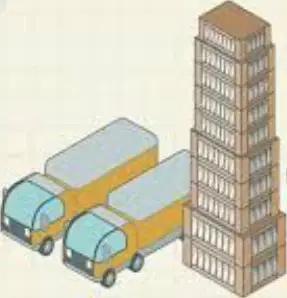
What are examples of capital in the factors of production?
Land
Tools, Machinery, Factories
Labor
Entrepreneurship
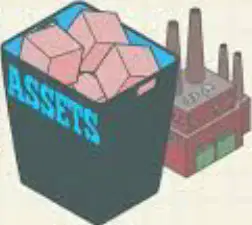
Fill in the blank: Human capital is ________, ideas, innovation.
brainpower.
money.
machinery.
land.

Which of the following is a risk associated with entrepreneurship in production?
Investing time
Natural resources
Labor
All of the above
Who are the final recipients of goods and services in the production process?
Consumers
Producers
Distributors
Retailers
Based on the passage, explain the concept of TINSTAAFL and how it applies to clean air and water.
TINSTAAFL means 'There is no such thing as a free lunch', and it implies that clean air and water require resources and effort to maintain.
TINSTAAFL is an economic principle that suggests everything has a cost, including clean air and water.
TINSTAAFL indicates that clean air and water are naturally free and require no effort to maintain.
TINSTAAFL is a concept that applies only to financial markets and not to environmental resources.

______ are used to make other goods.
Capital goods
Consumer goods
Raw materials
Finished products

Consumer Goods: final products that are purchased directly by the ______.
consumer
manufacturer
retailer
wholesaler

What is specialization in production?
Combining all production processes
Dividing up production so that goods are produced efficiently
Producing all goods in one location
Eliminating production processes
Explain the concept of 'Division of Labor' and how it contributes to greater efficiency in production.
Division of Labor is the assignment of different parts of a manufacturing process or task to different people to improve efficiency.
Division of Labor is the process of dividing a market into distinct subsets of consumers with common needs.
Division of Labor is the allocation of resources to maximize the production of goods and services.
Division of Labor is the study of how people use resources to satisfy their needs.
Increasing land, labor, and capital affects production by:
Increasing production output
Decreasing production output
Having no effect on production
Only affecting labor productivity
What is the measure of the production of an entire country in one year called?
GDP
GNP
NDP
NNP
What does GDP stand for?
Gross Domestic Product
General Domestic Product
Gross Development Product
General Development Product
Fill in the blank: 'Revenues' is the total amount of money a company or the government takes ____.
in.
out.
from.
away.
What are Fixed Costs?
Costs that do not change with the level of output
Costs that vary directly with the level of output
Costs that are incurred only once
Costs that are unpredictable
What are Variable Costs?
Costs that change with the level of output
Costs that remain constant regardless of output
Costs that are fixed over time
Costs that do not vary with production
What is the formula for Total Costs?
Fixed Costs + Variable Costs
Fixed Costs - Variable Costs
Variable Costs / Fixed Costs
Fixed Costs * Variable Costs
Profit is the difference between Total Costs and ________.
Total Revenue
Total Expenses
Net Income
Gross Margin
What does the term 'marginal' mean in the field of economics?
Basic
Additional
Subtractive
Minimal
The final step of the decision making process is:
evaluating the results
gathering information
identifying the problem
selecting the best course of action

