
 Worksheets
Apes unit 9 quiz 1
Total questions: 30
Worksheet time: 30mins


Earth's average temperature has increased 1°C in the past century. Which reason best explains this increase in temperature?
lower levels of ozone in the atmosphere
lower levels of nitrogen in the atmosphere
higher levels of carbon dioxide in the atmosphere
higher levels of oxygen in the atmosphere
Which of the following gases is NOT a greenhouse gas?
carbon dioxide (CO2)
nitrogen (N2)
water vapor (H20)
methane (CH4)
Which of the following are evidence of climate change?
extreme weather events
increase in the average global temperature
melting of polar ice caps
all of the above
The main human activity that releases carbon dioxide (CO2) into the atmosphere is...
using bottled water
burning fossil fuels
texting on cellphones
eating meat
Which of the following is contributing to an increase in carbon dioxide (CO2) in the atmosphere?
deforestation
burning fossil fuels
burning down trees
all of the above
CFCs alter the natural formation of ozone by:
breaking up ozone
bonding with O3
preventing UV radiation to strike ozone

What is the main cause of coral bleaching?
Higher ocean temperatures
Not enough carbon dioxide is dissolved in ocean water
Whales chewing on coral reefs
Too much sunlight
Which of the following best identifies the reason that chlorofluorocarbons (CFCs) were banned in 1996 by the Montreal Protocol?
CFCs increased acid deposition in northern latitudes.
CFCs increased the rates of cancer in workers in mining operations.
CFCs led to a spike in the number of respiratory illnesses diagnosed in children.
CFCs led to the destruction of stratospheric ozone.
Which of the following is part of a positive feedback mechanism associated with global climate change?
Increased cloudiness caused by more moisture in the atmosphere
Melting of Arctic sea ice
Increased growth of CO2 -absorbing trees and grasses
Increased acidity of seawater
Which of the following best describes how an anthropogenic activity can increase ocean acidification?
Emissions from power plants that burn fossil fuels increase atmospheric carbon dioxide, which is absorbed by the ocean.
A spill from an oil rig in the ocean can have acute toxic effects on fish and other aquatic organisms, which disrupt the aquatic food web.
Tourist activities in coastal areas increase the concentration of sunscreen in the water, which decreases the photosynthetic rates of aquatic producers and increases the pH of the ocean.
During and after a major volcanic eruption, large amounts of greenhouse gases, aerosols, and ash are released into the stratosphere, which affects global climate.
Coral bleaching can be hazardous to some fish species because
decomposition of corals can lead to ocean acidification
coral reefs provide unique habitats for fish
the dead corals attract predators that feed on the fish
the corals are the primary source of O2 in ocean water
"Bad ozone" occurs in the
Lithosphere
Mesosphere
Stratosphere
Troposphere
Which of the following best describes the importance of ozone in the stratosphere to life on Earth?
Ozone reflects X-rays from the Sun back into space.
Ozone absorbs most of the ultraviolet radiation from the Sun.
Ozone helps to moderate surface temperature by absorbing CO2 and CH4.
Ozone increases mutation rates and accelerates evolution in a variety of species.
The second step of ozone formation involves atomic oxygen combining with what molecule?
CO2
O2
NO2
2H2O
Which of the following is a greenhouse gas that comes only from human sources?
Nitrous oxide
Carbon dioxide
Methane
Chlorofluorocarbons
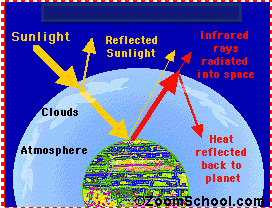
Which of the following best describes the mechanism of the greenhouse effect in Earth's atmosphere?
Infrared radiation from Earth's surface is absorbed by gases in the atmosphere.
Cosmic radiation from deep space is absorbed by gases in the atmosphere.
Alpha radiation from the Sun is absorbed by water vapor in the atmosphere.
Ultraviolet radiation from the Sun is absorbed by ozone gas in the stratosphere.

How does ocean acidification impact marine calcifiers?
It weakens their shells and bodies
It makes their food die
It makes the water too warm for them
It adds too much weight to their shells
People and animals and their diseases have been frozen in the permafrost for hundreds of years, but unfreezing them ____.
is not cause for concern
can bring back those diseases
can cause more food for wildlife
can cause more plants to be made from the remains
What are the main greenhouse gases?
carbon dioxide, oxygen, water vapor, nitrous oxide, methane
carbon dioxide, methane, nitrous oxide, water vapor, sulfur dioxide
methane, water vapor, carbon dioxide, oxygen
methane, water vapor, carbon dioxide, nitrous oxide
What are the biggest anthropogenic source(s) of atmospheric methane?
deforestation
burning fossil fuels
melting permafrost
livestock
Where does most nitrous oxide emissions come from?
fertilizers
permafrost
livestock
vehicles


