
 Worksheets
Hydrosphere: Freshwater
Total questions: 74
Worksheet time: 25mins
The Hydrosphere is comprised of ___________________
all water on the ground/surface, below ground, and surrounding us in the atmosphere
frozen water of the glaciers and ice caps
the salt water in the oceans
the freshwater found in rivers and streams
Water comes in _______ different forms
2
3
4
5
Ice and snow are examples of water in ____________________ form
solid
liquid
gas
Rivers, Oceans, and Rain are examples of water in ____________________ form
solid
liquid
gas
Evaporation in the atmosphere is an example of water in ____________________ form
solid
liquid
gas
__________ of the Earth is covered in water
10%
38%
55%
71%
__________ of Earth's water is salt water and not fit to drink.
20%
58%
75%
97%
The majority of Earth's freshwater is ______________
found in ground water
in rivers and lakes
frozen in glaciers and ice caps
in the atmosphere
70% of our body weight is made up of ____________
food
waste
fat
water
Hydro means _______________
snake
water
air
earth
Around _____ of Earth's water is available for us to drink
1%
15%
30%
50%


Water that soaks into the ground is referred to as
condensation
runoff
groundwater
precipitation
The land area that supplies water to a river system is called a
watershed
tributary
divide
wetland
Water that fills cracks and spaces in underground soil and rock layers is
saltwater
rain water
groundwater
water vapor
Groundwater is ……………….
a fresh water source
a salt water source
a non-potable water
impure
Groundwater is replenished by ………………..
rocks
pumping
well
rainwater
A ……………….. is most commonly used to access groundwater.
well
pond
river
tap
The water is able to flow the pore spaces, what type of rock is it?
permeable
impermeable
aquifer
geyser
If water is not able to flow through the rock, the rock is?
permeable
impermeable
geyser
aquifer
Which of these are permeable?
sand
metal
diamond

A natural, underground area where large quantities of groundwater fill the spaces between rocks is a/an:
ocean
river
aquifer
A place where the water table intersects the ground surface and where a natural flow of groundwater results is called:
a spring.
a geyser.
an aquatard.
a fissure.
What is the most common method for removing groundwater?
a well bored into the zone of saturation
accessing the water table by use of low-grade explosives
building a water tower
damming up a river

What would cause the water table to lower?
Periods of low precipitation
Low rates of evaporation and transpiration
Increasing amounts of runoff
A heavy rainstorm with a lot of precipitation
Which surface would be impermeable?


Water is able to flow more easily through the aquifer because its material has a ___________.
low permeability
low porosity
high porosity
high permeability

In the diagram, the area labeled A is called the __________.
zone of infiltration
recharge zone
zone of saturation
zone of permeability
Subsidence is...
sinking regions of Earth's crust to lower elevations
separation of tectonic plates
collision of tectonic plates
rising of Earth materials to higher elevation
In general, water use worldwide is dominated by
Agricultural use
Domestic needs
Industrial activities
All of these are sectors that use water about equally
An area of land that in which all water flows into the same river is a
watershed
river system
tributary
alluvial fan
The flat area that surrounds a river or stream is called a
Sediment
Runoff
Floodplain
Pollution
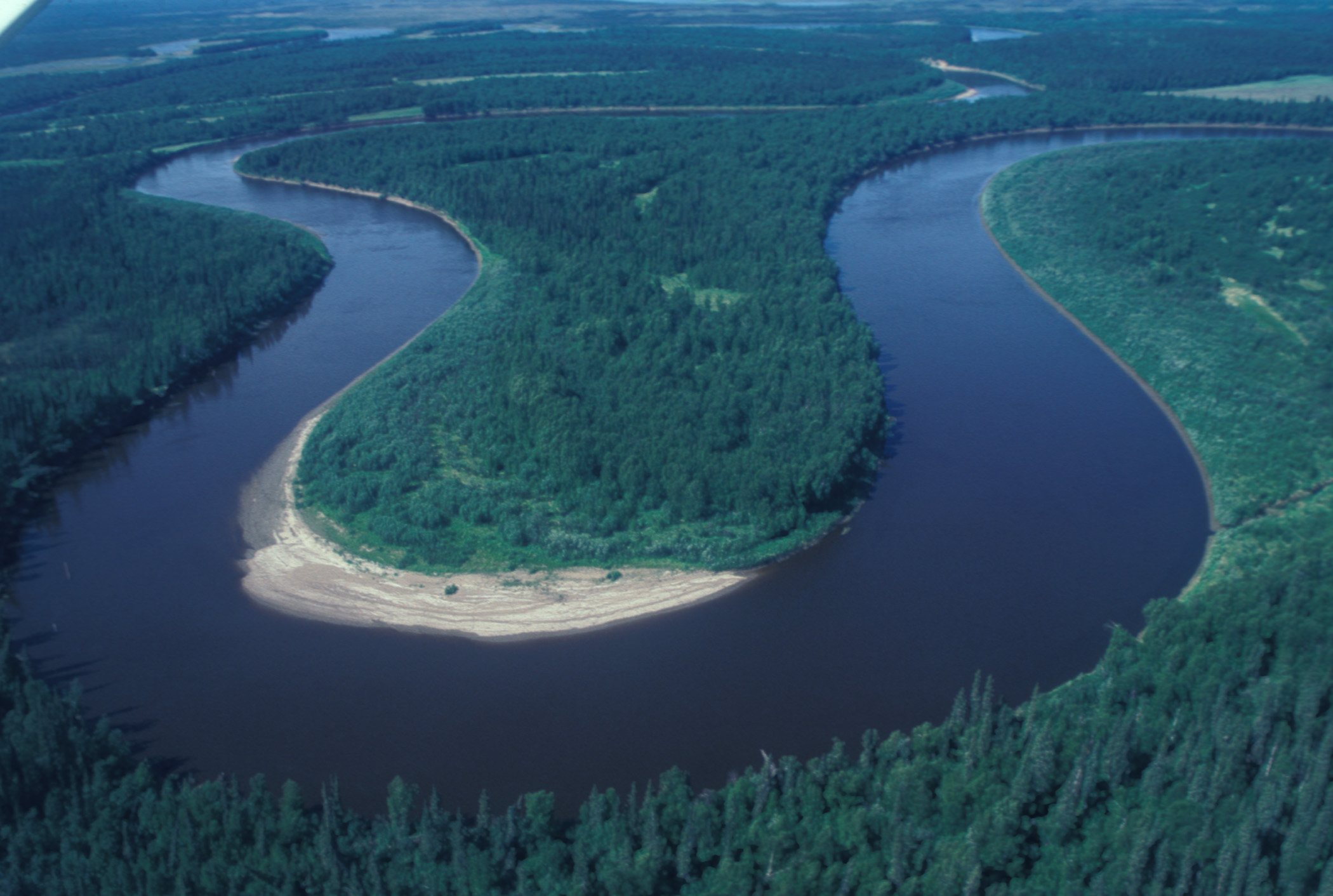
The picture shows bends in a river as it flows over land - what river feature is this?
Oxbow Lake
Meander
Estuary
Tributary

The picture shows the point where a river meets a larger body of water, such as an ocean. What river feature is this?
Headwaters
Meander
Levee
Mouth
Landform created by deposition of sediment that is carried by a river as the flow enter slower-moving water
delta
tributary
meander
basin
A river source or headwaters are:
the beginning of a river
the middle of a river
the end of a river
a tributary of a river

How should #1 be labeled?
source
delta
tributary
watershed
How should #3 be labeled?
meander
tributary
mouth
creek
How should #4 be labeled?
source
watershed
delta
tributary
Which statement best describes the mouth of a river?
It is where a river splits off from another river.
It is where a river empties into a lake or ocean.
It is where a river begins from a spring or lake.
It is where a river meets up with other rivers.

The point at which two rivers or streams meet is called:
A tributary
A coincidence
A confluence
A delta

Which statements below are true about the source of a river? (more than one correct answer)
Found in
The start of a river
A stream or spring often found in the mountains/highland
Deposits sediment forming large deltas


What type of glacier forms in a mountainous area?
Alpine
continental
till
moraine

What is Water Pollution?
Water that is healthy for human and animals to drink and use
When a body of water becomes contaminated with chemicals, waste and other pesticides, making it harmful for animals and humans.
Water that flows in lakes only
Water that comes from mountains and flows into dams and lakes
Aquifers and Springs are examples of
groundwater
surface water
water table
An underground layer of permeable rock or sand that collects, holds, and conducts water is a(n)...
Lake
Pond
Aquifer
River
What is a geyser?
A geyser
A hot spring that forcefully ejects wat from the ground at regular intervals
Darth Vader
An old man
Where does all fresh water come from?
Evaporation
Precipitation
Groundwater
Runoff
What is the area of permeable rock or soil filled with water called?
Water table
Unsaturated zone
Confining bed
Saturated zone
What is a type of hot spring that rises through narrow passages as it is forced out by heated gases and steam from below?
Artesian well
Natural spring
Geyser
Watershed
An underground water systems that is a man-made hole drilled below that water table is called a (an) ____.
Geyser
Well
Natural Spring
Aquifer
The ability of a material (rock and sediment) to transmit a fluid (water).
porosity
permeability
Groundwater moves more slowly when pore spaces are smaller.
true
false
Water in a (a) is warmer than the average air temperature at the location it's found.
Water within the zone of saturation is called (a) .

What is ablation?
The point where glaciers get larger.
The point where glaciers melt.

Accumulation is the point where snow falls on a glacier making it larger.
True
False

What is glacial sediment?
Rocks that a glacier breaks apart and moves to a new location.
A natural force that pulls objects toward the center of the planet.
The statistics of weather over a long period of time.
An individual hill that shows us where a piece of glacier melted.

What is an ice shelf?
An individual hill that shows us where a piece of glacier melted.
A glacier that spreads out in every direction and is usually very flat.
A part of a glacier that extends out over the ocean (or other body of water).
An iceberg.

What is a very long raised piece of land that shows us where a glacier melted or retreated?
moraine
kame
ice shelf
gravity

What is an individual hill that shows us where a piece of glacier melted?
gravity
moraine
kame
climate

What causes glaciers to move?
climate
gravity
kame
moraine

What is climate?
The statistics of weather over a long period of time.
A natural force that pulls objects towards the center of the planet.
A part of a glacier that extends out over the ocean.
The weather over a short period of time.

What is a sheet glacier?
A part of a glacier that extends out over the ocean (or other body of water).
A large body of ice that moves across land.
A glacier that spreads out in every direction and is usually very flat.
A glacier that grows up or in one direction because of land that surrounds it.

