
 Worksheets
wind energy
Total questions: 94
Worksheet time: 2hrs 38mins
As blade ______ increases the potential power output of the wind turbine increases.
Width
length
Span
What is Wind Turbine Blade Span?
How wide the blade is
How long the blade is
the diameter of the largest circle swept by any part of the fan blade
Do longer blades generate (make) more power?
Yes
No
Usually
If they are designed well

What is the blade chord?
the "front" of the blade airfoil that cuts into the wind
width of the blade measured from the leading edge to the trailing edge
the "back" of the blade airfoil

Where is the Root of a turbine blade ?
the "back" of the blade airfoil
the "front" of the blade airfoil that cuts into the wind
where the blade is attached to the turbine
width of the blade measured from the leading edge to the trailing edge

Aerodynamic shape that provides high lift and low drag like an airplane wing
airfoil
wind blade
fan blade
teardrop
To generate power, wind turbine blades need to spin and create ___________
air
torque
wind
Which forces are important in the movement of wind turbine blades? (check all that apply)
lift
drag
torque
spin
velocity
Newton's third law states that for every _________, there is an equal and opposite reaction. In the case of a wind turbine blade, the action of the wind pushing against the blade causes a reaction — the blade is deflected, or pushed in the opposite direction.
movement
motion
action
act

What is Rotational Energy?
Energy created when something drops from a distance
The forward motion of an object
Energy created from an object turning in a circular motion
What are the units of power measured in?
Volts
Watts
Joules
torques
Drag force should be ________and Lift force should be _________
high, low
low, high
equal, low
same, high
As blade ______ increases the potential power output of the wind turbine increases.
Width
length
Span
What is Wind Turbine Blade Span?
How wide the blade is
How long the blade is
the diameter of the largest circle swept by any part of the fan blade
Do longer blades generate (make) more power?
Yes
No
Usually
If they are designed well
What is the blade chord?
the "front" of the blade airfoil that cuts into the wind
width of the blade measured from the leading edge to the trailing edge
the "back" of the blade airfoil
Where is the Root of a turbine blade ?
the "back" of the blade airfoil
the "front" of the blade airfoil that cuts into the wind
where the blade is attached to the turbine
width of the blade measured from the leading edge to the trailing edge
Aerodynamic shape that provides high lift and low drag like an airplane wing
airfoil
wind blade
fan blade
teardrop
To generate power, wind turbine blades need to spin and create ___________
air
torque
wind
Which forces are important in the movement of wind turbine blades? (check all that apply)
lift
drag
torque
spin
velocity
Newton's third law states that for every _________, there is an equal and opposite reaction. In the case of a wind turbine blade, the action of the wind pushing against the blade causes a reaction — the blade is deflected, or pushed in the opposite direction.
movement
motion
action
act
What is Rotational Energy?
Energy created when something drops from a distance
The forward motion of an object
Energy created from an object turning in a circular motion
What are the units of power measured in?
Volts
Watts
Joules
torques
Drag force should be ________and Lift force should be _________
high, low
low, high
equal, low
same, high

The diagram above shows a wind turbine. Which section of the wind turbine converts wind energy to electrical energy?
blades
generator
rotor
pitch system
The diagram above shows a wind turbine. Which section of the wind turbine converts wind energy to electrical energy?
blades
generator
rotor
pitch system
What causes the production of wind?
rotation of the Earth
variations in the Earth's atmosphere
the Sun heating the atmosphere
all of the above
What causes the production of wind?
rotation of the Earth
variations in the Earth's atmosphere
the Sun heating the atmosphere
all of the above
How many blades does a modern wind turbine have?
2
3
4
There is no standard number of blades
How many blades does a modern wind turbine have?
2
3
4
There is no standard number of blades
Roughly how tall are most utility - scale wind turbine towers in the U.S.
65 meters (213 feet)
82 meters (269 feet)
114 meters (374 feet)
140 meters (460 feet)
Which U.S. state gets the highest percentage of its electricity from wind?
Iowa
Texas
Kansas
South Dakota
Which U.S. state gets the highest percentage of its electricity from wind?
Iowa
Texas
Kansas
South Dakota

The map below shows the annual average wind within the U.S. Which U.S. region is most likely to benefit from wind turbines?
Western region of the U.S.
Southern region of the U.S.
Midwest region of the U.S.
Northeast region of the U.S.
what does a wind turbine look like


What type of energy is torque?
Rational energy
potential energy
chemical energy
wind energy
Why is wind energy considered a renewable resource?
It can be harnessed by human beings.
It's related to the weather
It's unlikely that humans will run out of it anytime soon.
It can be used to generate electricity.
What is the best definition of a generator?
A device that measures wind speed.
A device that converts mechanical motion into electricity.
A device that conducts electrical current through a wire
A device that spins when exposed to wind.
Electric current is the flow of ______________________
electrons
protons
neutrons
both protons and neutrons

Why is hydropower also called "hydroelectric power"?
Moving water can be poured into an electrical outlet.
It harnesses energy from flowing water and converts it into electricity.
Both of the above.
None of the above.
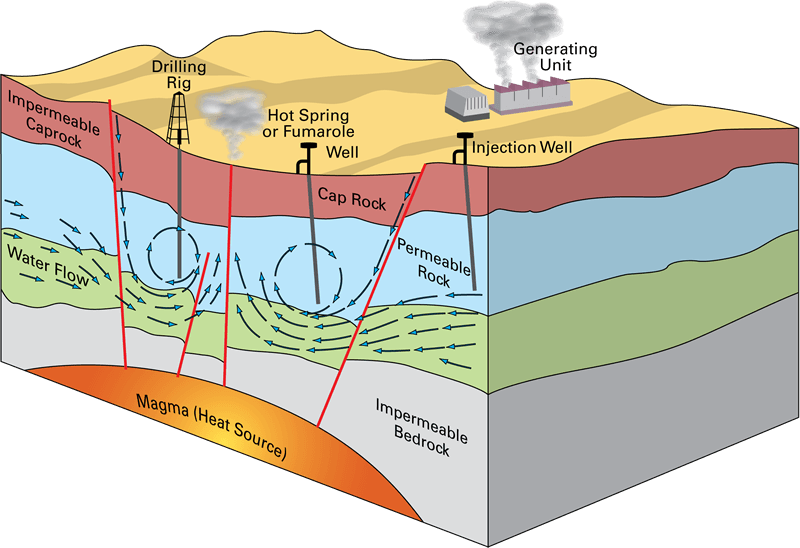
__________uses heat from the interior of the Earth.
Solar
Geothermal
Nucler
Wind


Where is the Root of a turbine blade ?
the "back" of the blade airfoil
the "front" of the blade airfoil that cuts into the wind
where the blade is attached to the turbine
width of the blade measured from the leading edge to the trailing edge
Where is the Root of a turbine blade ?
the "back" of the blade airfoil
the "front" of the blade airfoil that cuts into the wind
where the blade is attached to the turbine
width of the blade measured from the leading edge to the trailing edge
Aerodynamic shape that provides high lift and low drag like an airplane wing
airfoil
wind blade
fan blade
teardrop
Aerodynamic shape that provides high lift and low drag like an airplane wing
airfoil
wind blade
fan blade
teardrop
What is Rotational Energy?
Energy created when something drops from a distance
The forward motion of an object
Energy created from an object turning in a circular motion
What percentage of the world's energy does the United States consume?
56 percent
25 percent
18 percent
3 percent
Create Solutions for environmental problems affecting the welfare of humans and nature.
Environmental Engineers
Nature Engineers
Electrical Engineers
Biomedical Engineers
____________ is produced through methods that do not release greenhouse gases or any other pollutants
Energy
Clean Energy
Clear energy
The synonym of the verb "midigate" is _________
resume
reduce
decrease
The synonym of the word "reliance " is ___________
dependence
independence
consuming
Renewable Energy______________.
increases the reliance on Fossil Fuels.
causes climate change
doesn't create any direct green gas emissions

Which energy type has the highest initial cost?
Solar
Wind
Nuclear
Hydro

Which energy type has the lowest operational cost per kW-yr? Choose 2.
Nuclear
Hydro
Wind
Solar

Which energy type provides the highest energy output?
Solar
Wind
Nuclear
Hydro

Which energy type has a "High" cost-benefit ratio due to its huge output over decades?
Solar
Nuclear
Wind
Hydro

Which energy type is most dependent on weather conditions? Choose 2.
Nuclear
Hydro
Solar
Wind

What is the approximate initial cost range for a large hydro dam?
100M−500M
1B−5B
6B−12B
100M−1B

Which energy type’s benefits are limited by water availability?
Solar
Wind
Nuclear
Hydro

The table lists nuclear’s initial cost as ~6B - 12B. Why does this high cost still lead to a "High" cost-benefit ratio?
It has the lowest operational cost
It produces energy at a 90%+ capacity factor
It uses cheaper fuel than hydro
It requires less maintenance than solar

Solar’s operational cost is 20 - 40/kW-yr. What does this suggest about its long-term use compared to nuclear (700 - 900/kW-yr)?
Solar is more expensive to maintain over time
Nuclear is cheaper to run after construction
Solar has lower ongoing costs, making it more affordable long-term
Nuclear’s output is too low to justify its operational cost

Wind has a capacity factor of ~30-40%. What does this imply about its reliability compared to hydro (~50-70%)?
Wind is more reliable because it’s renewable
Hydro is more consistent due to higher output potential
Wind produces more energy in all conditions
Hydro’s output is less predictable than wind’s

Hydro’s initial cost is 1B - 5B. Why might this be a better investment for a river-rich region than solar (100M - 1B)? Choose 3.
Hydro has a lower operational cost
Solar’s energy output is too high for small regions
Hydro’s steady output outweighs its higher upfront cost
Solar requires more maintenance than hydro

Nuclear’s operational cost is 700 - 900/kW-yr. What does this high cost reflect compared to wind (40 - 60/kW-yr)?
Wind’s higher fuel expenses
Nuclear’s need for safety and waste management
Wind’s greater energy output
Nuclear’s lower maintenance needs

Solar’s capacity factor is ~20-25%. What does this low percentage suggest about its use in a cloudy region?
It would perform better than nuclear
Its energy output would be less reliable than hydro
It would have a higher cost-benefit ratio than wind
Its operational costs would decrease

The table notes wind’s initial cost as 100M - 500M. Why might this make it a good choice for a small, windy community over nuclear (6B - 12B)?
Wind’s higher energy output justifies its cost
Nuclear’s lower operational cost is less important
Wind’s lower upfront cost fits a smaller budget
Nuclear is too renewable for small areas

The table lists solar’s initial cost as 100M - 1B. Why might this range make it more appealing than hydro
(1B-5B) for a budget-conscious town, given solar’s operational cost is ~20 - 40/kW-yr?
Solar’s higher energy output offsets its cost
Hydro’s operational costs are too high
Solar offers a lower entry cost and similar ongoing expenses
Hydro’s capacity factor is less predictable
Why is clean energy on the rise?
It runs out quickly.
It makes little to no air pollution.
It's easier to use.
Electricity is dangerous.
What is another name for clean energy?
non-renewable energy
Earth energy
renewable energy
electric energy
What is a large group of wind turbines sitting on flat land called?
wind farm
spinning farm
windmill
windy city

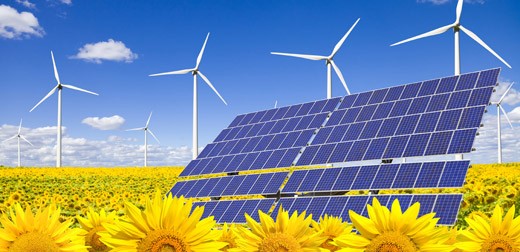
What type of clean energy is used in this photo?
hydro energy
solar energy
wind energy
magnetic energy
Where is a Offshore wind turbine made
on land
in water
on a hill
in a building

How do batteries work?
They store mechanical energy to be converted to chemical energy.
They store electrical energy to be converted to chemical energy.
They store mechanical energy to be converted to electrical energy.
They store chemical energy to be converted to electrical energy.