
 Worksheets
6/4 Chords, Plagal Motion, "La" and "Mi" in the Bass
Total questions: 13
Worksheet time: 7mins
How many 6/4 Chords as Forms of Prolongation we have studied in class?
3: Passing 6/4, Neighbor 6/4 and Arpeggiating 6/4
3: Passing 6/4, Neighbor 6/4 and Special 6/4
2: Passing 6/4 and Neighbor 6/4
4: Passing 6/4, Neighbor 6/4, Arpeggiating 6/4 and Special 6/4
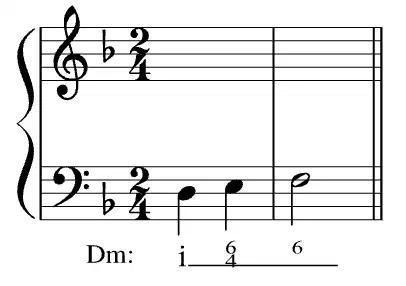
This is an example of...?
Cadential 6/4
Passing 6/4
Neighbor 6/4
Arpeggiating 6/4

This is an example of...?
Cadential 6/4
Arpeggiating 6/4
Neighbor 6/4
Passing 6/4

This is an example of...?
Cadential 6/4
Passing 6/4
Neighbor 6/4
Arpeggiating 6/4
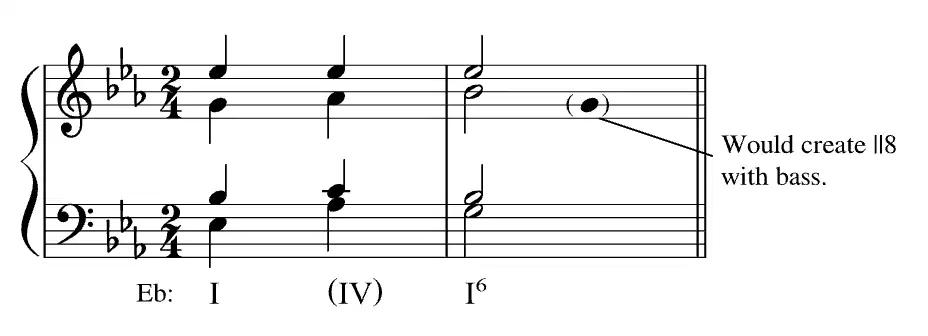
This chord progression is also called as:
None of them
Tonic Prolongation
Plagal Motion
Tonic Motion
What means "Deceptive Motion"?
Deceptive motion most commonly occurs when V(7) moves to iii/III rather than I
Deceptive motion most commonly occurs when V(7) moves to vi rather than I
Deceptive motion most commonly occurs when V(7) moves to vii rather than I
Deceptive motion most commonly occurs when V(7) moves to ii rather than I
Is vi/VI chord a weak or a strong Predominant?
Weak
Strong
Depends on the chord progression
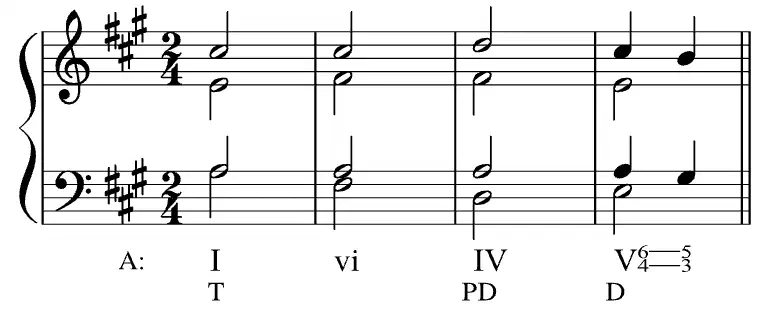
Why in this example vi is NOT part of the PD function?
Because it's a weak predominant, and IV is the first strong predominant that we find right before V.
Because it comes right after I.
Because the example is in Major Mode, and that is the exception to the general rule.
The Phrygian Half Cadence appears at the beginning of a phrase.
False
True
The Phrygian Half Cadence only occurs in Major Mode.
True
False. The Phrygian Half Cadence only occurs in Minor Mode.
The iii chord is a weak Predominant.
True
False
The iii chord (III in minor) typically moves through a ii or IV/iv chord on the way to a V chord.
True.
False.
iii/III can also go directly to V.
Yes. Only in Minor Mode.
Yes. Only in Major Mode.
No.

