
NEW
Font size
 Worksheets
Rapid Review STAAR Questions (Earth and Space)
Total questions: 30
Worksheet time: 20mins
What are the main stages in a star's life?
Birth, Life, Death
Light, Heat, Explosion
Moon, Planet, Sun
Small, Medium, Large
What diagram do scientists use to classify stars?
Life Cycle Chart
H-R Diagram
Star Graph
Color Spectrum
What kind of galaxy is the Milky Way?
Irregular
Elliptical
Spiral
Circular
What is redshift used to study?
Star color
Universe size
Galaxy speed
Universe expansion
What energy source drives weather on Earth?
Moon
Ocean
Sun
Volcanoes
What happens when air and water interact?
Nothing
Earthquakes
Weather forms
Wind stops
What are global wind patterns?
Predictable air movement
Local breezes
Where do hurricanes hit most in Texas?
North
West
Gulf Coast
Panhandle
What helps form hurricanes?
Cold dry air
Warm ocean water
Snow
Gravity
How do ocean currents affect weather?
They create deserts
They regulate temperature
They cause earthquakes
They stop rain
What can a volcano do to Earth’s climate?
Make it colder
Make it rain
Make it warmer
Create oceans
How does cutting down forests affect climate?
Cools the Earth
Adds oxygen
Adds CO₂
Stops clouds
What do fossil fuels release?
Water
Heat
Carbon dioxide
Oxygen
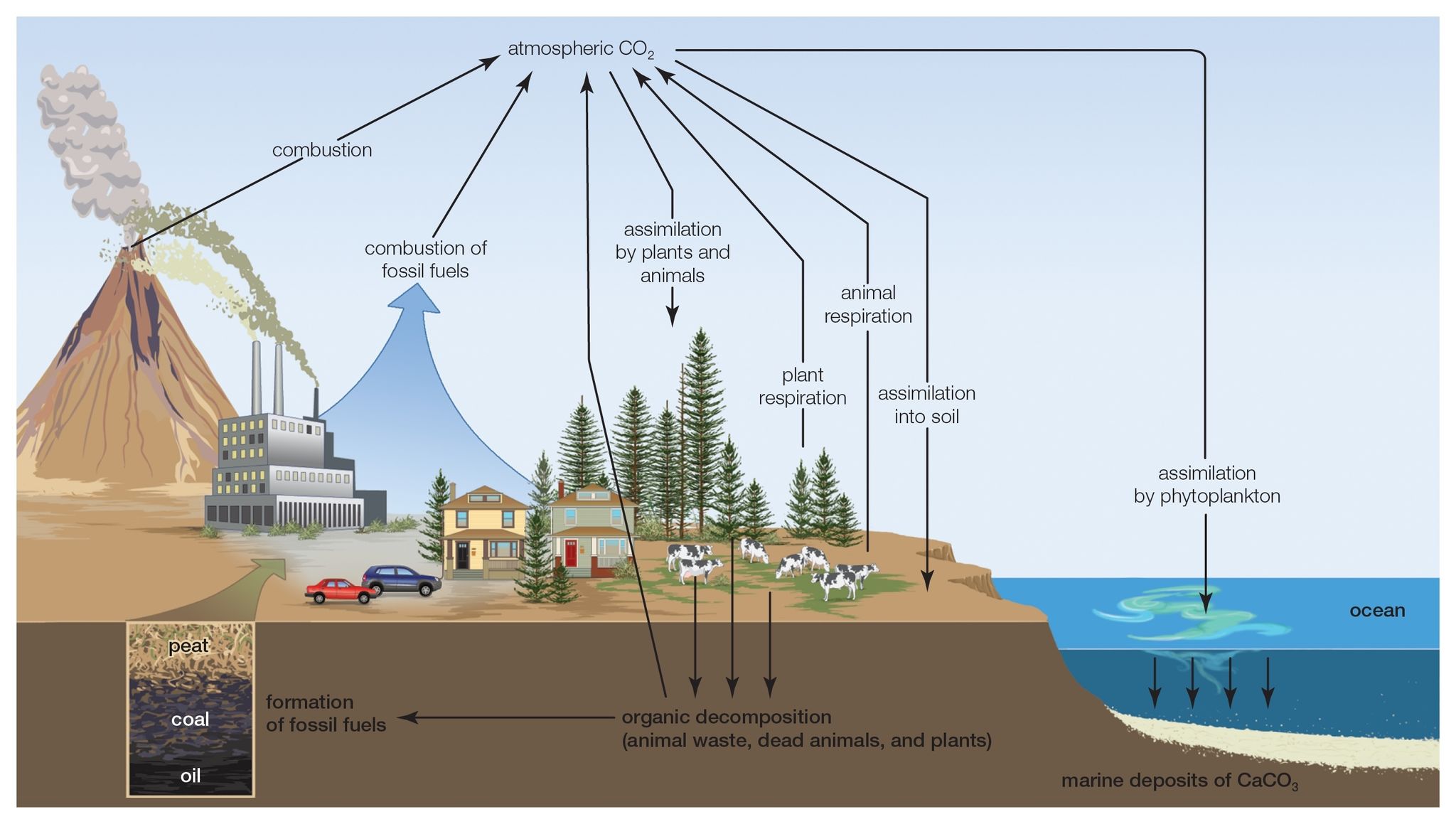
What moves carbon between air, plants, and animals?
Water cycle
Carbon cycle
Food web
Rock cycle
Name one human activity that adds greenhouse gases.
Planting trees
Riding bicycles
Burning fossil fuels
Using solar panels

Who came up with the theory of continental drift?
Alfred Wegener
Harry Hess
Albert Einstein
Which boundary is most likely to build mountains?
convergent
divergent
transform
What type of boundary is also called a sliding boundary?
convergent
divergent
transform
Where is a rift valley formed?
Diverging continental crust
Converging continental crust
Converging continental and oceanic crust
Transform boundary
Hess' theory that new seafloor is formed when magma is forced upward toward the surface at mid-ocean ridge
seafloor spreading
continental drift
diverge
Pangaea
How does deforestation affect levels of carbon in the atmosphere?
Trees remove oxygen from the atmosphere during photosynthesis. With fewer trees, more oxygen remains in the atmosphere.
Trees remove carbon dioxide from the atmosphere during photosynthesis. With fewer trees, more carbon dioxide remains in the atmosphere.
Deforestation removes the harmful chemicals from the environment that farmers use on crops.
Deforestation adds more carbon dioxide to the air which is harmful for the environment.
Which statement supports the use of fossil fuels?
fossil fuels are expensive
fossil fuels are limited
fossil fuels produce a large amount of energy
fossil fuels pollute the air when burned
What is the primary cause of ocean currents?
Wind patterns
Human activity
Earthquakes
Volcanic eruptions

