
 Worksheets
AP Chem The Whole Enchilada Units 1-3
Total questions: 187
Worksheet time: 3hrs 14mins
Unit 1: When an electron is in a higher energy level, it is farther away from the nucleus and has less Coulombic attraction to the nucleus and is therefore easier to remove
True
False
Unit 1: When reading a PES graph, the higher the peak, the less electrons there are in that sublevel, and a larger binding energy means that the electrons are closer to the nucleus.
True
False
Unit 1: Isotopes of an element have the same number of protons, but different numbers of electrons.
True
False
Unit 1: Cations (+) are smaller than their atoms since you are removing valence electrons that are farther from the nucleus and anions (−) are larger than their atoms since adding extra electrons increases electron-electron repulsions.
True
False
Unit 1: The greater the electronegativity difference between 2 atoms, the more polar the bond becomes.
True
False
Unit 1: % error= (experimental - theoretical)/experimental
True
False
Unit 1: Filtering separates mixtures based on differences in what property?
Chemical
Solubility
Particle size
Density
Unit 1: What is the equation for calculating the density of a substance?
D=m/v
m=D/v
D=v*m
D=v/m
Unit 1: When an electron is in a lower energy level, it is ________________ away from the nucleus
Closer
Farther
Unit 1: When reading a PES (Photoelectric Spectroscopy) graph, what does the height of a peak represent?
The number of electrons
The number of protons
The mass or the isotope
The amount of energy the electron has
Unit 1: Isotopes of an element have the same number of __________, but different number of __________.
protons, neutrons
neutrons, protons
protons, electrons
electrons, protons
Unit 1: When reading a PES (Photoelectron Spectroscopy) graph, a larger binding energy means that the electrons are _________________ the nucleus?
Closer to
Farther from
Unit 1: Distillation separates mixtures based on differences in what property?
Solubility
Boiling Point
Particle Size
State of Matter
Unit 1: What type of change conserves mass?
none
chemical
physical
chemical and physical
Unit 1: When an electron is in a higher energy level, it has ___________ Coulombic attraction to the nucleus
More
Less

Unit 1: What is the measurement of the burette? (in mL)
6.6mL
6.64mL
7.36mL
7.3mL
Unit 1: Which orbital comes after 4s?
3d
5s
4p
4d
Unit 1: Are cations larger or smaller than their neutral atoms?
Larger
Smaller
Same size
Unit 1: Which piece of glassware is the most precise
beaker
graduated cylinder
burette
test tube
Unit 1: Moving across a row (L to R) on the periodic table, Zeff _________________
Increases
Decreases
Stays the same
Unit 1: What type of change separates a compound into elements?
physical
chemical
chemical and physical
Unit 1: Why do atoms get smaller moving across a period (L to R) on the periodic table?
More protons (q) to attract the electrons
Fewer protons (q) to attract the electrons
More energy shells (r) so it can't attract the electrons
Fewer energy shells (r) so it attracts the electrons closer
Unit 1: Why are anions larger than their neutral atoms?
More shielding that repels the other electrons
Fewer protons to attract electrons
More electrons to attract protons
More Zeff to attract electrons
Unit 1: Which piece of glassware is the least precise?
graduated cylinder
beaker
burette
Unit 1: When an electron is in a lower energy level, it has a ________________ 1st ionization energy
Higher
Lower
Same
Unit 1: Which electrons are removed first when making a cation?
s
p
d
f
Unit 1: What do mass spectroscopy graphs measure?
Mass of isotopes
Mass of protons
Energy of electrons
Number of electrons
Unit 1: When reading a PES graph, a larger binding energy means that the electrons are ____________ from the nucleus?
closer
farther
the same distance
Unit 1: Which orbital comes after 4p?
5s
4s
3d
4p
Unit 1: germanium is a ________________, hydrogen is a _________________ and uranium is a ________________
metal, non-metal, metalloid
metalloid, non-metal, metal
non-metal, metal, metalloid
Unit 1: Are anions larger or smaller than their neutral atoms?
Larger
Smaller
Same size
Unit 1: When an electron is in a lower energy level, it has a ___________ 1st ionization energy
Higher
Lower
What is the molar mass of Cl2?
17 g/mol
35.5 g/mo;
71.0 g/mol
89 g/mol
Calculate the molar mass of KOH.
28 g/mol
56 g/mol
84 g/mol
112 g/mol
Calculate the molar mass of Ba(C2H3O2)2
255.3 g/mol
237.3 g/mol
228.3 g/mol
196.3 g/mol
What is the molar mass of the diatomic element nitrogen?
7 g/mol
14 g/mol
28 g/mol
Beryllium and sulfur will form a ______ bond
ionic
covalent
metalloid
MgO
ionic
covalent
metallic
Which concept is Avogadro's number related to?
Mole
Atomic number
Chemical equation
Molar mass
What does Avogadro's number allow scientists to determine?
The temperature of atoms or molecules in a given amount of substance.
The color of atoms or molecules in a given amount of substance.
The weight of atoms or molecules in a given amount of substance.
The number of atoms or molecules in a given amount of substance.
Avogadro's number is approximately equal to:
3.141 x 10^23
9.999 x 10^22
1.234 x 10^24
6.022 x 10^23
How do you solve the following problem: How many grams are there in 7.5 moles of H2SO4?
Convert liters to moles then moles to grams
Convert particles to moles then moles to grams
Convert moles to grams
Convert grams to moles
Match the following...
You convert moles to grams by...
multiplying by the molar mass
You convert liters to moles by...
dividing by 22.4L
You convert moles to particles by...
multiplying my avagadro's constant
You convert grams to moles by...
dividing by the molar mass
You convert moles to liters by...
multiplying by 22.4L
How many grams are in 9.28x10²³ molecules of NaCl?
Choose the correct setup.
9.28x10²³ molecules ×1 mole6.02x1023 grams
9.28x10²³ molecules ×1 mole6.02x1023 mc×1 mole58.44 g
9.28x10²³ molecules ×6.02x10²³ mc1 mole×1 mole58.44 g
9.28x10²³ molecules ×1 mole58.44 g
How many moles are in 2.67x1024 molecules of H2O?
What is the missing piece?
2.67x1024 molecules×6.02x10²³ mc???????????
6.02x10²³ mc
1 mole
18.016 grams
2.67x1024 mc

What element is this?
Chlorine
Lithium
Boron
Phosphate
Phosphite

If you had 192.9 atoms of silver, 100 would be Ag-107 and 92.9 would be Ag-109. What would the Average Atomic Mass be? (You have time to answer... do your work...)
Important numbers: Atomic Mass of Ag-107 is 106.905 and Atomic Mass of Ag-109 is 108.904.
107.87
108.85
107.44
108.26
107.94


Molecular Formula = C2F6
Choose the correct empirical formula.
CF
C2F6
C3F
CF3
Empirical Formula = CF2
Molecular formula mass = 192 g/mol
Molecular Formula = ?
C4F8
C8F4
C3F6
C2F4
What percentage of the total atomic mass of carbon monoxide (CO) is composed of carbon?
29%
43%
57%
73%
What percentage of the total atomic mass of carbon monoxide (CO) is composed of oxygen?
29%
43%
57%
73%
which one defines percent composition?
the percent by mass of each element in a compound
when elements join together
when water dries up
elements split
How do you calculate the percent composition by mass of an element in a compound?
( (a) ) ÷ ( (b) ) × 100
% to Mass; Mass to Moles; Divide by Small; Multiply Till Whole
Steps to find an Empirical Formula
Steps to find a Molecular Formula
Steps to find % Composition
Weight of the Molecular Formula Divided by the Weight of the Empirical Formula x 100
Steps to find an Empirical Formula
Steps to find a Molecular Formula
Steps to find Percent Composition
Individual divided by total x 100
Steps to find an Empirical Formula
Steps to find a Molecular Formula
Steps to find Percent Composition
Click the hotspot for the box that represents an element.
Click the hotspot that represents a mixture

Identify the substance in box Y.
element
compound
mixture

Identify this substance.
element
compound
mixture

Identify this substance.
element
compound
mixture


1s22s22p63s23p64s23d10
Zinc (Zn)
Copper (Cu)
Nickel (Ni)
Germanium (Ge)

The PES spectrum below is for the element _______________.
O
Ne
N
F

Examine the spectrum below. Where would you expect the 2p peak for F be if it were on the same spectrum?
To the left of the peak at 3.04
To the right of the peak at 3.04
To the left of the peak at 1.31
To the right of the peak at 1.31

What does the 4th peak from the left represent?
The 2s electrons
The 3d electrons
The 2p electrons
The 3s electrons

Which electrons would be ejected with the most kinetic energy according to the spectrum below?
The ones in the peak at 151
The ones in the peak at 7.9
The ones in the peak at 1.09
The ones in the peak at 0.58

Which peak (or peaks) correspond to the valence electrons?
The peak at 1
The peaks at 1 and 2.05
The peak at 239
The peaks at 239 and 22.7

How many valence electrons does the element pictured in the PES spectrum below have?
1
2
3
4

As the energy level goes higher, the electrons
have lower in energy
are more stable
are weaker
are farther from the nucleus
Click on the hotspot that represents an energy level.
The lowest available energy state of an electron is called the:
the lowest state
the ground state
the entry state
the fixed state
Select the hotspot that shows the most EN element
Select the hotspot that shows the smallest element
Select the hotspot that shows the largest element
Select the hotspot that shows the largest 1st ionization energy
Reorder the following in order of increasing atomic radius
F
Cl
Br
I
At
Reorder the following in order of increasing atomic radius.
Cl
S
P
Si
Al
Reorder the following in order of increasing EN
Ni
Cu
N
O
F
Unit 2: A single bond is composed of
1 sigma bond
1 pi bond
1 sigma and 1 pi bond
no sigma or pi bonds
Unit 2: A triple bond is composed of
1 sigma bond
1 pi bond
2 pi bonds
1 sigma and 2 pi bonds
Unit 2: Lattice energy is the energy to break an ionic bond in a compound. Lattice energy increases as the ion’s charge increases. Lattice energy decreases as the radii of the ions increase.
True
False
Unit 2: SiO2 (quartz) and diamonds are ____________________, and they have very high boiling/melting points.
covalent network solids
ionic solids
molecular solids
interstitial alloys
Unit 2: ______________ alloys are made when a smaller atom fits into the gaps between larger atoms of a metallic crystal.
Interstitial
Substituitonal
Unit 2: What type of alloy is made when the radii of the atoms are similar in size?
interstitial
substitutional

Unit 2: In this molecule, Carbon has a formal charge of ____ and Nitrogen has a formal charge of _____.
0, 0
1, 0
0, -1
-1, 0

Unit 2: What type of alloy is this?
Interstitial
Substitutional
Unit 2: What is the total # of covalent bonds carbon can form when drawing a Lewis structure?
12
6
4
8
Unit 2: What is the bond angle in BF3?
90
120
109.5
180
Unit 2: What is the bond angle in H2O?
120
90
180
104.5
Unit 2: Are asymmetrical molecules polar or nonpolar?
Polar
non-polar
neither
Unit 2: What is the bond angle in NH3
120
107.3
180
90
Unit 2: What is the hybridization of carbon in CH4?
sp3
sp
sp2
Unit 2: What is the hybridization for carbon in CO2
sp3
sp
sp2

Unit 2: Count the number of sigma and pi bonds in this molecule:
13 sigma, 1 pi
14 sigma, 2 pi
1 sigma, 14 pi
2 sigma, 13 pi
Unit 2: What is the hybridization for an oxygen in CO2
sp3
sp
sp2

Unit 2: Choose the correct shape for this molecule:
Unit 2: What is the total # of covalent bonds carbon has to make when drawing a Lewis structure?
12
6
4
8

Unit 2: What is the the shape of this molecule according to VSPER theory?
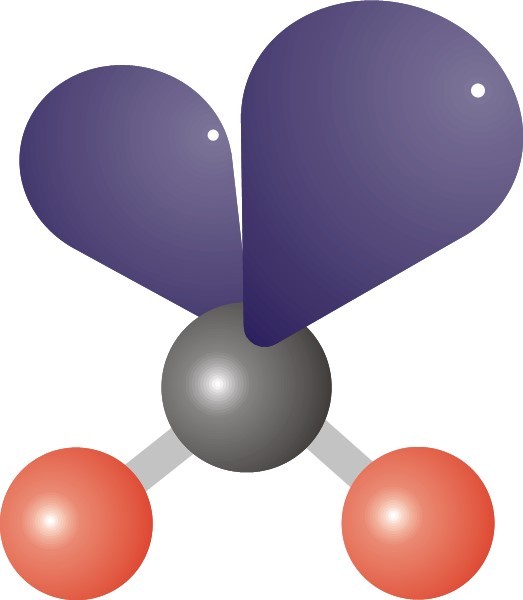
Unit 2: What compound could this be?
CO2
NH3
H2S
CH4
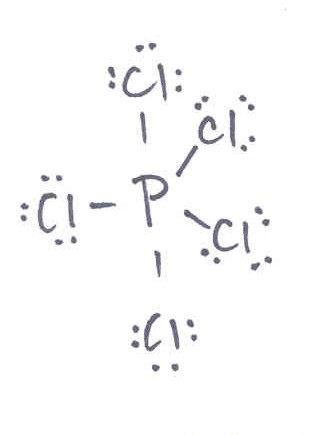
Unit 2: Draw the Lewis Dot structure for PCl5 and determine the predicted molecular geometry
octahedral
trigonal pyramidal
seesaw
trigonal bipyramidal
Unit 2: Choose the correct shape for this molecule:
Unit 2: Choose the correct shape for this molecule:

Unit 2: How many sigma and pi bonds does this have?
Unit 2: How many sigma and pi bonds does this have?

Unit 2: Carbon atom undergo
Unit 2: What is the total # of covalent bonds carbon has to make when drawing a Lewis structure?
12
6
4
8
Unit 2: What is the bond angle in BF3?
90
120
109.5
180
Unit 2: What is the bond angle in H2O?
120
90
180
109.5
Unit 2: Are asymmetrical molecules polar or nonpolar?
Polar
non-polar
neither
Unit 2: What is the bond angle in NH3
120
109.5
180
90
Unit 2: What is an example of a covalent network solid?
Salt
Diamond
Sugar
Water
Unit 2: What is the hybrid orbital used in CH4?
sp3
sp
sp2
Unit 2: What is the hybrid orbital used in CO2
sp3
sp
sp2
Unit 2: Count the number of sigma and pi bonds in this molecule:
13 sigma, 1 pi
14 sigma, 2 pi
1 sigma, 14 pi
2 sigma, 13 pi
Unit 2: Why are asymmetrical molecules polar?
Their dipoles do not cancel
Their dipoles cancel
Unit 2: What is the bond angle in SO2
120
90
180
109.5

When two identical atoms, such as two oxygen atoms, bond, the resulting bond is (a)
Click on the bond that shares the most electrons in this structure.
Label the type of bonds seen in the structure to the right
Double Bond
Triple Bond
Single bond
Quadruple Bond

Electronegativity difference is large enough to cause unequal sharing of electrons but not large enough to cause a transfer of electrons from one atom to another.
C
Compounds held together with these bonds are malleable with high thermal and electrical conductivity due to freely moving electrons
A
Bonded atoms share electrons without a dipole moment
D
Electronegativity difference between atoms is large enough to transfer electrons
B
Match the following
One shared pair of electrons
Single Bond
Two shared pairs of electrons
Double Bond
Three shared pairs of electrons
Triple Bond
Match the types of elements with the correct bond formation.
metal - nonmetal
ionic bond
metal - metal
metallic bond
nonmetal - nonmetal
covalent bond
Match the term and its diagram

Ionic bond

Covalent bond

Hydrogen bond
(a) compounds are usually the strongest.
Match the following pictures to the types of bonds

metallic bond

hydrogen bond

ionic bond

covalent bond

polar bond
A sea of electrons forms a (a)
Match the following with their correct chemical bond type
NaCl
Ionic
H2O
Covalent
Co
Metallic


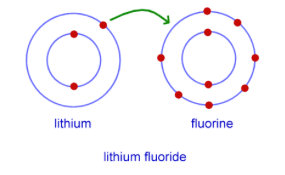

The image above shows:
covalent bonding
ionic bonding
metallic bonding

Which best describes the bonding in the cyanide ion (CN-)?
3 (sigma) bonds
2 (sigma) bonds and I (pi) bond
1 (sigma) bond and 2 (pi) bonds
3 (pi) bonds

Use your knowledge and electronegativity sheet to predict what the following compound is classified as.
nonpolar covalent
polar covalent
ionic
metallic


What is the name for the electrostatic force of attraction between the particles shown in the image?
covalent bond
dative covalent bond
metallic bond
ionic bond
Unit 3: Real gases behave most like an ideal gas at high temperature and at low pressure. The more polar a gas is and the larger a gas is, the more it will deviate from ideal behavior. Consequently, small, nonpolar gases are the _______ ideal.
Most
Least
Unit 3: Which is the strongest IMF?
LDF
Dipole dipole
Hydrogen bonding
Ion-dipole
Unit 3: Which would have the strongest IMFs?
CH4
C2H2
C4H8
C8H14
Unit 3: Vapor pressure and volatility decrease as IMF’s increase.
True
False

Unit 3: Which atom has the negative dipole in this molecule?
Hydrogen
Fluorine
Neither
Unit 3: As the electronegativity difference between 2 atoms increases, the polarity of the bond ____________________
increases
decreases
Unit 3: What type of bond forms between hydrogen and chlorine?
polar covalent
non-polar covalent
ionic
hydrogen bond
Unit 3: Why are asymmetrical molecules polar?
Their dipoles do not cancel
Their dipoles cancel
Unit 3: When a molecular solid melts or boils, which breaks?
Intermolecular forces
Intramolecular bonds

Unit 3: The particles under the purple curve (middle) have an average Kinetic Energy that is proportional to of 500K
True
False

Unit 3: Which curve represents the most particles in this Maxwell-Boltzmann curve (# of particles vs. speed)?
Black (peak on the left)
Red (peak in the middle)
Blue (peak on the right)
They all have the same number of particles
Unit 3: Which curve in this Maxwell-Boltzmann distribution represents the highest proportion of particles moving the fastest (# of particles vs. speed)?
Black (peak on the left)
Red (peak in the middle)
Blue (peak on the right)
All particles are moving at the same speed
Unit 3: Why are all gas mixtures considered to be homogenous?
The gas particles mix uniformly without distinct areas of concentration
The gas particles mix in distinct areas of concentration
The gas particles cannot be separated from each other
The gas particles are in constant random motion
Unit 3: Why are gases compressible?
Gas particles are very small but take up large volumes of space
Gas particles are very small and take up small volumes of space
Gas particles are strong attracted to one another.
Unit 3: How are P and V related?
When Pressure increases Volume increases
When Pressure increases Volume decreases
When Pressure decreases Volume decreases
Unit 3: What causes gas pressure?
The constant collisions of gas particle on the walls of a container
The decrease in temperature when gas particles move slower
The collision of gas particles with each other
Unit 3: How are T and V related?
When Temperature increases Volume increases
When Temperature increases Volume decreases
When Temperature decreases Volume increases
Unit 3: How are T and P related?
When Temperature decreases Pressure increases
When Temperature increases Pressure decreases
When Temperature increases Pressure increases
Unit 3: In the equation PV = nRT what are the units for T, V and P?
Celcius, L, atm
Kelvin, ml, torr
Kelvin, L atm
Unit 3: At STP what is the volume of one mole of an ideal gas?
14.4 L
22.4 L
11.2 L
Unit 3: How are gas pressure and number of moles related?
When # moles decreases P increases
When # moles decreases P decreases
When # moles increases P increases
When # of moles increases P decreases
Unit 3: Which of the following gases will move the fastest if they are at the same temperature?
He Ar
He will move slower because it is smaller than Ar
He will move faster because it is smaller than Ar
He will move faster because it is larger than Ar
Unit 3: When carbon dioxide gas is collected over water, what accounts for the total pressure in the container?
carbon dioxide gas only
water vapor only
carbon dioxide gas and water vapor
Unit 3: In what conditions do real gases behave most like ideal gases?
low T and high P
low P and high T
high T and high P
Unit 3: What gases deviate the most form ideal gas behavior?
polar and large gas particles
nonpolar and large gas particles
polar and small gas particles
Unit 3: When a molecular solid melts or boils, which bonds break?
Intermolecular
Intramolecular
Unit 3: Name a property that increases as Intermolecular Forces increase.
Vapor pressure
Conductivity
Melting point
Solubility
Unit 3: List the 3 Intermolecular forces from weakest to strongest
hydrogen bonding, london dispersion, dipole dipole
london dispersion, hydrogen bonding, dipole dipole
london dispersion, dipole dipole, hydrogen bonding
dipole dipole, hydrogen bonding, london dispersion
Unit 3: List ALL the Intermolecular forces that exist in PCl3
hydrogen bonding, london dispersion
london dispersion, hydrogen bonding, dipole dipole
london dispersion, dipole dipole
london dispersion
Unit 3: “More polarizable” refers to which Intermolecular Force?
hydrogen bonding
london dispersion
dipole dipole
Unit 3: Name a property that decreases as Intermolecular Forces increase.
Vapor pressure
Conductivity
Melting point
Solubility
Unit 3: P and V are ___________________ related?
inversely
directly
Unit 3: The more molar mass a gas has, the_________________ it moves
faster
slower
Unit 3: Average Kinetic Energy is another term for _____________.
Heat
Temperature
Pressure
Activation energy
Unit 3: Real gases behave most like an ideal gas at what conditions of temperature and pressure?
High T, Low P
High P, Low T
High V, Low T

