
NEW
Font size
 Worksheets
AP World Unit 2 MCQ Practice
Total questions: 17
Worksheet time: 17mins

The passage above best illustrates which of the following?
Muslims’ examination of their own cultural and economic decline after the Crusades
The debt the Arab world owed Europe for preserving Arab scientific knowledge and cultural history
The reason European industrial expertise far surpassed that of the Arab world
The effects of interregional contact on the development of European culture and technology

Evidence for what historical process is shown through the passage?
Creation, expansion, and interaction of economic systems
Development and transformation of social structures
Development and interaction of cultures
Interaction between humans and the environment
Calicut is a perfectly secure harbor, which, like that of Ormuz, brings together merchants from every city and from every country; in it are to be found abundance of precious articles brought thither from maritime countries ... the town is inhabited by Infidels, and situated on a hostile shore. It contains a considerable number of Mussulmauns, who are constant residents, and have built two mosques, in which they meet every Friday to offer up prayer ... Security and justice are so firmly established in the city, that the most wealthy merchants bring thither from maritime countries considerable cargoes, which they unload, and unhesitatingly send into the markets and the bazaars, without thinking in the meantime of any necessity of checking the account or of keeping watch over the goods.
Abd-Er-Razzák (1442-1444)
According the Muslim ambassador, Abd-Er-Razzák, how did the port of Calicut compare to others within the Indian Ocean trade network?
Calicut was very secure, but other ports, like Ormuz, were quite dangerous.
Similar to other ports in the Indian Ocean trade network, Calicut got most of its precious trade items by way of land.
Like many ports in the region, there was a substantial Muslim presence.
The merchants of Calicut were primarily local, while those in Ormuz were from all over the world.

Based on this secondary source, what is the best conclusion about cultural diffusion into Europe after 1000 C.E.?
A) Europeans borrowed ideas from other civilizations and improved as a result of cultural diffusion.
B) The Crusades were so damaging to relations between religions that cultural diffusion stopped.
C) Aside from isolated examples such as Marco Polo, Europeans weren’t interested in new ideas.
D) Europeans were far more advanced than Asia, causing China to borrow extensively from them.
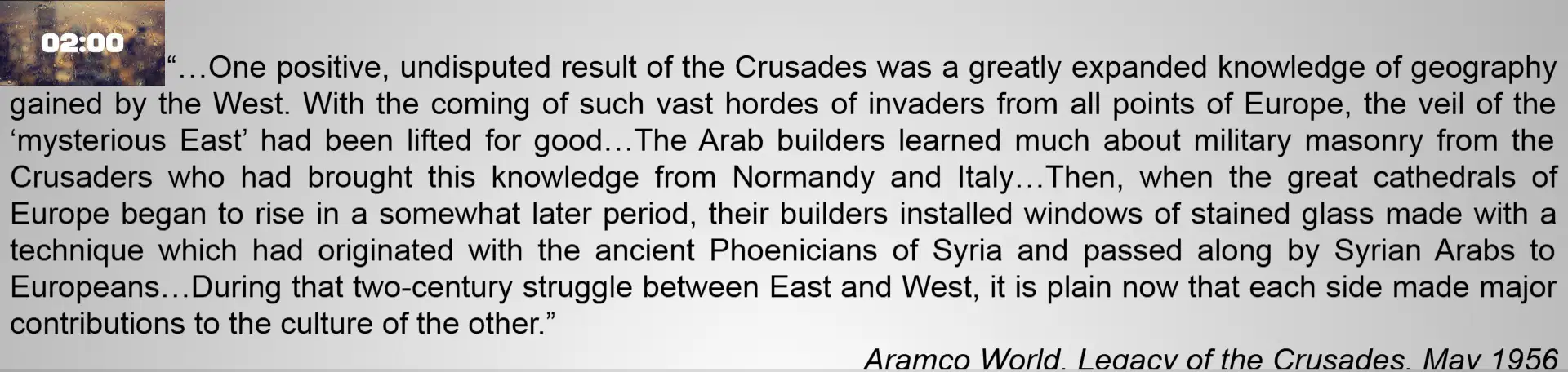
The patterns of cultural diffusion described in this secondary source are most SIMILAR to which of the following events?
Ways that the Byzantine Empire continued the cultural traditions of the old Roman Empire.
The imposition of Islam following conquests by Muslim armies after Muhammad.
Sharing of technological innovations between warring Mongol and East Asian peoples.
Economic trade between East Africa and Asia in the Indian Ocean trade network.
In this excerpt from Travels in Mali, Ibn Battuta (1307–1377 CE), a Moroccan Muslim scholar and traveler, describes his impressions of Muslims in Mali. "Their women are of surpassing beauty, and are shown more respect than the men. These people are Muslims, punctilious in observing the hours of prayer, studying the books of law, and memorizing the Koran. Yet their women show no bashfulness before men and do not veil themselves, though they are assiduous in attending prayers. Any man who wishes to marry any of them may do so, but they do not travel with their husbands, and, even if one desired to do so, her family would not allow her to go. The women have their 'friends' and 'companions' amongst the men outside their own families."
The views in this document are best seen as evidence of which of the following?
Muslim clerics used expanded trade routes to spread their religious beliefs.
Increased travel within Afro-Eurasia led to greater intercultural conflict.
West African societal structure was more influenced by Christianity than by Islam.
Muslim diasporic communities incorporated their own cultural traditions with indigenous cultures.
In this excerpt from Travels in Mali, Ibn Battuta (1307–1377 CE), a Moroccan Muslim scholar and traveler, describes his impressions of Muslims in Mali. "Their women are of surpassing beauty, and are shown more respect than the men. These people are Muslims, punctilious in observing the hours of prayer, studying the books of law, and memorizing the Koran. Yet their women show no bashfulness before men and do not veil themselves, though they are assiduous in attending prayers. Any man who wishes to marry any of them may do so, but they do not travel with their husbands, and, even if one desired to do so, her family would not allow her to go. The women have their 'friends' and 'companions' amongst the men outside their own families."
The syncretism described by Ibn Battuta in this passage most strongly resembles which of the following?
Muslim society during the early Caliphates
Japanese animistic beliefs incorporating Buddhist ideas
The Eastern Orthodox Church in the Byzantine Empire
Mongols tolerating different religions within their empire
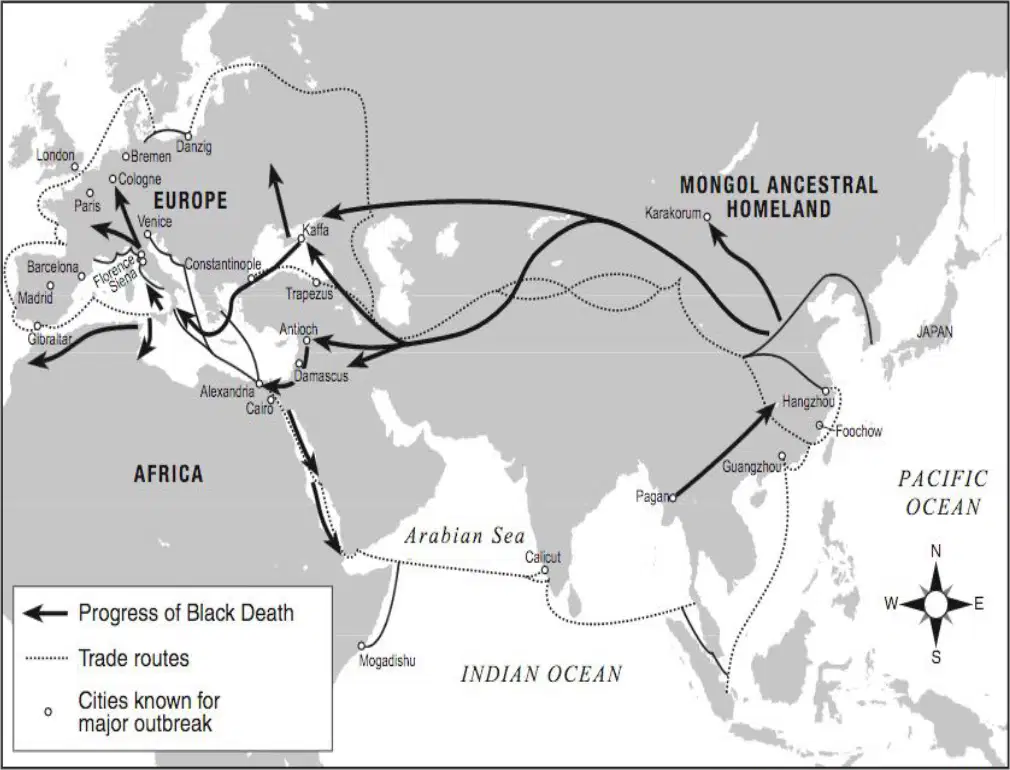
This map is best understood in the context of which of the following concepts?
The growth of urban areas that was caused by the expansion of trade routes.
The decline of urban areas following invasions and falling agricultural productivity.
Technological and cultural transfers that were caused by the expansion of trade routes.
The diffusion of crops and epidemic diseases caused by the expansion of trade routes.

The “progress of the Black Death” shown on this map could be used as evidence to support which of the following claims?
The Middle East was the site of the first outbreak of the disease because of the Crusades.
Eastern Europe had the first outbreak and the disease spread to Western Europe.
Starting in East Asia, the Black Death spread via the silk routes to the west.
African deaths were not as numerous as those in Eurasia.
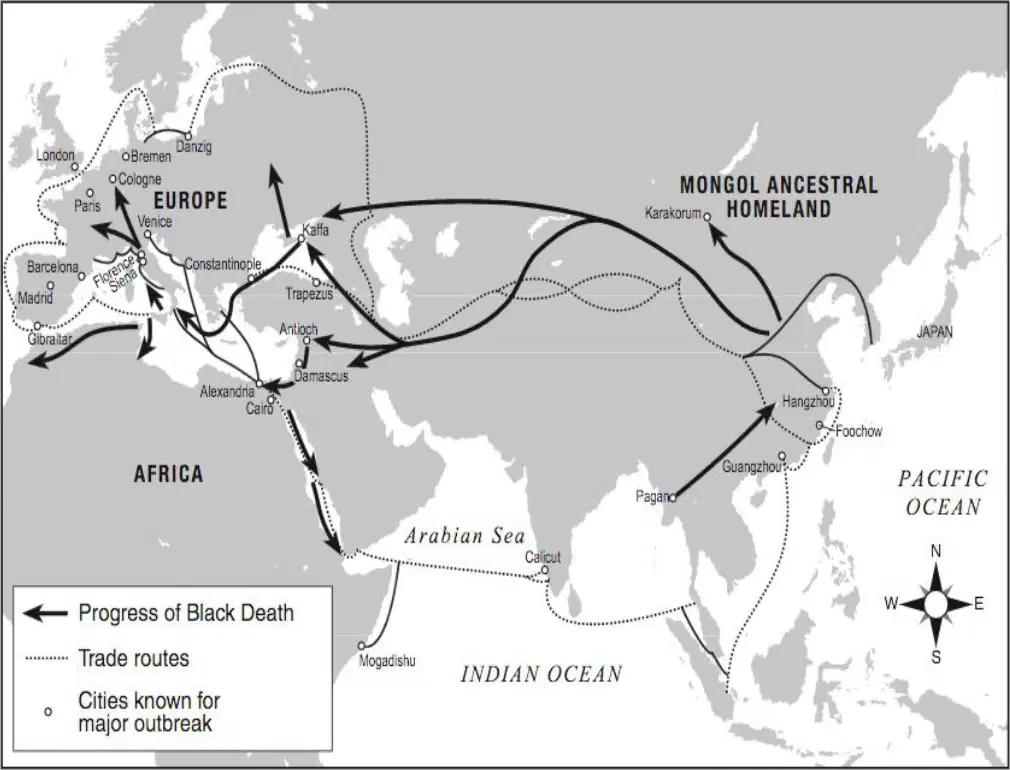
Which is the BEST description of the effects of the Black Death on Europe?
One-third of the population died, creating economic and social problems for feudal kingdoms.
Physicians rapidly developed a cure for the disease, launching a medical revolution.
Seeking help, Europeans voluntarily joined the Mongol Empire which became stronger.
Fearful of the outside world, Europe lost interest in all trade and exploration opportunities.

Which of the following factors contributed the most to Omani traders’ ability to undertake the voyages depicted on the maps?
The strong backing for the voyages by the Caliphate
Navigational and maritime innovations, such as the astrolabe and lateen sail
The spread of Arabic as the language of commerce in the Red Sea and western Indian Ocean basins
Innovations in agriculture, which allowed the Omani population to increase rapidly

Which of the following could be best inferred about the South and East Asian trading cities shown on the maps?
They were under the direct political control of Oman.
They had a majority Arab population.
They had Muslim diasporic merchant communities.
They were primarily sources of slave labor for the Omanis.
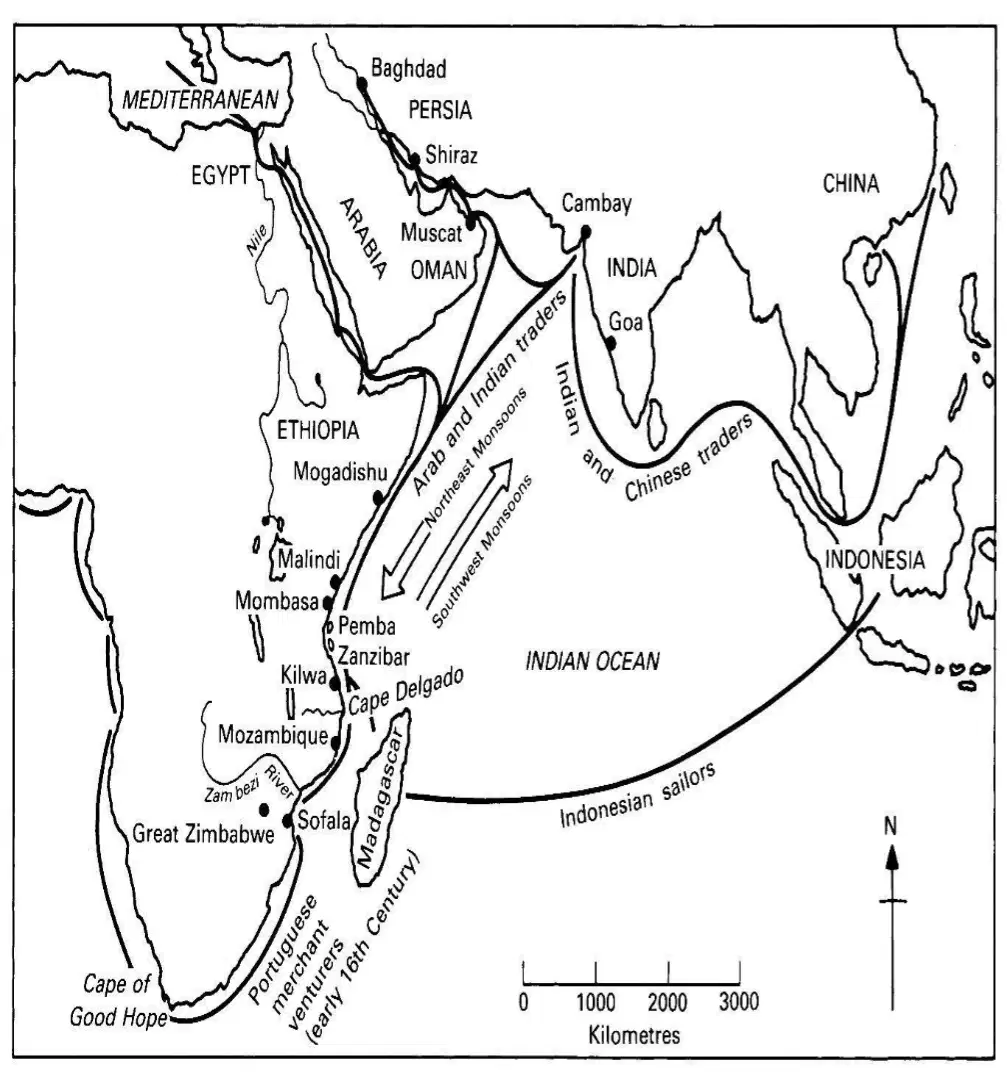
Which of the following statements could be supported by the evidence found in this map?
Powerful monsoon winds prevented Indian sailors from reaching East Africa.
Indonesian sailors dominated the Indian Ocean trade.
Trade contributed to the growth of coastal cities with shipping ports.
Cotton textiles from India were heavily in demand around the Indian Ocean basin.
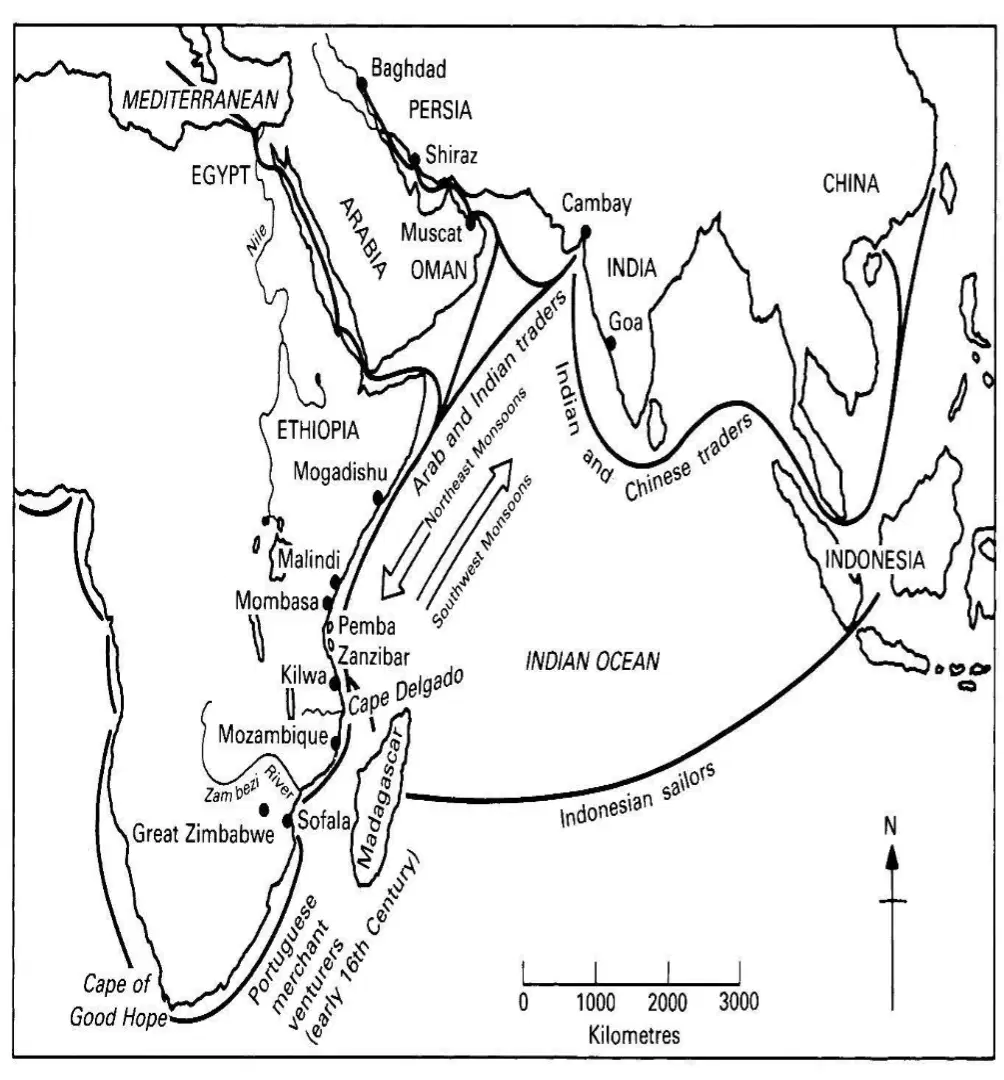
Which of the following political states would have had the LEAST ability to control trade in the Indian Ocean during the time period shown on the map?
Yuan Dynasty China
Western European Kingdoms
Islamic Caliphates
Great Zimbabwe
“One day I entered the home of Aboû Mohammed Yandecán, a man of the Mesoûfah tribe. He was sitting on a rug while in the middle of his house was a bed covered with a canopy. On it was his wife in conversation with another man sitting at her side. I said to Aboû Mohammed“Who is this woman?”—”She is my wife,” he responded—”And who is the man with her?” I asked. “He is her friend,” replied the judge. I asked how he, who knew the divine law on suchmatters, could permit such a thing. He replied that “The companionship of women with men in this country is proper and honorable: It does not inspire suspicion. Our women are not like the women of your country.” I was shocked at his stupid answer and immediately left his home and never returned....”
Ibn Battuta, Voyages D’Ibn Battuta, circa 1352
The differing opinions on appropriate interactions between Muslim men and women were most likely a result of which of the following broader processes from 600-1450?
Syncretism as a result of increased trade and communication.
Cultural diffusion as a result of religious proselytizing.
Assimilation as a result of state promotion of religion.
Cultural leveling as a result of major religions overtaking local beliefs.
“One day I entered the home of Aboû Mohammed Yandecán, a man of the Mesoûfah tribe. He was sitting on a rug while in the middle of his house was a bed covered with a canopy. On it was his wife in conversation with another man sitting at her side. I said to Aboû Mohammed“Who is this woman?”—”She is my wife,” he responded—”And who is the man with her?” I asked. “He is her friend,” replied the judge. I asked how he, who knew the divine law on such matters, could permit such a thing. He replied that “The companionship of women with men in this country is proper and honorable: It does not inspire suspicion. Our women are not like the women of your country.” I was shocked at his stupid answer and immediately left his home and never returned....”
Ibn Battuta, Voyages D’Ibn Battuta, circa 1352
The views expressed in the excerpt are best seen as evidence of which of the following:
Patriarchal systems and gender relations became stronger as a result of the expansion of Islam.
Local practices were rarely in conflict with the major religious doctrines and texts.
As religions spread during this period, interpretations of their doctrines varied greatly.
Social structures were shaped largely by class and caste hierarchies.

The information shown in the map supports all of the following conclusions EXCEPT:
The trans-Saharan trade facilitated the spread of Islam
Islam entered North Africa through military conquest and forced conversions
The presence of Islam was strongest in the empires of West Africa
Commerce and Islam connected West Africa to the Islamic world

