
 Worksheets
QUIZ 5 Lever Class Differences
Total questions: 23
Worksheet time: 15mins
What determines the class of a lever?
The weight of the load
The position of the fulcrum, load, and effort
The length of the lever arm
The amount of force applied
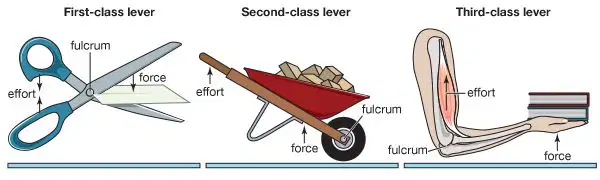
Which of the following is a characteristic of a first-class lever?
The fulcrum is located between the effort and the load.
The load is located between the fulcrum and the effort.
The effort is located between the fulcrum and the load.
The load and effort are on the same side of the fulcrum.
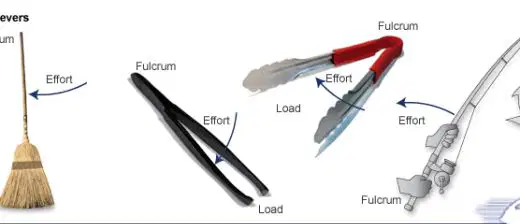
Which of the following is an example of a third-class lever?
A seesaw
A wheelbarrow
A pair of tweezers
A crowbar
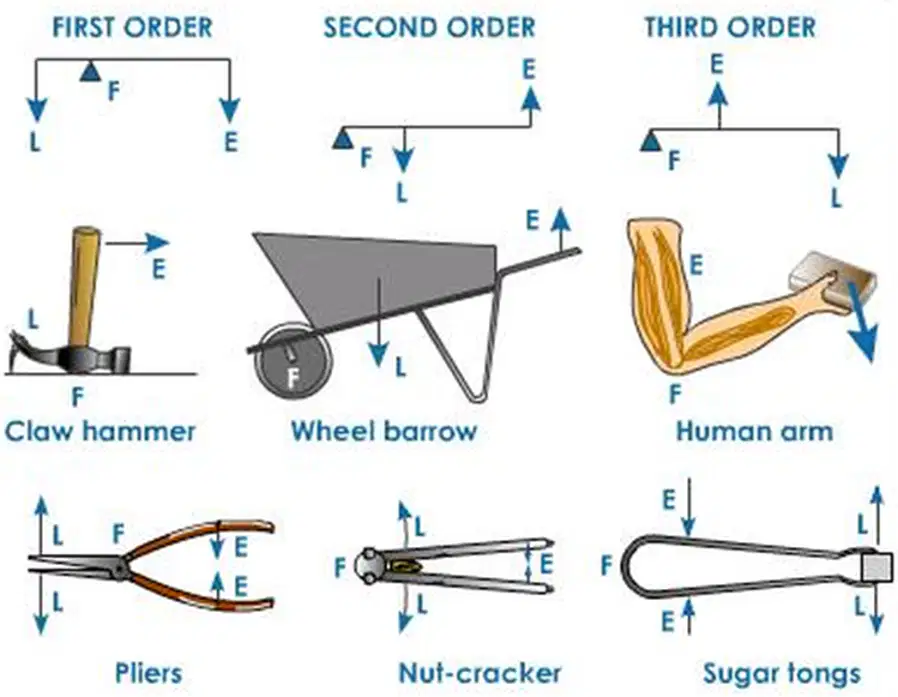
In a second-class lever, where is the load positioned?
Between the fulcrum and the effort.
At the fulcrum.
At the effort.
On one side of the fulcrum and effort.
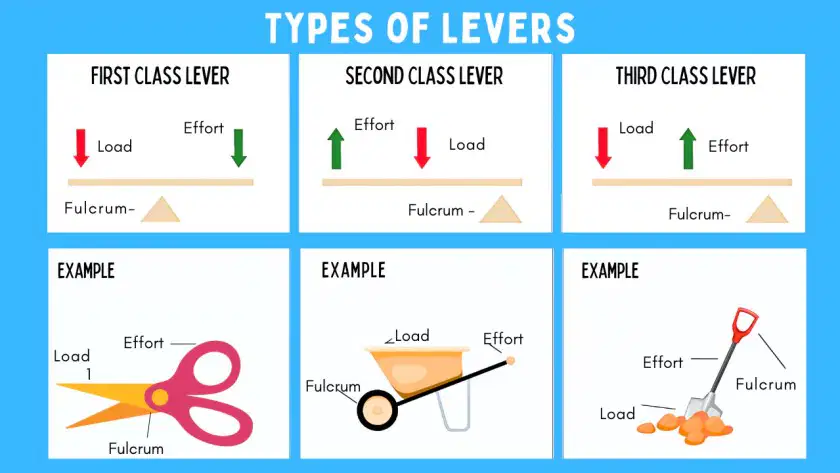
In a second-class lever, which of the following statements is true?
The effort is applied between the fulcrum and the load.
The load is applied between the fulcrum and the effort.
The fulcrum is applied between the load and the effort.
The effort and load are on opposite sides of the fulcrum.
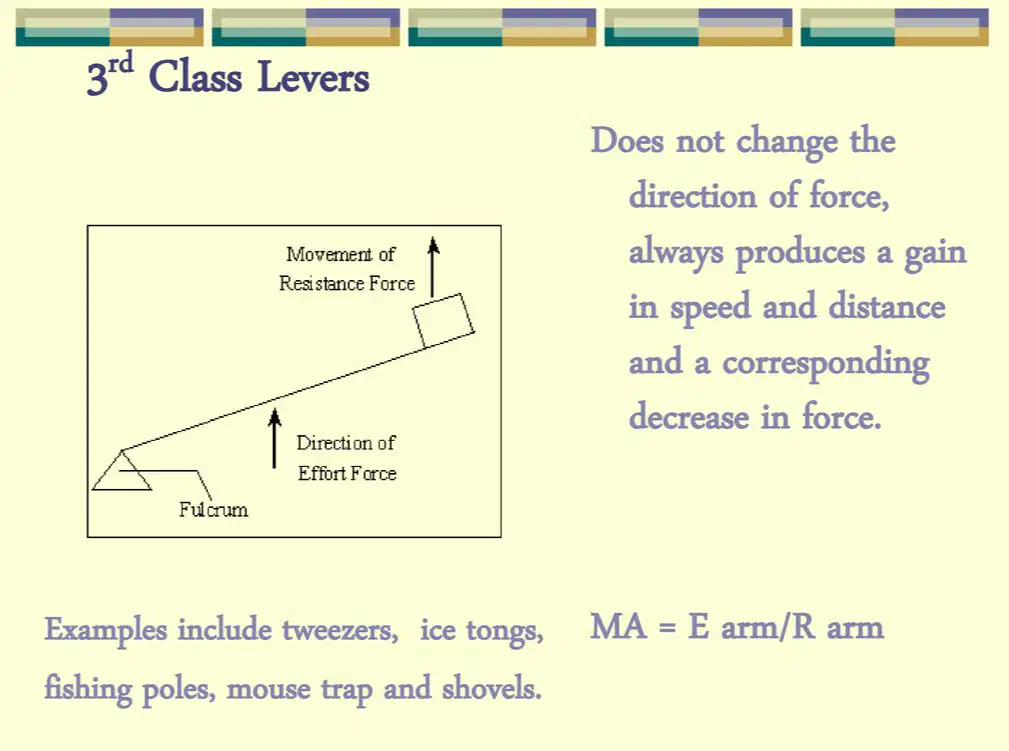
Which lever class is most commonly used to increase speed and range of motion?
First-class lever
Second-class lever
Third-class lever
Fourth-class lever
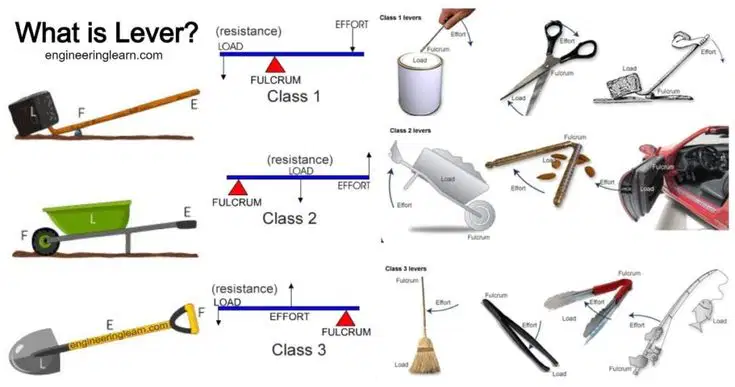
Which of the following is a real-world example of a first-class lever?
A nutcracker
A fishing rod
A pair of scissors
A bottle opener
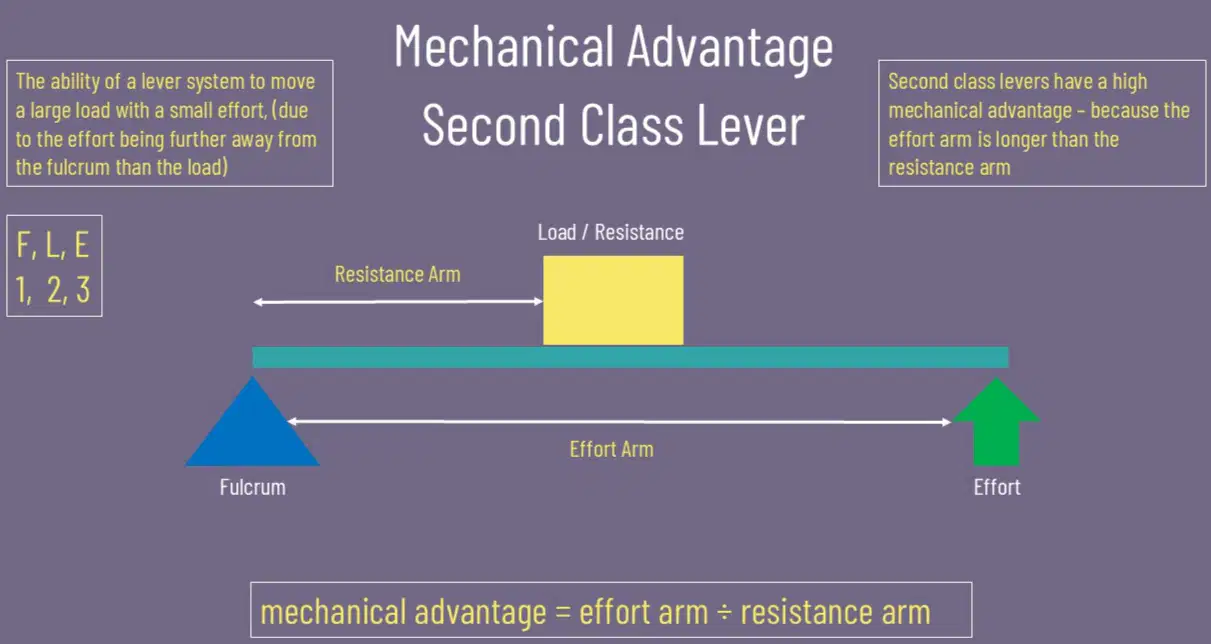
What is the primary advantage of using a second-class lever?
It increases speed.
Resistance and Effort forces are in the same direction.
It changes the direction of the force.
It decreases the effort needed.
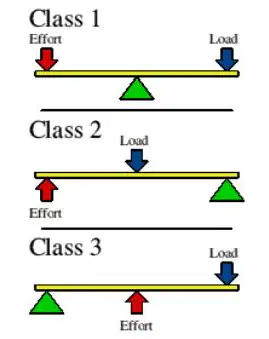
In a third-class lever, where is the effort applied?
Between the fulcrum and the load.
At the fulcrum.
At the load.
On the opposite side of the fulcrum from the load.
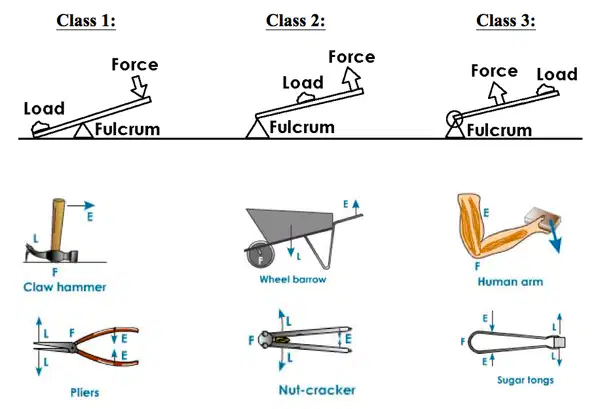
Which of the following statements is true for all classes of levers?
The fulcrum is always at the center.
The load is always at the center.
The effort is always at the center.
They all have a fulcrum, load, and effort.
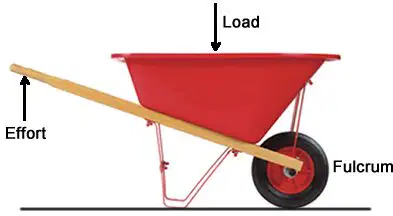
Which class of lever is a wheelbarrow an example of?
First-class lever
Second-class lever
Third-class lever
Fourth-class lever
Match the following
Lever Class with MA GREATER OR LESS than 1
First Class Lever
Lever Class with MA always GREATER than 1
Second Class Lever
Lever Class with MA always LESS than 1
Third Class Lever
Match the following
Lever Class that always changes the direction of Force
First Class Lever
Lever Class that does not change the direction of Force
Second Class Lever
Lever Class that does not change the direction of Force but produces gain in speed and decrease in Force
Third Class Lever
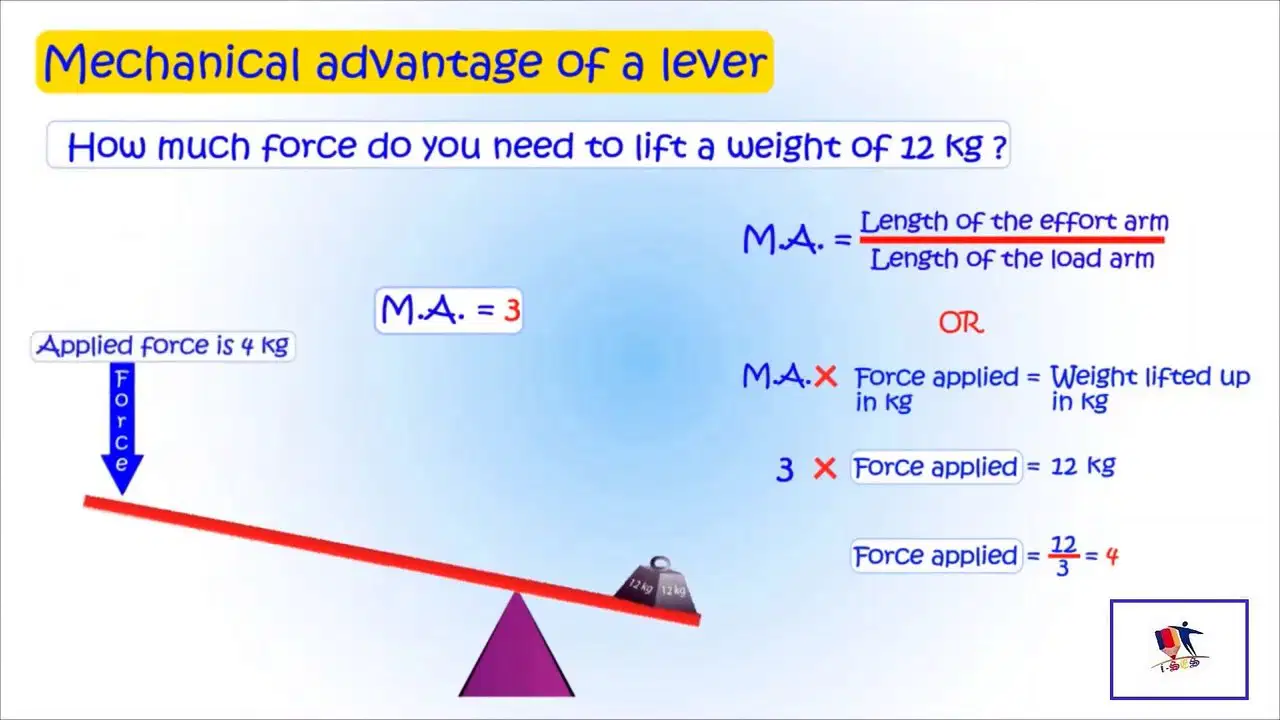
What is the formula for calculating the mechanical advantage of a lever?
Mechanical Advantage=Load Arm LengthEffort Arm Length
Mechanical Advantage=Effort Arm LengthLoad Arm Length
Mechanical Advantage=Effort Arm Length×Load Arm Length
Mechanical Advantage=Load Arm Length−Effort Arm Length
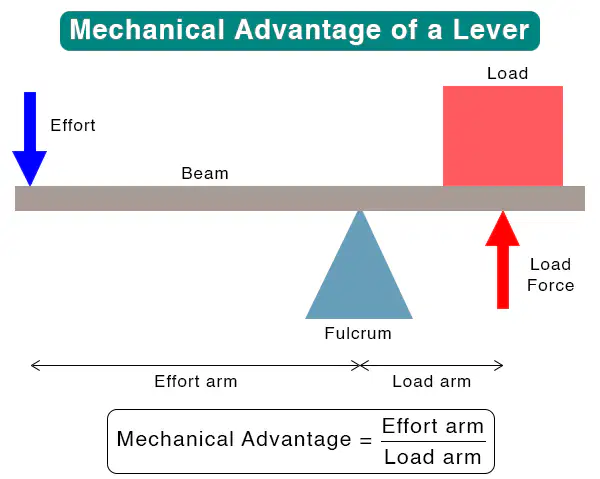
What is the mechanical advantage of a first-class lever when the fulcrum is equidistant from the load and the effort?
1
Greater than 1
Less than 1
0
Which class of lever generally has a mechanical advantage less than 1?
First-class
Second-class
Third-class
All classes
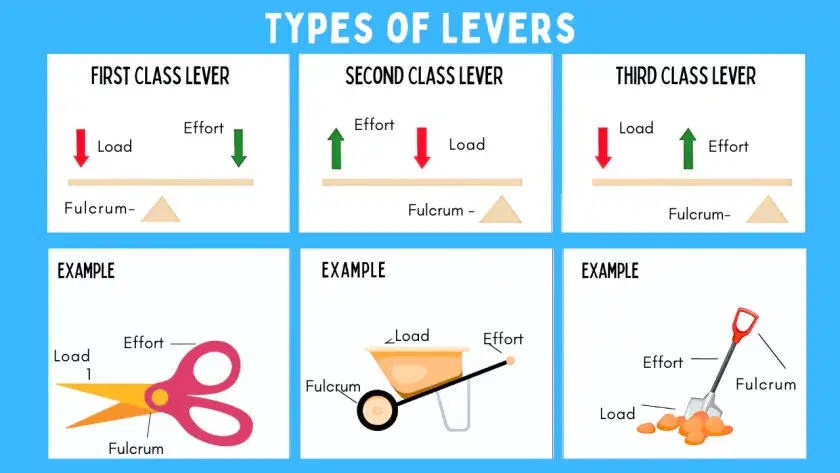
Match the following types of levers
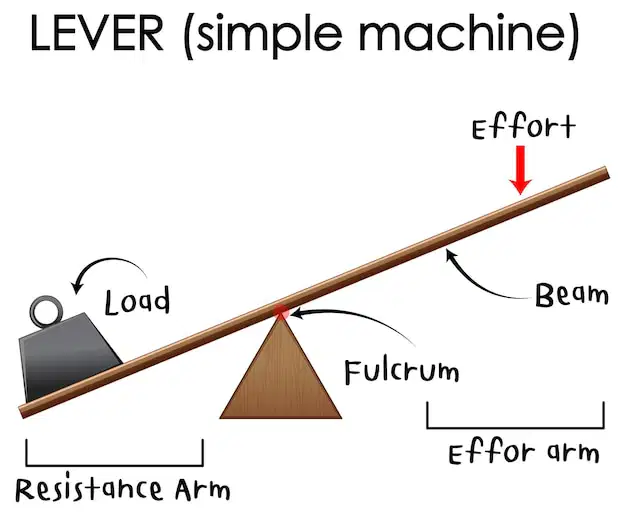
1st class lever

2nd class lever
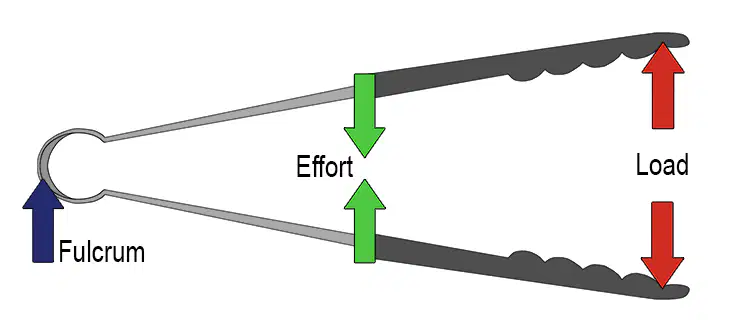
3rd class lever
Match the lever to its correct class.

first class

third class

second class


which lever type is a wheel barrow?
type 1
type 2
type 3
none of them


