
NEW
Font size
 Worksheets
2.11 Lenses & Formation of Images
Total questions: 9
Worksheet time: 48mins

In this photograph, the water droplet is acting like a lens. Lenses work because of _________.
reflection
refraction
diffraction
interference

The lens pictured is exhibiting _______ behavior and is ______ in shape.
converging, convex
converging, concave
diverging, convex
diverging, concave

The lens pictured is exhibiting _______ behavior and is ______ in shape.
converging, convex
converging, concave
diverging, convex
diverging, concave
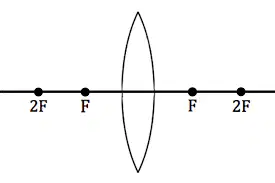
Which best describes the optical centre of this lens?
2F
F
The midpoint of F & F
The top of the lens
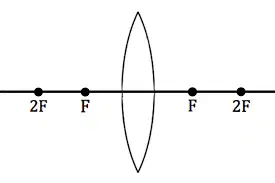
Which best describes the axis of symmetry of the lens?
2F
F
The horizontal line through the middle of the lens
A vertical line through the middle of the lens
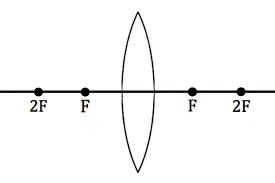
Which best describes the principal axis?
F
2F
The horizontal line going through the centre of the lens
A vertical line going through the centre of the lens
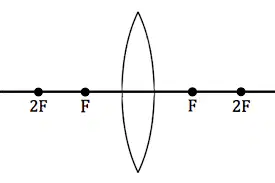
Which best describes the principal focus of this lens?
F
2F
Top of the lens
Bottom of the lens
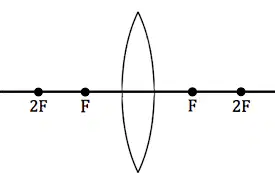
Why is the focal point important for lenses?
The focal point controls where the object is.
The focal point is where light rays converge or diverge, affecting image formation and clarity.
The focal point is where light originates from.
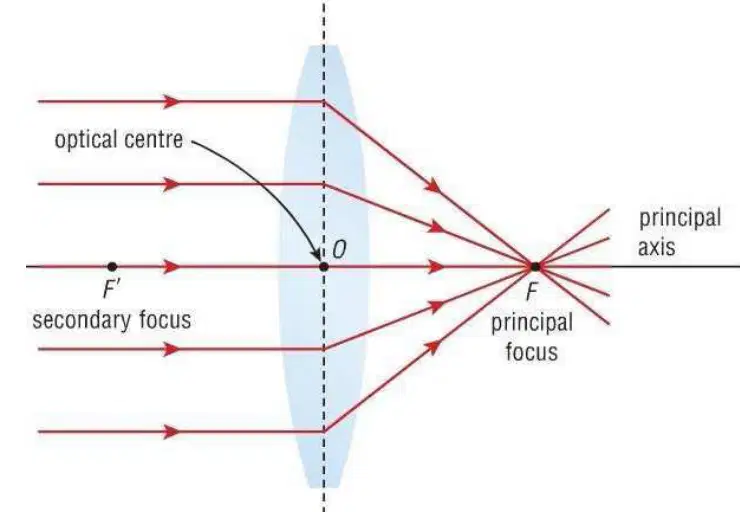
Which best describes the focal length?
The distance from O to F
The distance from F to F'
The distance from the top of the lense to the bottom of the lens
The distance from the object to the lens

