
Font size
 Worksheets
Mini physics
Total questions: 117
Worksheet time: 2hrs 30mins
All of the following are base units of the SI system except:
kilogram
liter
meter
kilometer
Physical quantities that cannot be derived from other physical quantities, sucsh as m, L and kg, are
base units
derived quantity
physical quantity
scalar quantity
What is the SI unit for mass?
g
kg
N
mg
What is the SI unit for length?
cm
m
km
mm
Which one is not a base quantity?
time
weight
mass
length
Which of the following include all SI units?
miles, inches, gallons
meters, miles, milliseconds
liters, kilograms, meters
pounds, ounces, liters

Which ruler is more accurate and precise?
(Ruler 1 is on top)
Ruler 1
Ruler 2
Ruler 3
Newtons could be used to measure __________ and __________.
mass, speed
momentum, work
force, weight
direction, power
SI unit for weight
Pound
Liter
Newton
Second
How could this be identified from the graph?
What is the unit watt in terms of SI base units?
Js–1
m2kgs–1
m2kgs–1
Nms–1
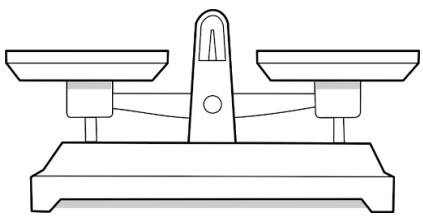
Choose ALL of the tools that you could use to measure weight.
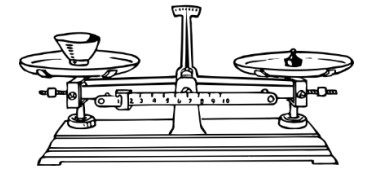
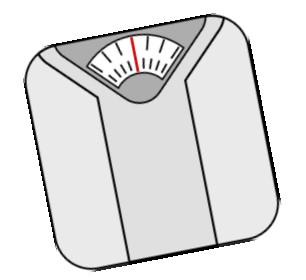


Choose the TWO tools that you could use to measure length.

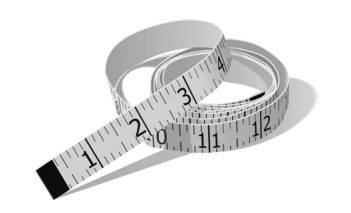
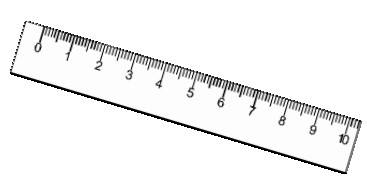

A
B
C
D

A
B
C
D

What does this image measure
volume
mass
length
density
A pendulum takes 8 seconds to make 0.5 oscillations. What is its period?
T = 16
T = 4
T = 3
T= 10
If a pendulum make 3 oscillations in 5 seconds, what is its frequency?
0.6 Hz
0.5 Hz
8 Hz
1.7 Hz
Find the frequency of a pendulum with the period of 0.025 seconds.
0.025 Hz
4 Hz
40 Hz
10 Hz
Which of the following instruments is used to measure time?
Hours
Calculator
Seconds
Pendulum
Which of the following correctly shows what is needed to find period?
Time and No. of Oscillations
Period, Time and No. of oscillations
Period and No. of oscillations
Time and Period
Find the frequency of a pendulum with the period of 0.025 seconds.
0.025 Hz
4 Hz
40 Hz
10 Hz
The measure of the force of gravity on an object
mass
weight
matter
grams
the distance an object travels per unit of time
speed
velocity
acceleration
displacement
A small steel ball is dropped from a low balcony. Ignoring air resistance, which statement describes its motion?
It falls with decreasing acceleration.
It falls with constant acceleration.
It falls with decreasing speed.
It falls with constant speed.

10 m
20 m
100 m
200 m

A
B
C
D

A
B
C
D
What is Uniform motion?
when a body travels through unequal distances in intervals of time
when a body travels the same distances in intervals of time
when a body travels equal distances in intervals of time
None of the above
______________ is the total length of the actual path covered by a moving object irrespective of its direction.
Displacement
Distance
Motion
Direction
_____________ motion is also called as linear motion.
Curvilinear motion
Translatory motion
Rectilinear motion
Which of the following statement is correct regarding velocity and speed of a moving body?
Velocity of a moving body is always higher than its speed
Speed of a moving body is always higher than its velocity
Speed of a moving body is its velocity in a given direction
Velocity of a moving body is its speed in a given direction
When a car driver travelling at a speed of 10 m/s applies brakes and brings the car to rest in 20 s, then the retardation will be:
+ 2 m/s2
− 2 m/s2
− 0.5 m/s2
+ 0.5 m/s2

The speed - time graph of a car is given here. Using the data in the graph calculate the total distance covered by the car.
1250 m
875 m
1500 m
870 m
A car of mass 1000 kg is moving with a velocity of 10 m/s. If the velocity-time graph for this car is a horizontal line parallel to the time axis, then the velocity of the car at the end of 25 s will be:
40 m/s
25 m/s
10 m/s
250 m/s

From the given v-t graph, it can be inferred that the object is
At rest
In uniform motion
Moving with uniform acceleration
In non-uniform motion
A player completes a circular path of radius r in 40 s. At the end of 2 minutes 20 seconds. Displacement will be:
7πr
Zero
2r
2πr
State the impulse-momentum theorem.
The impulse-momentum theorem states that the change in momentum of an object is equal to the impulse applied to it.
The impulse-momentum theorem states that momentum is conserved in all collisions.
The impulse-momentum theorem states that the change in momentum of an object is equal to the force applied to it.
The impulse-momentum theorem states that the impulse applied to an object is inversely proportional to its momentum.
How does impulse relate to the change in momentum of an object?
Impulse is inversely proportional to the change in momentum of an object.
Impulse is greater than the change in momentum of an object.
Impulse is not related to the change in momentum of an object.
Impulse is equal to the change in momentum of an object.
What is the formula to calculate the horizontal distance traveled by a projectile?
horizontal distance = initial velocity * time * secant(angle)
horizontal distance = initial velocity * time * cosine(angle)
horizontal distance = initial velocity * time * sine(angle)
horizontal distance = initial velocity * time * tangent(angle)
Define impulse in the context of momentum.
Impulse is the product of force and time.
Impulse is the result of dividing momentum by time.
Impulse is the change in kinetic energy of an object.
Impulse is the product of mass and acceleration.
What is the relationship between impulse and change in momentum?
Impulse is equal to velocity.
Impulse is equal to the change in momentum.
Impulse is inversely proportional to change in momentum.
Impulse is not related to change in momentum.
Calculate the impulse experienced by an object if its momentum changes from 20 kg m/s to 40 kg m/s in 5 seconds.
10 kg m/s
20 kg m/s
30 kg m/s
50 kg m/s
What is the difference between elastic and inelastic collisions in terms of momentum conservation?
In elastic collisions, kinetic energy is conserved.
In inelastic collisions, kinetic energy is conserved.
In elastic collisions, both momentum and kinetic energy are conserved. In inelastic collisions, only momentum is conserved while kinetic energy is not.
In elastic collisions, momentum is not conserved.
What is the definition of the gravitational field?
A region around a massive object where the force of gravity can be detected
A region around a planet where electromagnetic waves are present
A region around a star where nuclear reactions occur
A region around a black hole where light cannot escape
Which planet is closest to the Sun and has extreme temperatures with no atmosphere?
Venus
Earth
Mars
Mercury
What is the force of attraction between two point masses proportional to?
The square of the distance between them
The cube of the distance between them
The mass of only one of the point masses
The velocity of the point masses
Which law of planetary motion states that planetary orbits are elliptical in shape?
Newton's Law of Universal Gravitation
Kepler's Third Law
Kepler's Second Law
Kepler's First Law
What is the gravitational potential energy dependent on?
The mass of the object and the distance from the Sun
The mass of the object and the height above the ground
The speed of the object and the atmospheric pressure
The color of the object and the time of day
Which planet is known for its strong greenhouse effect and high surface temperature?
Mercury
Earth
Venus
Mars
What is the gravitational constant denoted by in the equation for gravitational force?
G
M
R
F
Which planet is the second-largest gas giant with a ring system made up of ice and rock particles?
Jupiter
Saturn
Neptune
Uranus
What is the unit of measurement for gravitational field strength?
Meters per second
Newtons per kilogram
Joules per kilogram
Kilograms per meter
Which law of planetary motion states that planets sweep out equal areas in equal times?
Newton's Law of Universal Gravitation
Kepler's Second Law
Kepler's First Law
Kepler's Third Law
What is the work done in raising a mass from the ground surface to a height above the ground?
P=VI
E=mc^2
F=ma
mgh
Which planet is known for its stormy atmosphere and the Great Red Spot?
Mars
Jupiter
Saturn
Neptune
What is the unit of measurement for gravitational potential?
Kilograms per meter
Joules per kilogram
Newtons per kilogram
Meters per second

Geosynchronous orbits take ______ to complete a full cycle.
24 hours
12 hours
48 hours
36 hours
The work done per unit mass in bringing a small test mass from infinity to the point.
Gravitational force
Gravitational field
Gravitational field strength
Gravitational potential at a point
Force exerted per unit mass acting on a small test mass place at that point.
Gravitational force
Gravitational field
Gravitational field strength
Gravitational potential at a point
What is the Equation for Momentum?
Momentum = Mass x Velocity
Momentum = Mass / Velocity
Momentum = Velocity / Mass
What is the Equation for a Moment of a Force?
Moment of a Force = Force x Distance
Moment of a Force = Force / Distance
Moment of a Force = Distance / Force
What is the Equation for Weight?
Weight = Mass x Gravitational Field Strength
Weight = Mass / Gravitational Field Strength
Weight = Gravitational Field Strength / Mass
A 3.0 kg block starts from rest at the top of a 300 incline and slides 2.0 m, measured along the incline, in 1.5 s. Is normal force on the block
Greater than 30 N
Less than 30 N
Equal to 30 N
A car rounds a curve at constant speed. If the car's speed doubles, the net force on the car is multiplied by a factor of
one fourth
one half
the net force does not change
two
four
A satellite of mass m orbits a moon of mass M in uniform circular motion with a constant tangential speed of v.
The gravitational field strength at a distance R from the center of moon is g. The satellite is moved to a new circular orbit that is 2R
from the center of the moon. What is the gravitational field strength of the moon at this new distance?
g/4
g/2
2g
4g
A 2 kg object is a distance of 10,000,000 m away from the center of Earth, which has a mass of nearly 6×10^24 kg. What is the approximate gravitational field strength of Earth’s gravitational field at the location of the 10 kg object?
2 N/kg
4 N/kg
10 N/kg
The gravitational field strength is negligible and, therefore approximately zero.
What is the direction of the centripetal acceleration for a mass whirled on a string in a vertical circle, when the mass is a the bottom of the circle?
Up
Down
Left
Right
In the direction that the mass is moving
If the object is doubled in mass, how does the escape velocity change?
By a factor of square root of 2
By a factor of 2
By a factor of 1/2
It doesn't change
Gravitational potential energy, 𝑈 stored in a test mass 𝑚 placed at a distance 𝑟 from the center of planet 𝑀 is defined as the ____________ by gravitational force in bringing a test mass from infinity to that point.
energy
power
velocity
work done
What is meant by a quantity having an inverse-square relationship with distance?
The quantity is proportional to the reciprocal of the square of a distance.
The quantity is not proportional to the square of the distance.
The quantity is proportional to the reciprocal of the square root of a distance.
The square of the quantity is proportional to the reciprocal of a distance.


A student is asked to solve the following problem:
An object is thrown upwards with a speed of 25 m s-1. How high will it be when the speed is 12 m s-1 ?
Which equation will allow the problem to be solved in a SINGLE calculation?
s=ut+21at2
s=2(u+v)t
v=u+at
v2=u2+2as
In which direction does centripetal force act in a rotating object?
Toward the outer edge of the object
In the opposite direction of the rotation
Away from the center of rotation
Towards the center of rotation
What factors affect the range of a projectile?
Projectile weight, launch sound, humidity
Projectile shape, launch location, time of day
Initial velocity, launch angle, air resistance, and gravitational force
Wind speed, temperature, projectile color

Two projectiles are fired horizontally from the same height but with different velocities as shown in the picture. Which one will travel farther before hitting the ground?
The one on the left.
The one on the right
They will hit at the same time.
Once a projectile is launched, what is the only force that affects its motion?
mass
friction
inertia
gravity
A projectile is launched with 45m/s at an angle 30o above the horizontal. What is the Vx when the projectile hits the ground.
22.5 m/s
35.7 m/s
39 m/s
45 m/s
Two identical balls, X and Y, are at the same height and a horizontal distance of 25 cm apart.
X is projected horizontally with a velocity of 0.10 m s–1 towards Y at the same time that Y is released from rest. Both X and Y move freely in the absence of air resistance.
What is the distance between the balls 1.0 s later?
0.15 m
0.25 m
2.4 m
4.9 m
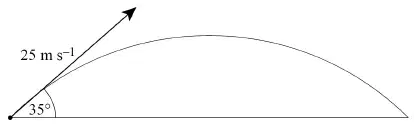
A projectile is launched with a speed of 25 m s–1 at an angle of 35° to the horizontal, as shown in the diagram.
Air resistance is negligible.
What is the time taken for the projectile to return to the ground?
1.5 s
2.1 s
2.9 s
4.2 s
A golf ball was hit from the surface of the Moon. The time of flight was 4.0 s.
What is the best estimate for the maximum height reached by the ball?
acceleration due to gravity on the Moon = 1.6 m s–2
3 m
15 m
40 m
80 m
What force acts on a projectile in the horizontal direction?
air resistance
gravity
tension
none of the above
You kick a baby seal off a 19.6 m high hill and it lands a distance of 12.0 m from the edge of the hill. What is the vertical displacement? No math required.
19.6 m
12.0 m
7.6 m
4.9 m

The diagram shows parabolic projectile motion. The object is launched at A. The object impacts the ground at G.
At which position or positions is the projectile slowing in the down direction?
Position G
Position E & F
Positions E, F, & G.
At no positions.
What is the "path" of the projectile as it flies through the air?
Range, x
Height, ∆y
Time of flight, t
Trajectory


Given an expression of a SHM
x = 10 sin (11.4t). Calculate the time taken when x=10 cm for the 1st time
0.138 s
1.24 s
11.11 s
0.79 s
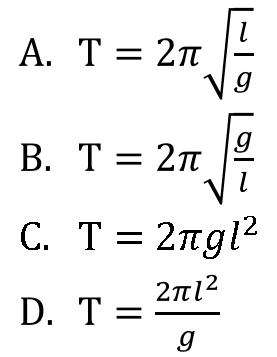
Based on your findings, which equation could best describe the pendulum’s period?
A
B
C
D
When is the pendulum at maximum velocity
At its lowest point
At its highest point
It moves at a constant velocity
It is at rest
What is the definition of SHM?
periodic motion without loss of energy in which the acceleration of a body is directly proportional to its displacement and is directed towards the equilibrium position but in opposite direction of the displacement.
periodic motion without loss of energy in which the acceleration is directly proportional to its velocity and is directed towards the equilibrium position but in opposite direction of the velocity.
periodic motion without loss of energy in which the acceleration of a body is inversely proportional to its displacement
periodic motion without loss of energy in which the angular frequency is directly proportional to its displacement and is directed towards the equilibrium position but in opposite direction of the displacement.
The number of cycles or oscillation made in one second is defined as
time taken
period
frequency
amplitude

